
 Abibirem
 Asia
Asia Yuropu
 Amerika Anaafoɔ
 Australia ne Oceania
 Antarctica
 Pacific Po
 Atlantic Po
 India Po
 Arctic Po
 Mediterranean Po
 Po Kɔkɔɔ
 Caribbean Po
 Coral Po
 China Anaafoɔ Po
 Philippine Po
 Andaman Po
 Atifi Po
 Timor ne Arafura Po
 Bengal Ɛpo Ano
 California Ɛpo Ano
Chinese scorpion
 Ɛwɔ
ƐwɔThe Chinese scorpion is a small scorpion that lives in warm, dry places with little plant cover. It is found in China, Mongolia and Korea. Its venom contains many different toxins, and scientists are studying some of them for possible medical uses.1
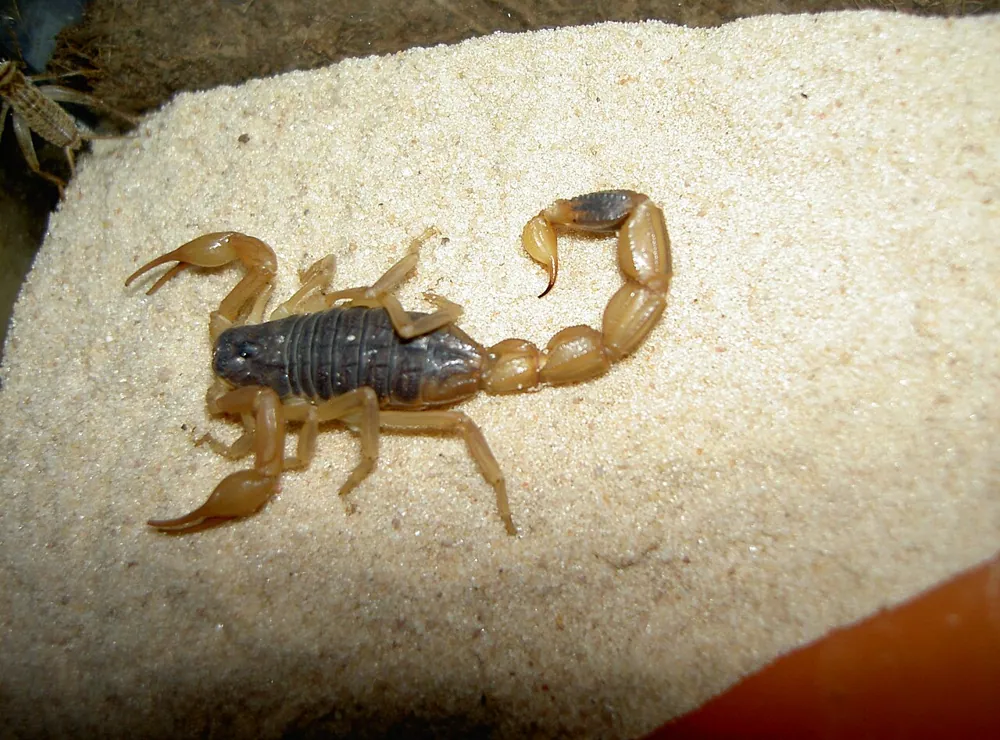
 Sɛdeɛ wobɛhunu no
Bɔre ahoɔden
Bɔre fi ne dua ano nsɔe (stinger) mu ba.
Ne bɔre yɛ dɛn?
The venom is made of many different toxins. Several of them act on sodium channels and potassium channels, which control signals in nerve and muscle cells. Some of these toxins have been studied for pain relief, seizures and other medical uses.1
Ne asiane ma nnipa te sɛn?
Asiane ma nnipa: Ɛyɛ denSɛ ɛwɔ wo a, kɔ dɔkota nkyɛn. Ɛntaa nkum obi koraa.The British National Centre for Reptile Welfare describes its sting as medically significant and potentially life threatening, but says an average adult would just have a really bad day.1
 Sɛ ɛwɔ a
- Fa ice pack dwo baabi a ɛwɔɔ no, na ma onipa no ntena dinn. Hwehwɛ dɔkota mmoa ntɛm, titiriw ma mmofra: akekantwerɛ bi tumi kum mmofra.
Di kan frɛ wo ahohiahia nɔma (112, 000, 911). Yei yɛ mmoa a ɛdi kan ho akwankyerɛ, ɛnyɛ dɔkota afotuo. Mmoa a ɛdi kan ho nsɛm titiriw
 Hwɛ wo ho so
- Mfa wo nsa nka wiram aboa biara, nkyere no na mfa no nni agorɔ, sɛ ɔyɛ ketewa mpo, na sɛ ɛte sɛ ɔrededa anaa wawu mpo a.
- Ma no kwan. Sɛ wohyia baako a, ma wo bo nnwo, san w'akyi brɛoo na ma ɔnkɔ ne kwan.
- Sɛ baako wɔ wo a: ma wo bo nnwo, tena dinn, frɛ wo ahohiahia nɔma (112, 000, 911) anaa kɔ ayaresabea ntɛm. Kae sɛdeɛ na ɛte, mfonini bɛboa.
Ɛnhwehwɛ wo sɛ ɛbɛpira wo. Ɛde ne bɔre kyere aduane anaa ɛbɔ ne ho ban, na ɛpɛ sɛ ɛhinta sene biribiara. Nsɛm pii fa ahobammɔ ho
Wiase mu baabi bɛn?
Ne kɛseɛ te sɛn?
Ne tenten te sɛn?
 ne tenten te sɛ agodeɛ blɔk 2 a wɔde to ntoatoasoɔ mu
 ɛbɛtumi atu mita 100 wɔ anibu 260 mu (onipa a ɔwɔ ntɛm sen biara hia 9.6)
Chinese scorpion kɛseɛ te sɛn sɛ wode toto WO ho a?
Akontabuo kɛkɛ wɔ wo browser mu. Wɔnkora hwee, na wɔmfa hwee nkɔ baabiara.
Ne ntɛm te sɛn?


Nsɛm
Its tail has been used in traditional Chinese medicine for many centuries to treat chronic pain, paralysis, apoplexy and epilepsy.1
One venom peptide, BmK AS, is the first long-chain scorpion peptide reported to have antimicrobial activity.1
Its venom contains at least 51 long-chain peptides related to sodium channel toxins and 18 peptides related to potassium channel toxins.1
It lives about 4 to 6 years.1
Baabi a nsɛm no fi
- Olivierus martensii (Wikipedia (CC BY-SA 4.0))
- Olivierus martensii (iNaturalist): din ne nkyekyɛmu.
- Venom Wiki: asiane gyinabea, kɛseɛ a ɛtaa yɛ ne ntɛm susuo no yɛ yɛn ankasa deɛ. Hwɛ sɛdeɛ yɛbu no: Sɛdeɛ yɛkyerɛ asiane gyinabea.
Nsɛm biara a ɛwɔ kratafa yi so wɔ nɔma a ɛkyerɛ ne fibea. Sɛ yɛfom biribi a, kafra, yɛyɛ mmoa ho akɔnnɔfoɔ, ɛnyɛ nyansahu nwoma. Ka kyerɛ yɛn wɔ [email protected] na yɛbɛsiesie.
 Ɔkɔm de akekantwerɛ no! Onipa baako na ɔyɛ Venom Wiki: ɛyɛ kwa, dawurubɔ nni so na biribiara nni so a ɛdi w'akyi. Akyɛdeɛ ketewa bi boa ma ɛkɔ so tena internet so.Ma akekantwere no aduane
 Deathstalker
 Indian red scorpion
 Arabian fat-tailed scorpion
 Asian forest scorpion
 Giant forest scorpion
 Black fat-tailed scorpion
 Indian cobra
 Indian saw-scaled viper
 King cobra
 Puff adder
 Russell ɔnanka
 Asian giant hornet
.jpg)