
 Abibirem
 Asia
Asia Yuropu
 Amerika Anaafoɔ
 Australia ne Oceania
 Antarctica
 Pacific Po
 Atlantic Po
 India Po
 Arctic Po
 Mediterranean Po
 Po Kɔkɔɔ
 Caribbean Po
 Coral Po
 China Anaafoɔ Po
 Philippine Po
 Andaman Po
 Atifi Po
 Timor ne Arafura Po
 Bengal Ɛpo Ano
 California Ɛpo Ano
Cuban solenodon
 Ka
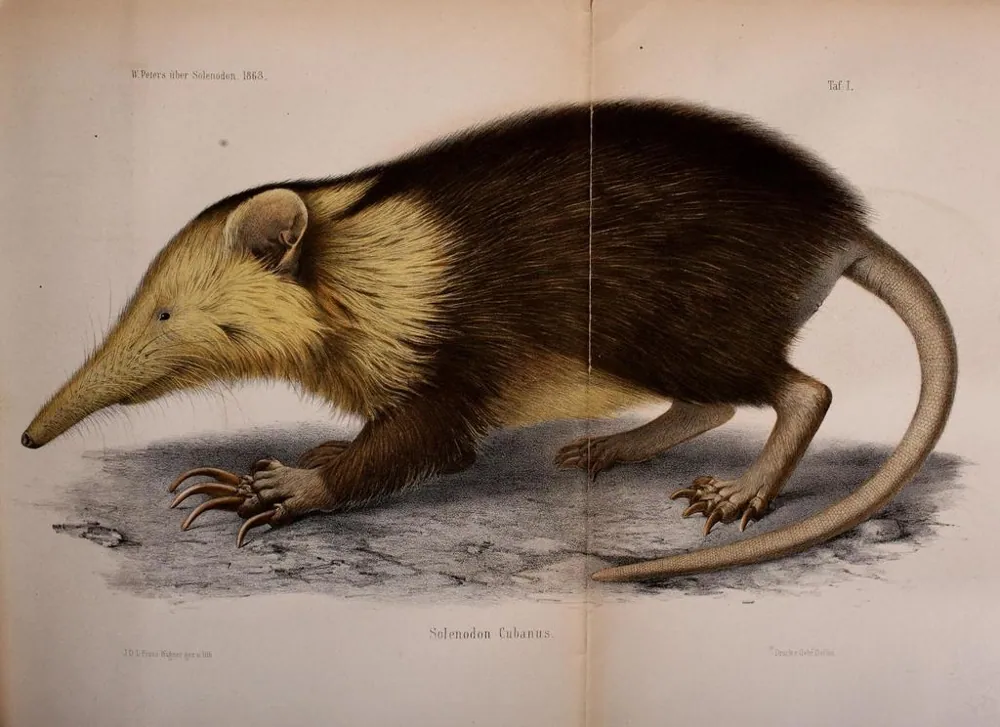
KaThe Cuban solenodon is a small, furry, shrew-like mammal that lives only in the mountain forests of eastern Cuba. It is one of the few mammals that can inject venom, which it uses to catch its prey. It is endangered and was once thought to be extinct.1



 Sɛdeɛ wobɛhunu no
Bɔre ahoɔden
Bɔre fi ne se mu ba bere a ɔka.
Ne bɔre yɛ dɛn?
Its venom comes from modified salivary glands in the lower jaw, so it is a venomous bite. The venom is strong enough to kill lizards, other small reptiles, frogs, small birds and rodents. Solenodons do not appear to be immune to the venom of their own kind, and cage mates have been reported dying after fights.1
Ne asiane ma nnipa te sɛn?
Asiane ma nnipa: Ɛyɛ yawƐtumi yɛ yaw paa, nanso ɛkame ayɛ sɛ ɛnyɛ asiane kɛseɛ da. Sɛ ɛka a
- Hohoro kuro no yie na hwehwɛ dɔkota mmoa.
Di kan frɛ wo ahohiahia nɔma (112, 000, 911). Yei yɛ mmoa a ɛdi kan ho akwankyerɛ, ɛnyɛ dɔkota afotuo. Mmoa a ɛdi kan ho nsɛm titiriw
 Hwɛ wo ho so
- Mfa wo nsa nka wiram aboa biara, nkyere no na mfa no nni agorɔ, sɛ ɔyɛ ketewa mpo, na sɛ ɛte sɛ ɔrededa anaa wawu mpo a.
- Ma no kwan. Sɛ wohyia baako a, ma wo bo nnwo, san w'akyi brɛoo na ma ɔnkɔ ne kwan.
- Sɛ baako ka wo a: ma wo bo nnwo, tena dinn, frɛ wo ahohiahia nɔma (112, 000, 911) anaa kɔ ayaresabea ntɛm. Kae sɛdeɛ na ɛte, mfonini bɛboa.
Ɛnhwehwɛ wo sɛ ɛbɛpira wo. Ɛde ne bɔre kyere aduane anaa ɛbɔ ne ho ban, na ɛpɛ sɛ ɛhinta sene biribiara. Nsɛm pii fa ahobammɔ ho
Wiase mu baabi bɛn?
Ne kɛseɛ te sɛn?
Ne tenten te sɛn?
Ne mu duru te sɛn?
 ne tenten te sɛ kwadu 3 a wɔde to ntoatoasoɔ mu
 ne tenten te sɛ agodeɛ blɔk 18 a wɔde to ntoatoasoɔ mu
 ɛbɛtumi atu mita 100 wɔ anibu 45 mu (onipa a ɔwɔ ntɛm sen biara hia 9.6)
Cuban solenodon kɛseɛ te sɛn sɛ wode toto WO ho a?
Akontabuo kɛkɛ wɔ wo browser mu. Wɔnkora hwee, na wɔmfa hwee nkɔ baabiara.
Ne ntɛm te sɛn?


Nsɛm
The solenodons are one of the few groups of mammals that are venomous.1
It was declared extinct in 1970, but was found again in 1974.1
The Cuban solenodon found in 2003 was named Alejandrito. It was healthy, and it was released back into the wild after two days of scientific study.1
Males mate with several females, but they do not help raise the young. Males and females only meet to mate.1
Atosɛm sɛefoɔ
Atosɛm: The Cuban solenodon is extinct.
Nokorɛ: It is not extinct. It was once thought to be extinct because it is so rare and hard to see, but it survives today and is listed as endangered.1
Baabi a nsɛm no fi
- Cuban solenodon (Wikipedia (CC BY-SA 4.0))
- Atopogale cubana (iNaturalist): din ne nkyekyɛmu.
- Venom Wiki: asiane gyinabea, kɛseɛ a ɛtaa yɛ ne ntɛm susuo no yɛ yɛn ankasa deɛ. Hwɛ sɛdeɛ yɛbu no: Sɛdeɛ yɛkyerɛ asiane gyinabea.
Nsɛm biara a ɛwɔ kratafa yi so wɔ nɔma a ɛkyerɛ ne fibea. Sɛ yɛfom biribi a, kafra, yɛyɛ mmoa ho akɔnnɔfoɔ, ɛnyɛ nyansahu nwoma. Ka kyerɛ yɛn wɔ [email protected] na yɛbɛsiesie.
 Ɔkɔm de akekantwerɛ no! Onipa baako na ɔyɛ Venom Wiki: ɛyɛ kwa, dawurubɔ nni so na biribiara nni so a ɛdi w'akyi. Akyɛdeɛ ketewa bi boa ma ɛkɔ so tena internet so.Ma akekantwere no aduane
Pii fi kuo korɔ no mu: Nufoɔ mmoa a wɔwɔ bɔre
 Common vampire batNufoɔ mmoa a wɔwɔ bɔreƐyɛ yaw kɛkɛ
 Hispaniolan solenodonNufoɔ mmoa a wɔwɔ bɔreƐyɛ yaw kɛkɛ
 Northern short-tailed shrewNufoɔ mmoa a wɔwɔ bɔreƐnni asiane
 Hairy-legged vampire batNufoɔ mmoa a wɔwɔ bɔreƐnni asiane
 White-winged vampire batNufoɔ mmoa a wɔwɔ bɔreƐnni asiane
 PlatypusNufoɔ mmoa a wɔwɔ bɔreƐyɛ yaw kɛkɛ
 Terciopelo
 Eastern coral snake
 Eastern diamondback rattlesnake
 Eyelash viper
 Timber rattlesnake
 Western diamondback rattlesnake