
 Abibirem
 Asia
Asia Yuropu
 Amerika Anaafoɔ
 Australia ne Oceania
 Antarctica
 Pacific Po
 Atlantic Po
 India Po
 Arctic Po
 Mediterranean Po
 Po Kɔkɔɔ
 Caribbean Po
 Coral Po
 China Anaafoɔ Po
 Philippine Po
 Andaman Po
 Atifi Po
 Timor ne Arafura Po
 Bengal Ɛpo Ano
 California Ɛpo Ano
White-winged vampire bat
 Ka
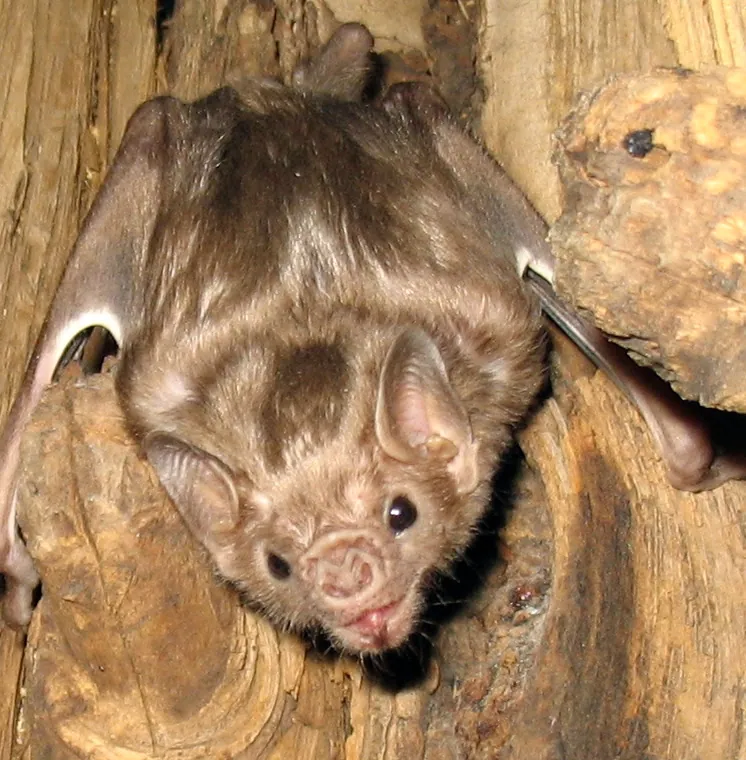
KaThe white-winged vampire bat is a small bat that feeds on blood. It lives from Mexico to northern Argentina, and also on the islands of Trinidad and Margarita Island. Its pale wing edges make it easy to tell apart from some of its relatives.1


 Sɛdeɛ wobɛhunu no
- Fur is clay-coloured, light brown or dark cinnamon brown.1
- The outline of the wings is white, as is the membrane between the second and third fingers.1
- Ears are 18 mm long, longer than they are wide.1
- Nose to tail length is about 84 mm, and it weighs 31.7–48.1 g.1
- Its forearms are 51–54 mm long.1
Wɔtaa fa no sɛ: It is often confused with the common vampire bat. The white-winged vampire bat has a smooth outer edge on its tragus (the small flap in front of the ear), while the common vampire bat's is serrated. Its thumb is also much shorter, and it has 22 teeth, compared with 20 in the common vampire bat.1
Bɔre ahoɔden
Bɔre fi ne se mu ba bere a ɔka.
Ne bɔre yɛ dɛn?
Its saliva contains plasminogen activators, which quickly dissolve the clots that form in the host's blood while it feeds. It also contains platelet aggregation inhibitors and other anticoagulants, which stop blood from clotting. These compounds work especially well on birds.1
Ne asiane ma nnipa te sɛn?
Asiane ma nnipa: Ɛnyɛ denƐte sɛ wowa wɔ anaa ɛnnu saa. Ɛkame ayɛ sɛ ɛnni asiane ma nnipa.It can transmit rabies, but this appears to be relatively uncommon. The only reports of rabies transmission from this species come from Trinidad.1
Ɛyɛ dɛn bere a ehu aka no?
When disturbed, it produces a foul-smelling odour from cup-shaped scent glands in its mouth, which may help deter predators.1
 Sɛ ɛka a
- Hohoro kuro no yie na hwehwɛ dɔkota mmoa.
Di kan frɛ wo ahohiahia nɔma (112, 000, 911). Yei yɛ mmoa a ɛdi kan ho akwankyerɛ, ɛnyɛ dɔkota afotuo. Mmoa a ɛdi kan ho nsɛm titiriw
 Hwɛ wo ho so
- Mfa wo nsa nka wiram aboa biara, nkyere no na mfa no nni agorɔ, sɛ ɔyɛ ketewa mpo, na sɛ ɛte sɛ ɔrededa anaa wawu mpo a.
- Ma no kwan. Sɛ wohyia baako a, ma wo bo nnwo, san w'akyi brɛoo na ma ɔnkɔ ne kwan.
- Sɛ baako ka wo a: ma wo bo nnwo, tena dinn, frɛ wo ahohiahia nɔma (112, 000, 911) anaa kɔ ayaresabea ntɛm. Kae sɛdeɛ na ɛte, mfonini bɛboa.
Ɛnhwehwɛ wo sɛ ɛbɛpira wo. Ɛde ne bɔre kyere aduane anaa ɛbɔ ne ho ban, na ɛpɛ sɛ ɛhinta sene biribiara. Nsɛm pii fa ahobammɔ ho
Wiase mu baabi bɛn?
Ne kɛseɛ te sɛn?
Ne tenten te sɛn?
Ne mu duru te sɛn?

 ne tenten te sɛ agodeɛ blɔk 2,5 a wɔde to ntoatoasoɔ mu
 ɛbɛtumi atu atwa bɔɔlobɔ agodibea mu nyinaa wɔ anibu 19 mu
White-winged vampire bat kɛseɛ te sɛn sɛ wode toto WO ho a?
Akontabuo kɛkɛ wɔ wo browser mu. Wɔnkora hwee, na wɔmfa hwee nkɔ baabiara.
Ne ntɛm te sɛn?


Nsɛm
In captivity, each bat drinks about 16 ml of defibrinated cow or chicken blood per day, and they should be kept in social colonies with dominance hierarchies.1
It is the only bat species in the world with 22 teeth, although older individuals sometimes lose the last upper molars.1
Its brain is large for its body size, which may be because its hunting needs careful planning and stealth.1
It is not as good as the common vampire bat at walking on all fours, but it is quite good at climbing branches.1
It roosts with many other bat species, including the common vampire bat.1
Baabi a nsɛm no fi
- White-winged vampire bat (Wikipedia (CC BY-SA 4.0))
- Venom Wiki: asiane gyinabea, kɛseɛ a ɛtaa yɛ ne ntɛm susuo no yɛ yɛn ankasa deɛ. Hwɛ sɛdeɛ yɛbu no: Sɛdeɛ yɛkyerɛ asiane gyinabea.
Nsɛm biara a ɛwɔ kratafa yi so wɔ nɔma a ɛkyerɛ ne fibea. Sɛ yɛfom biribi a, kafra, yɛyɛ mmoa ho akɔnnɔfoɔ, ɛnyɛ nyansahu nwoma. Ka kyerɛ yɛn wɔ [email protected] na yɛbɛsiesie.
 Ɔkɔm de akekantwerɛ no! Onipa baako na ɔyɛ Venom Wiki: ɛyɛ kwa, dawurubɔ nni so na biribiara nni so a ɛdi w'akyi. Akyɛdeɛ ketewa bi boa ma ɛkɔ so tena internet so.Ma akekantwere no aduane
Pii fi kuo korɔ no mu: Nufoɔ mmoa a wɔwɔ bɔre
 Common vampire batNufoɔ mmoa a wɔwɔ bɔreƐyɛ yaw kɛkɛ
 Cuban solenodonNufoɔ mmoa a wɔwɔ bɔreƐyɛ yaw kɛkɛ
 Hispaniolan solenodonNufoɔ mmoa a wɔwɔ bɔreƐyɛ yaw kɛkɛ
 Northern short-tailed shrewNufoɔ mmoa a wɔwɔ bɔreƐnni asiane
 Hairy-legged vampire batNufoɔ mmoa a wɔwɔ bɔreƐnni asiane
 PlatypusNufoɔ mmoa a wɔwɔ bɔreƐyɛ yaw kɛkɛ
 Terciopelo
 Eastern coral snake
 Eastern diamondback rattlesnake
 Eyelash viper
 Timber rattlesnake
 Western diamondback rattlesnake