
 Abibirem
 Asia
Asia Yuropu
 Amerika Anaafoɔ
 Australia ne Oceania
 Antarctica
 Pacific Po
 Atlantic Po
 India Po
 Arctic Po
 Mediterranean Po
 Po Kɔkɔɔ
 Caribbean Po
 Coral Po
 China Anaafoɔ Po
 Philippine Po
 Andaman Po
 Atifi Po
 Timor ne Arafura Po
 Bengal Ɛpo Ano
 California Ɛpo Ano
Florida bark scorpion
 Ɛwɔ
ƐwɔThe Florida bark scorpion is a small scorpion with a sting that can cause serious harm. It is not really from Florida: it is native to northern Middle America and has spread to other places, including Florida. It hides under rocks, bark and rubbish, and sometimes lives inside houses.1


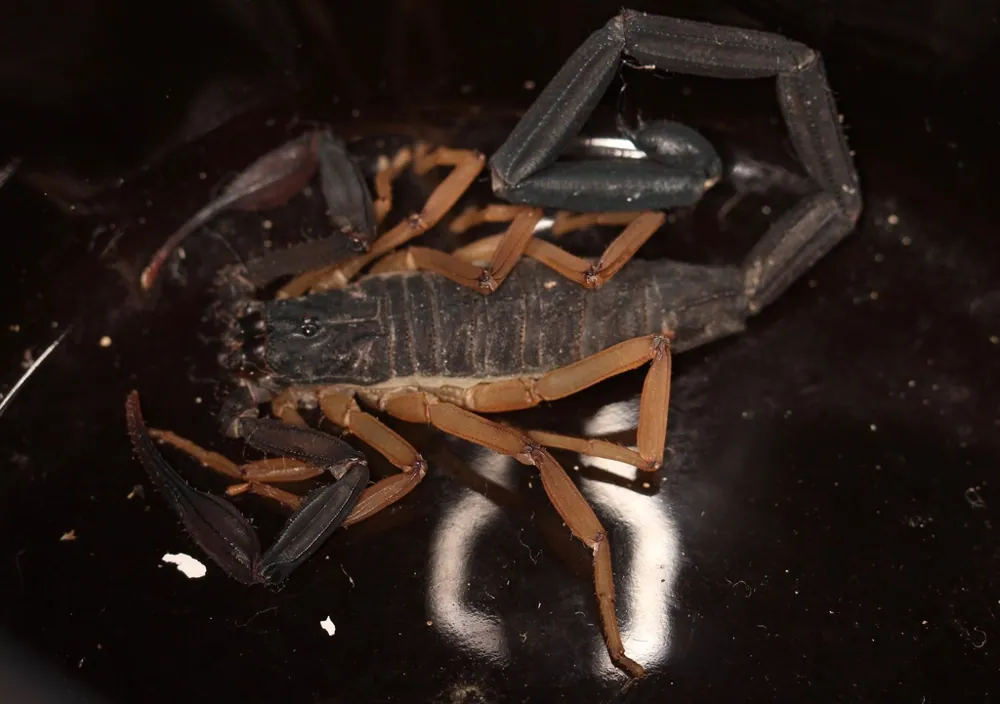
 Sɛdeɛ wobɛhunu no
- Its colour varies. It may be reddish, black with reddish pincers, or dark brown with yellowish legs and red pincers.1
- Some individuals are dark brown with reddish and black tail sections.1
- Females reach up to 10 cm long. Males can grow over 15 cm long.1
Wɔtaa fa no sɛ: In Florida it lives alongside two native scorpions, the Hentz striped scorpion and the Guiana striped scorpion.1
Bɔre ahoɔden
Bɔre fi ne dua ano nsɔe (stinger) mu ba.
Ne bɔre yɛ dɛn?
This scorpion is venomous, but much less toxic than others in its genus. Its venom is neurotoxic (it attacks the nerves) and cardiotoxic (it affects the heart), and it causes the release of catecholamines, hormones that speed up the body. Local effects include pain, redness, itching and swelling. Possible symptoms include irregular or fast heartbeat, fluid in the lungs, nausea, vomiting, sweating, diarrhoea, shock, convulsions and coma.1
Ne asiane ma nnipa te sɛn?
Asiane ma nnipa: Ɛyɛ yawƐtumi yɛ yaw paa, nanso ɛkame ayɛ sɛ ɛnyɛ asiane kɛseɛ da.It is much less toxic than other scorpions in its genus. Serious symptoms can still occur, and death is possible.1
 Sɛ ɛwɔ a
- Fa ice pack dwo baabi a ɛwɔɔ no, na ma onipa no ntena dinn. Hwehwɛ dɔkota mmoa ntɛm, titiriw ma mmofra: akekantwerɛ bi tumi kum mmofra.
Di kan frɛ wo ahohiahia nɔma (112, 000, 911). Yei yɛ mmoa a ɛdi kan ho akwankyerɛ, ɛnyɛ dɔkota afotuo. Mmoa a ɛdi kan ho nsɛm titiriw
 Hwɛ wo ho so
- Mfa wo nsa nka wiram aboa biara, nkyere no na mfa no nni agorɔ, sɛ ɔyɛ ketewa mpo, na sɛ ɛte sɛ ɔrededa anaa wawu mpo a.
- Ma no kwan. Sɛ wohyia baako a, ma wo bo nnwo, san w'akyi brɛoo na ma ɔnkɔ ne kwan.
- Sɛ baako wɔ wo a: ma wo bo nnwo, tena dinn, frɛ wo ahohiahia nɔma (112, 000, 911) anaa kɔ ayaresabea ntɛm. Kae sɛdeɛ na ɛte, mfonini bɛboa.
Ɛnhwehwɛ wo sɛ ɛbɛpira wo. Ɛde ne bɔre kyere aduane anaa ɛbɔ ne ho ban, na ɛpɛ sɛ ɛhinta sene biribiara. Nsɛm pii fa ahobammɔ ho
Wiase mu baabi bɛn?
Ne kɛseɛ te sɛn?
Ne tenten te sɛn?
 ne tenten te sɛ agodeɛ blɔk 5 a wɔde to ntoatoasoɔ mu
 ɛbɛtumi atu mita 100 wɔ anibu 180 mu (onipa a ɔwɔ ntɛm sen biara hia 9.6)
Florida bark scorpion kɛseɛ te sɛn sɛ wode toto WO ho a?
Akontabuo kɛkɛ wɔ wo browser mu. Wɔnkora hwee, na wɔmfa hwee nkɔ baabiara.
Ne ntɛm te sɛn?


Nsɛm
Females can reproduce without a male, through a process called parthenogenesis.1
Newborn young ride on their mother's back.1
Tarantulas such as Tliltocatl vagans prey on it, and a tarantula may kill it even if the scorpion strikes first.1
In a laboratory study, males lived about 33 months on average and females about 38 months.1
Despite its name, it is native to northern Middle America, not Florida.1
Atosɛm sɛefoɔ
Atosɛm: It is a Florida native scorpion, as its name suggests.
Nokorɛ: It is not native to Florida. It comes from northern Middle America and was introduced to Florida and other places.1
Ma bɔre ho animdefoɔ
- Nyansahu din
- Centruroides gracilis
- Kuo
- Akekantwerɛ
- Abusua
- Buthidae2
- Nhyehyɛeɛ (Order)
- Scorpiones
- Asaase akɛseɛ
- Amerika Atifi, Amerika Anaafoɔ
- Mmofra nketewa
- The female gives birth to a litter of 25 to 35 young, and litters of 91 have been recorded. The young ride on the female's back.1
- Asiane ma nnipa
- 2 / 5: Ɛyɛ yaw3
Baabi a nsɛm no fi
- Centruroides gracilis (Wikipedia (CC BY-SA 4.0))
- Centruroides gracilis (iNaturalist): din ne nkyekyɛmu.
- Venom Wiki: asiane gyinabea, kɛseɛ a ɛtaa yɛ ne ntɛm susuo no yɛ yɛn ankasa deɛ. Hwɛ sɛdeɛ yɛbu no: Sɛdeɛ yɛkyerɛ asiane gyinabea.
Nsɛm biara a ɛwɔ kratafa yi so wɔ nɔma a ɛkyerɛ ne fibea. Sɛ yɛfom biribi a, kafra, yɛyɛ mmoa ho akɔnnɔfoɔ, ɛnyɛ nyansahu nwoma. Ka kyerɛ yɛn wɔ [email protected] na yɛbɛsiesie.
 Ɔkɔm de akekantwerɛ no! Onipa baako na ɔyɛ Venom Wiki: ɛyɛ kwa, dawurubɔ nni so na biribiara nni so a ɛdi w'akyi. Akyɛdeɛ ketewa bi boa ma ɛkɔ so tena internet so.Ma akekantwere no aduane
 Arizona bark scorpion
 Brazilian yellow scorpion
 Cuban blue scorpion
 Striped bark scorpion
 Giant desert hairy scorpion
 Amazonian black scorpion
 Terciopelo
 Eastern coral snake
 Eastern diamondback rattlesnake
 Eyelash viper
 Timber rattlesnake
 Western diamondback rattlesnake