
 Abibirem
 Asia
Asia Yuropu
 Amerika Anaafoɔ
 Australia ne Oceania
 Antarctica
 Pacific Po
 Atlantic Po
 India Po
 Arctic Po
 Mediterranean Po
 Po Kɔkɔɔ
 Caribbean Po
 Coral Po
 China Anaafoɔ Po
 Philippine Po
 Andaman Po
 Atifi Po
 Timor ne Arafura Po
 Bengal Ɛpo Ano
 California Ɛpo Ano
Hura centipede
 Ka
KaThe hura, also called the giant centipede, is a centipede found in Australia and New Zealand. In New Zealand it can grow to over 20 centimetres, which makes it one of the largest centipedes there. It hunts small animals and can give a painful bite when threatened.1


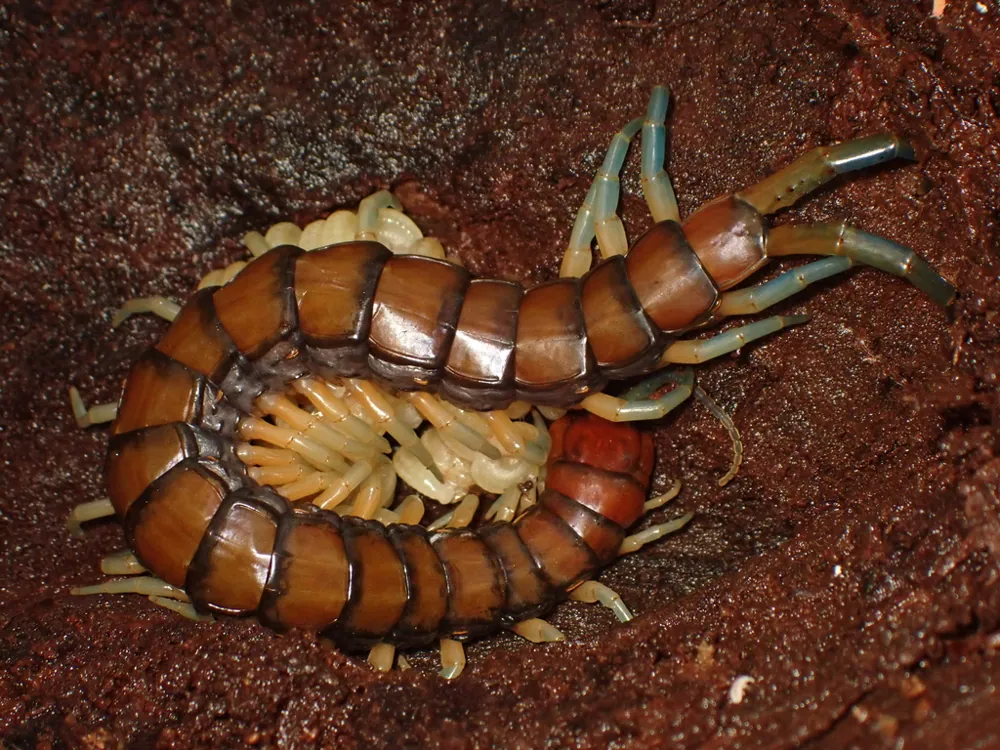
 Sɛdeɛ wobɛhunu no
- The head and first body plate are reddish-brown, and the other body plates are olive-brown.1
- It has large black forcipules, which are fang-like claws near the head.1
- Its legs are yellowish at the base and turn green towards the tip.1
- The last pair of legs has light blue tips.1
- In New Zealand it can exceed 20 cm long, but in Australia it usually reaches only about 3.9 cm.1
Bɔre ahoɔden
Bɔre fi ne se mu ba bere a ɔka.
Ne bɔre yɛ dɛn?
The bite can cause swelling. In one recorded case it caused severe pain and vomiting.1
Ne asiane ma nnipa te sɛn?
Asiane ma nnipa: Ɛyɛ yawƐtumi yɛ yaw paa, nanso ɛkame ayɛ sɛ ɛnyɛ asiane kɛseɛ da.When threatened, it can inflict a painful bite.1
Ɛyɛ dɛn bere a ehu aka no?
When threatened, it uses its forcipules to bite.1
 Sɛ ɛka a
- Hohoro baabi a ɛkaa no, dwo anaa fa hyɛ nsuo a ɛyɛ hyew kakra mu ma yaw no, na hwehwɛ dɔkota mmoa sɛ ɛyɛ den kɔ so a.
Di kan frɛ wo ahohiahia nɔma (112, 000, 911). Yei yɛ mmoa a ɛdi kan ho akwankyerɛ, ɛnyɛ dɔkota afotuo. Mmoa a ɛdi kan ho nsɛm titiriw
 Hwɛ wo ho so
- Mfa wo nsa nka wiram aboa biara, nkyere no na mfa no nni agorɔ, sɛ ɔyɛ ketewa mpo, na sɛ ɛte sɛ ɔrededa anaa wawu mpo a.
- Ma no kwan. Sɛ wohyia baako a, ma wo bo nnwo, san w'akyi brɛoo na ma ɔnkɔ ne kwan.
- Sɛ baako ka wo a: ma wo bo nnwo, tena dinn, frɛ wo ahohiahia nɔma (112, 000, 911) anaa kɔ ayaresabea ntɛm. Kae sɛdeɛ na ɛte, mfonini bɛboa.
Ɛnhwehwɛ wo sɛ ɛbɛpira wo. Ɛde ne bɔre kyere aduane anaa ɛbɔ ne ho ban, na ɛpɛ sɛ ɛhinta sene biribiara. Nsɛm pii fa ahobammɔ ho
Wiase mu baabi bɛn?
Ne kɛseɛ te sɛn?
Ne tenten te sɛn?
 ne tenten te sɛ agodeɛ blɔk 6 a wɔde to ntoatoasoɔ mu
 ɛbɛtumi atu mita 100 wɔ anibu 180 mu (onipa a ɔwɔ ntɛm sen biara hia 9.6)
Hura centipede kɛseɛ te sɛn sɛ wode toto WO ho a?
Akontabuo kɛkɛ wɔ wo browser mu. Wɔnkora hwee, na wɔmfa hwee nkɔ baabiara.
Ne ntɛm te sɛn?


Nsɛm
In a study on the Three Kings Islands, researchers reportedly had to wrap their sleeping bags in tinfoil to warn them of the centipedes nearby.1
In New Zealand, introduced rats and European hedgehogs eat hura, so the centipedes are most common on islands without these pests.1
North Island brown kiwi are known to prey on hura.1
Its blood-like fluid, called haemolymph, has a high concentration of protein and is thought to be typical of more primitive arthropods.1
Baabi a nsɛm no fi
- Cormocephalus rubriceps (Wikipedia (CC BY-SA 4.0))
- Cormocephalus rubriceps (iNaturalist): din ne nkyekyɛmu.
- Venom Wiki: asiane gyinabea, kɛseɛ a ɛtaa yɛ ne ntɛm susuo no yɛ yɛn ankasa deɛ. Hwɛ sɛdeɛ yɛbu no: Sɛdeɛ yɛkyerɛ asiane gyinabea.
Nsɛm biara a ɛwɔ kratafa yi so wɔ nɔma a ɛkyerɛ ne fibea. Sɛ yɛfom biribi a, kafra, yɛyɛ mmoa ho akɔnnɔfoɔ, ɛnyɛ nyansahu nwoma. Ka kyerɛ yɛn wɔ [email protected] na yɛbɛsiesie.
 Ɔkɔm de akekantwerɛ no! Onipa baako na ɔyɛ Venom Wiki: ɛyɛ kwa, dawurubɔ nni so na biribiara nni so a ɛdi w'akyi. Akyɛdeɛ ketewa bi boa ma ɛkɔ so tena internet so.Ma akekantwere no aduane
 Giant Australian centipede
 Orange-footed centipede
 Tanzanian blue ringleg centipede
 Peruvian giant centipede
 Chinese red-headed centipede
 Giant desert centipede
 Coastal taipan
 Common death adder
 Eastern brown snake
 Taipan a ɔwɔ Australia mfinimfini
 Sydney funnel-web spider
 Ɔwɔ a ɔte sɛ ɔsebɔ (Tiger snake)