
 Abibirem
 Asia
Asia Yuropu
 Amerika Anaafoɔ
 Australia ne Oceania
 Antarctica
 Pacific Po
 Atlantic Po
 India Po
 Arctic Po
 Mediterranean Po
 Po Kɔkɔɔ
 Caribbean Po
 Coral Po
 China Anaafoɔ Po
 Philippine Po
 Andaman Po
 Atifi Po
 Timor ne Arafura Po
 Bengal Ɛpo Ano
 California Ɛpo Ano
Montpellier snake
 Ka
KaThe Montpellier snake is a rear-fanged snake found in southern Europe and North Africa. It is mildly venomous, and it is active during the day, mainly hunting lizards. It is one of the most common snakes across its range, even in areas where people live.1

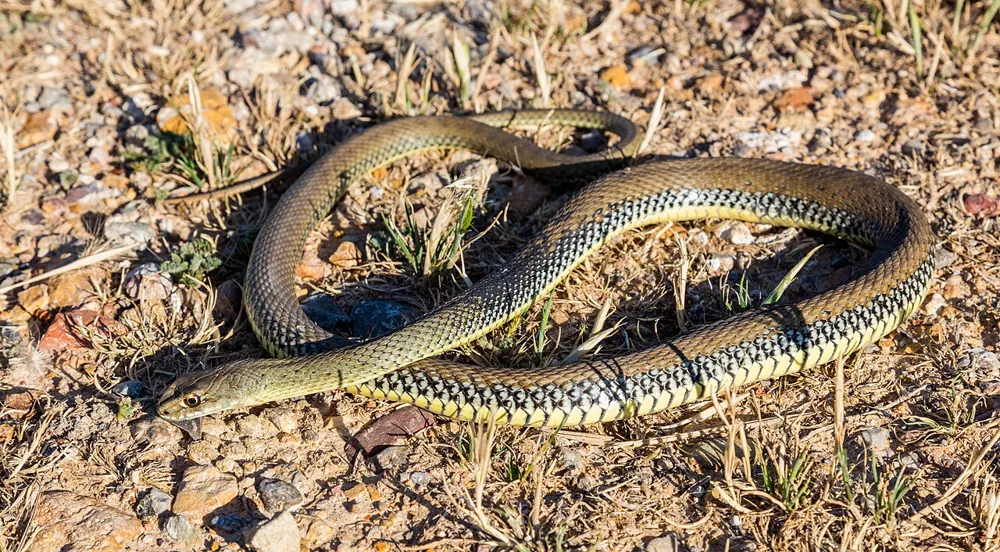
 Sɛdeɛ wobɛhunu no
Bɔre ahoɔden
Bɔre fi ne se mu ba bere a ɔka.
Ne bɔre yɛ dɛn?
It is mildly venomous. Its rear fangs, which sit towards the back of the mouth, make it less likely to inject venom, and the venom is of low toxicity. Venom can still be injected by bites from large individuals.1
Ne asiane ma nnipa te sɛn?
Asiane ma nnipa: Ɛyɛ yawƐtumi yɛ yaw paa, nanso ɛkame ayɛ sɛ ɛnyɛ asiane kɛseɛ da.The Montpellier snake is not dangerous to humans. Only a few cases of envenomation of people are known, and one of these happened when a finger was put into the snake's mouth. The venom is not very dangerous.1
 Sɛ ɛka a
- Symptomatic treatment, which means treating the symptoms as they appear, is enough to deal with an envenomation.1
- Hohoro baabi a ɛkaa no, ma onipa no bo nnwo na hwehwɛ dɔkota mmoa. Awɔ bi (te sɛ boomslang) betumi akum nnɔnhwerew pii akyi.
Di kan frɛ wo ahohiahia nɔma (112, 000, 911). Yei yɛ mmoa a ɛdi kan ho akwankyerɛ, ɛnyɛ dɔkota afotuo. Mmoa a ɛdi kan ho nsɛm titiriw
 Hwɛ wo ho so
- Mfa wo nsa nka wiram aboa biara, nkyere no na mfa no nni agorɔ, sɛ ɔyɛ ketewa mpo, na sɛ ɛte sɛ ɔrededa anaa wawu mpo a.
- Ma no kwan. Sɛ wohyia baako a, ma wo bo nnwo, san w'akyi brɛoo na ma ɔnkɔ ne kwan.
- Sɛ baako ka wo a: ma wo bo nnwo, tena dinn, frɛ wo ahohiahia nɔma (112, 000, 911) anaa kɔ ayaresabea ntɛm. Kae sɛdeɛ na ɛte, mfonini bɛboa.
Ɛnhwehwɛ wo sɛ ɛbɛpira wo. Ɛde ne bɔre kyere aduane anaa ɛbɔ ne ho ban, na ɛpɛ sɛ ɛhinta sene biribiara. Nsɛm pii fa ahobammɔ ho
Wiase mu baabi bɛn?
Ne kɛseɛ te sɛn?
Ne tenten te sɛn?
Ne mu duru te sɛn?
 ne tenten te sɛ nkraman 2,5 a wɔde hwene ne dua to ntoatoasoɔ mu
 ne tenten te sɛ kwadu 14 a wɔde to ntoatoasoɔ mu
 ne mu duru bɛyɛ sɛ fie agyinamoa
 ɛbɛtumi atu mita 100 wɔ anibu 59 mu (onipa a ɔwɔ ntɛm sen biara hia 9.6)
Montpellier snake kɛseɛ te sɛn sɛ wode toto WO ho a?
Akontabuo kɛkɛ wɔ wo browser mu. Wɔnkora hwee, na wɔmfa hwee nkɔ baabiara.
Ne ntɛm te sɛn?


,_Nig%C3%BCella,_Zaragoza,_Espa%C3%B1a,_2017-05-24,_DD_07.jpg)
Nsɛm
Genetic evidence suggests it originated in the Maghreb and migrated into southwestern Europe between 83,000 and 168,000 years ago.1
It is often killed by cars and farmers, and it is sometimes used by snake charmers and sold as a curio.1
Its common, relatively mild persecution by people has helped it become one of the most common snakes across its range.1
Atosɛm sɛefoɔ
Atosɛm: That the Montpellier snake is a dangerous snake for humans.
Nokorɛ: It is not dangerous to humans. Its rear fangs and low-toxicity venom mean serious harm is very unlikely.1
Baabi a nsɛm no fi
- Malpolon monspessulanus (Wikipedia (CC BY-SA 4.0))
- Malpolon monspessulanus (iNaturalist): din ne nkyekyɛmu.
- Venom Wiki: asiane gyinabea, kɛseɛ a ɛtaa yɛ ne ntɛm susuo no yɛ yɛn ankasa deɛ. Hwɛ sɛdeɛ yɛbu no: Sɛdeɛ yɛkyerɛ asiane gyinabea.
Nsɛm biara a ɛwɔ kratafa yi so wɔ nɔma a ɛkyerɛ ne fibea. Sɛ yɛfom biribi a, kafra, yɛyɛ mmoa ho akɔnnɔfoɔ, ɛnyɛ nyansahu nwoma. Ka kyerɛ yɛn wɔ [email protected] na yɛbɛsiesie.
 Ɔkɔm de akekantwerɛ no! Onipa baako na ɔyɛ Venom Wiki: ɛyɛ kwa, dawurubɔ nni so na biribiara nni so a ɛdi w'akyi. Akyɛdeɛ ketewa bi boa ma ɛkɔ so tena internet so.Ma akekantwere no aduane
Pii fi kuo korɔ no mu: Awɔ a wɔn bɔre se wɔ akyi
 BoomslangAwɔ a wɔn bɔre se wɔ akyiƐtumi kum
 Cape twig snakeAwɔ a wɔn bɔre se wɔ akyiƐtumi kum
 Forest twig snakeAwɔ a wɔn bɔre se wɔ akyiƐtumi kum
 Bibron's stiletto snakeAwɔ a wɔn bɔre se wɔ akyiƐhia dɔkota
 Madagascar leaf-nosed snakeAwɔ a wɔn bɔre se wɔ akyiƐyɛ yaw kɛkɛ
 Eastern twig snakeAwɔ a wɔn bɔre se wɔ akyiƐtumi kum
Ɔte nso wɔ: Yuropu
 Common European adderViper ne adderƐhia dɔkota
 Spanish flyMmoa afoforɔ a wɔn ho yɛ awuduroƐhia dɔkotaMfa wo nsa nka
 Common waspWowa, kotokurodu ne kotokurodu akɛseɛƐyɛ yaw kɛkɛ
 European hornetWowa, kotokurodu ne kotokurodu akɛseɛƐyɛ yaw kɛkɛ
 Fire salamanderApɔtorɔwa a wɔn ho yɛ awuduro, apɔtorɔ ne newtƐyɛ yaw kɛkɛMfa wo nsa nka
 Western honey beeWowa, kotokurodu ne kotokurodu akɛseɛƐyɛ yaw kɛkɛ