
 Abibirem
 Asia
Asia Yuropu
 Amerika Anaafoɔ
 Australia ne Oceania
 Antarctica
 Pacific Po
 Atlantic Po
 India Po
 Arctic Po
 Mediterranean Po
 Po Kɔkɔɔ
 Caribbean Po
 Coral Po
 China Anaafoɔ Po
 Philippine Po
 Andaman Po
 Atifi Po
 Timor ne Arafura Po
 Bengal Ɛpo Ano
 California Ɛpo Ano
Boomslang
 Ka
KaThe boomslang is a highly venomous tree snake from Sub-Saharan Africa. It spends most of its time in trees and bushes, though it also hunts and shelters on the ground. Its venom works slowly, so a bite can look harmless at first and still be life-threatening.1



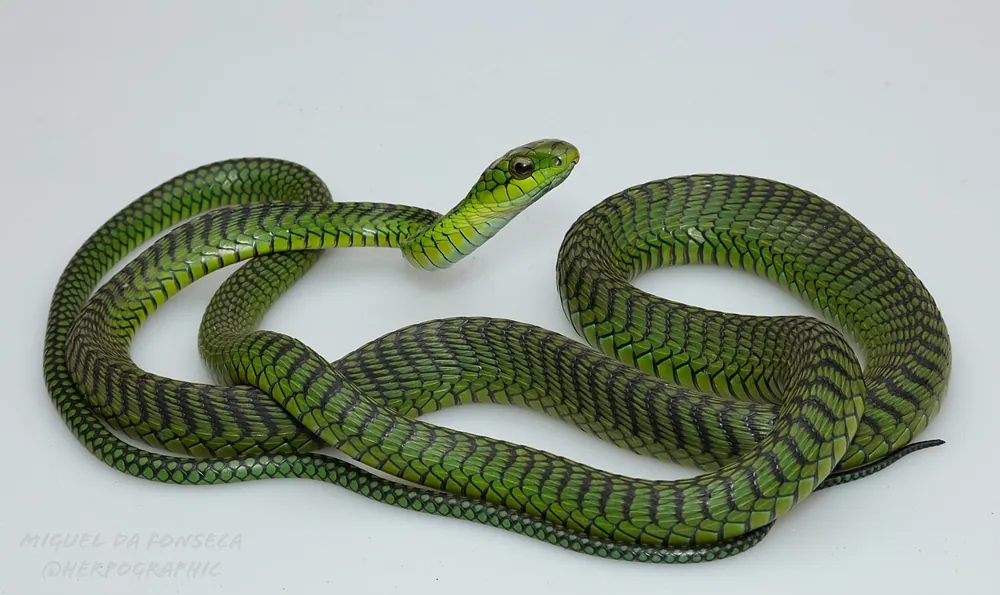
 Sɛdeɛ wobɛhunu no
Bɔre ahoɔden
Bɔre fi ne se mu ba bere a ɔka.
Ne bɔre yɛ dɛn?
Its venom is mainly a haemotoxin, a type of venom that disrupts blood clotting. Many tiny clots form in the blood, causing bleeding in tissues such as muscle and the brain, while the small blood vessels become clogged. Symptoms include headache, nausea, sleepiness and confusion, and can lead to cardiac arrest and unconsciousness. Because the venom is slow-acting, symptoms may not appear until many hours after a bite.1
Ne asiane ma nnipa te sɛn?
Asiane ma nnipa: Asiane kɛseɛ womƐtumi kum onipa a wɔnhwɛ no yareɛ.Bites can be fatal. Of eight serious envenomations reported between 1919 and 1962, two were lethal. In 1957, a herpetologist died after being bitten by a juvenile. Hatchlings about 45 cm long are already dangerously venomous. Delayed symptoms can lead victims to wrongly believe a bite was a harmless dry bite.1
 Asɛmpa: dɔkotafoɔ wɔ aduro (antivenom) anaa ayaresa ma yei.1
Ɛyɛ dɛn bere a ehu aka no?
It is timid and usually bites only when people try to handle, catch, chase or kill it. When cornered, it inflates its neck and takes an S-shaped striking pose.1
 Sɛ ɛka a
- Antivenom is available and treatment is needed after a bite. Complete blood transfusions may also be required, especially if more than 24 to 48 hours pass without antivenom. Do not assume a bite is harmless just because no symptoms have appeared.1
- Hohoro baabi a ɛkaa no, ma onipa no bo nnwo na hwehwɛ dɔkota mmoa. Awɔ bi (te sɛ boomslang) betumi akum nnɔnhwerew pii akyi.
Di kan frɛ wo ahohiahia nɔma (112, 000, 911). Yei yɛ mmoa a ɛdi kan ho akwankyerɛ, ɛnyɛ dɔkota afotuo. Mmoa a ɛdi kan ho nsɛm titiriw
 Hwɛ wo ho so
- Mfa wo nsa nka wiram aboa biara, nkyere no na mfa no nni agorɔ, sɛ ɔyɛ ketewa mpo, na sɛ ɛte sɛ ɔrededa anaa wawu mpo a.
- Ma no kwan. Sɛ wohyia baako a, ma wo bo nnwo, san w'akyi brɛoo na ma ɔnkɔ ne kwan.
- Sɛ baako ka wo a: ma wo bo nnwo, tena dinn, frɛ wo ahohiahia nɔma (112, 000, 911) anaa kɔ ayaresabea ntɛm. Kae sɛdeɛ na ɛte, mfonini bɛboa.
Ɛnhwehwɛ wo sɛ ɛbɛpira wo. Ɛde ne bɔre kyere aduane anaa ɛbɔ ne ho ban, na ɛpɛ sɛ ɛhinta sene biribiara. Nsɛm pii fa ahobammɔ ho
Wiase mu baabi bɛn?
Ne kɛseɛ te sɛn?
Ne tenten te sɛn?
Ne mu duru te sɛn?
 ne tenten te sɛ fie agyinamoa 4 a wɔde hwene ne dua to ntoatoasoɔ mu
 ne tenten te sɛ kwadu 10 a wɔde to ntoatoasoɔ mu
 ɛbɛtumi atu mita 100 wɔ anibu 60 mu (onipa a ɔwɔ ntɛm sen biara hia 9.6)
Boomslang kɛseɛ te sɛn sɛ wode toto WO ho a?
Akontabuo kɛkɛ wɔ wo browser mu. Wɔnkora hwee, na wɔmfa hwee nkɔ baabiara.
Ne ntɛm te sɛn?


Nsɛm
An adult has only 1.6 to 8 mg of venom, but it is thought that 2 to 3 mg could be enough to kill a healthy adult human.1
It can open its jaws up to 170 degrees when biting.1
Its head is distinctly egg-shaped, and its eyes are exceptionally large.1
It often moves its head from side to side to get a better view of objects directly in front of it.1
When it is pursued by something too large to eat, it escapes by moving from branch to branch.1
Atosɛm sɛefoɔ
Atosɛm: Rear-fanged snakes cannot produce a lethal bite.
Nokorɛ: For a long time many herpetologists believed this, but boomslang bites have caused deaths.1
Ma bɔre ho animdefoɔ
- Nyansahu din
- Dispholidus typus
- Kuo
- Awɔ a wɔn bɔre se wɔ akyi
- Abusua
- Colubridae2
- Nhyehyɛeɛ (Order)
- Squamata
- Asaase akɛseɛ
- Abibirem
- Mmofra nketewa
- It lays eggs, on average 8 to 14 (up to 27 have been observed), in a hollow tree trunk or rotting log. The eggs take about 3 months to hatch.1
- Asiane ma nnipa
- 4 / 5: Asiane kɛseɛ wom3
Baabi a nsɛm no fi
- Boomslang (Wikipedia (CC BY-SA 4.0))
- Dispholidus typus (iNaturalist): din ne nkyekyɛmu.
- Venom Wiki: asiane gyinabea, kɛseɛ a ɛtaa yɛ ne ntɛm susuo no yɛ yɛn ankasa deɛ. Hwɛ sɛdeɛ yɛbu no: Sɛdeɛ yɛkyerɛ asiane gyinabea.
Nsɛm biara a ɛwɔ kratafa yi so wɔ nɔma a ɛkyerɛ ne fibea. Sɛ yɛfom biribi a, kafra, yɛyɛ mmoa ho akɔnnɔfoɔ, ɛnyɛ nyansahu nwoma. Ka kyerɛ yɛn wɔ [email protected] na yɛbɛsiesie.
 Ɔkɔm de akekantwerɛ no! Onipa baako na ɔyɛ Venom Wiki: ɛyɛ kwa, dawurubɔ nni so na biribiara nni so a ɛdi w'akyi. Akyɛdeɛ ketewa bi boa ma ɛkɔ so tena internet so.Ma akekantwere no aduane
Pii fi kuo korɔ no mu: Awɔ a wɔn bɔre se wɔ akyi
 Cape twig snakeAwɔ a wɔn bɔre se wɔ akyiƐtumi kum
 Forest twig snakeAwɔ a wɔn bɔre se wɔ akyiƐtumi kum
 Bibron's stiletto snakeAwɔ a wɔn bɔre se wɔ akyiƐhia dɔkota
 Madagascar leaf-nosed snakeAwɔ a wɔn bɔre se wɔ akyiƐyɛ yaw kɛkɛ
 Montpellier snakeAwɔ a wɔn bɔre se wɔ akyiƐyɛ yaw kɛkɛ
 Eastern twig snakeAwɔ a wɔn bɔre se wɔ akyiƐtumi kum
 Black mamba
 Deathstalker
 Egyptian cobra
 Puff adder
 Fat-tailed scorpion
 Gaboon viper