
 Abibirem
 Asia
Asia Yuropu
 Amerika Anaafoɔ
 Australia ne Oceania
 Antarctica
 Pacific Po
 Atlantic Po
 India Po
 Arctic Po
 Mediterranean Po
 Po Kɔkɔɔ
 Caribbean Po
 Coral Po
 China Anaafoɔ Po
 Philippine Po
 Andaman Po
 Atifi Po
 Timor ne Arafura Po
 Bengal Ɛpo Ano
 California Ɛpo Ano
Red bull ant
 Ɛwɔ
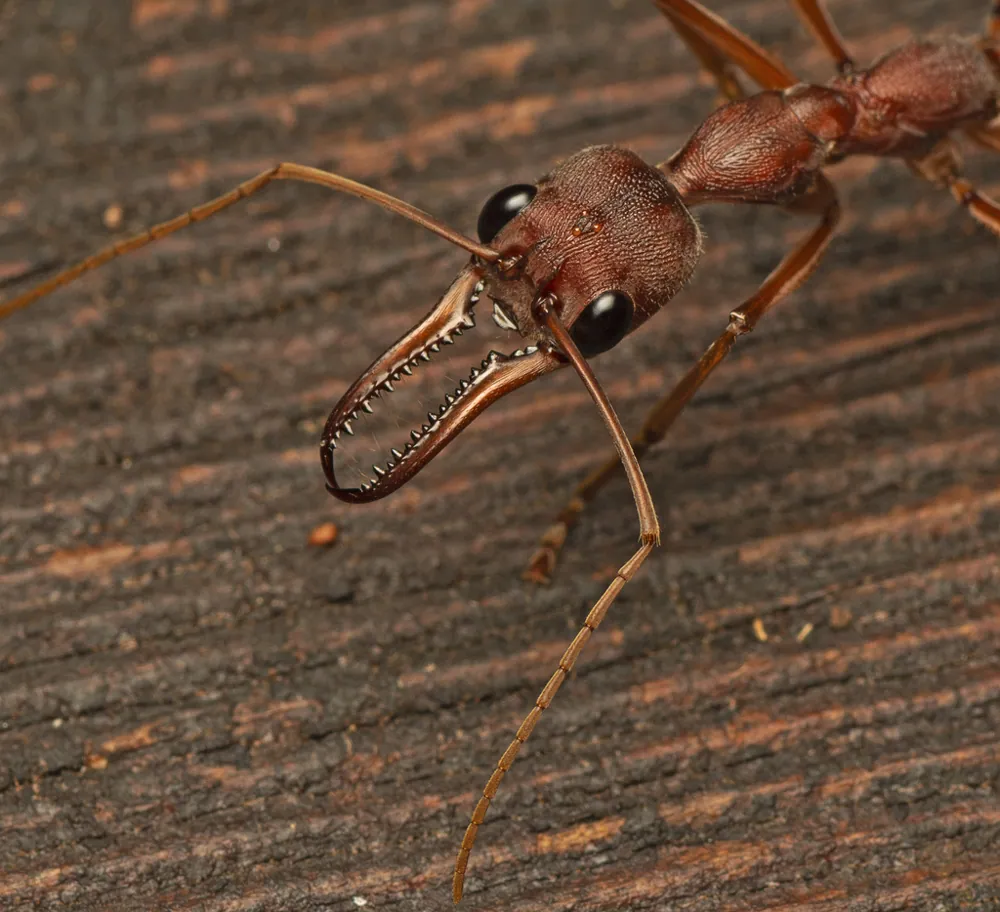
ƐwɔThe red bull ant is a large ant that lives in eastern Australia. Adults can give a painful sting, and they are fierce hunters that can overpower bees and other ants. Their large size and aggressive behaviour make them one of Australia's best-known ants.1


 Sɛdeɛ wobɛhunu no
- Adults have a red-brown head and thorax (the middle part of the body).1
- The rear half of the abdomen (the back of the body) is black.1
- The mandibles (jaws) are brown-yellow and long, powerful and serrated (saw-edged).1
- Adults measure about 15 to 30 mm in body length, making them one of the larger ant species.1
Bɔre ahoɔden
Bɔre fi ne dua ano nsɔe (stinger) mu ba.
Ne bɔre yɛ dɛn?
They have a venom-laced sting, which can cause severe pain for a couple of days.1
Ne asiane ma nnipa te sɛn?
Asiane ma nnipa: Ɛyɛ yawƐtumi yɛ yaw paa, nanso ɛkame ayɛ sɛ ɛnyɛ asiane kɛseɛ da.The sting causes severe pain that can last a couple of days. Red bull ants are described as notoriously aggressive hunters.1
 Sɛ ɛwɔ a
- Hohoro baabi a ɛwɔɔ no na dwo.
- Sɛ onipa no ntumi nhome yie, n'anim anaa ne mene mu hono, anaa ɛyɛ no sɛ ɔrebɛtɔ piti a, ɛyɛ allergy ahohiahia: frɛ wo ahohiahia nɔma.
Di kan frɛ wo ahohiahia nɔma (112, 000, 911). Yei yɛ mmoa a ɛdi kan ho akwankyerɛ, ɛnyɛ dɔkota afotuo. Mmoa a ɛdi kan ho nsɛm titiriw
 Hwɛ wo ho so
- Mfa wo nsa nka wiram aboa biara, nkyere no na mfa no nni agorɔ, sɛ ɔyɛ ketewa mpo, na sɛ ɛte sɛ ɔrededa anaa wawu mpo a.
- Ma no kwan. Sɛ wohyia baako a, ma wo bo nnwo, san w'akyi brɛoo na ma ɔnkɔ ne kwan.
- Sɛ baako wɔ wo a: ma wo bo nnwo, tena dinn, frɛ wo ahohiahia nɔma (112, 000, 911) anaa kɔ ayaresabea ntɛm. Kae sɛdeɛ na ɛte, mfonini bɛboa.
Ɛnhwehwɛ wo sɛ ɛbɛpira wo. Ɛde ne bɔre kyere aduane anaa ɛbɔ ne ho ban, na ɛpɛ sɛ ɛhinta sene biribiara. Nsɛm pii fa ahobammɔ ho
Wiase mu baabi bɛn?
Ne kɛseɛ te sɛn?
Ne tenten te sɛn?
 ne tenten bɛyɛ sɛ paper clip
Red bull ant kɛseɛ te sɛn sɛ wode toto WO ho a?
Akontabuo kɛkɛ wɔ wo browser mu. Wɔnkora hwee, na wɔmfa hwee nkɔ baabiara.
Ne ntɛm te sɛn?


Nsɛm
They cannot smell or use chemical senses like most ants, but their eyesight is extremely keen. They can spot and respond to intruders up to two metres away.1
Workers' infertile eggs are fed to the queen and larvae as part of their diet.1
The first specimen was collected in 1770 by Joseph Banks, making it one of the first Australian insects collected and described by a European.1
Their nests are built with tunnel systems that may become quite large.1
Baabi a nsɛm no fi
- Myrmecia gulosa (Wikipedia (CC BY-SA 4.0))
- Myrmecia gulosa (iNaturalist): din ne nkyekyɛmu.
- Venom Wiki: asiane gyinabea, kɛseɛ a ɛtaa yɛ ne ntɛm susuo no yɛ yɛn ankasa deɛ. Hwɛ sɛdeɛ yɛbu no: Sɛdeɛ yɛkyerɛ asiane gyinabea.
Nsɛm biara a ɛwɔ kratafa yi so wɔ nɔma a ɛkyerɛ ne fibea. Sɛ yɛfom biribi a, kafra, yɛyɛ mmoa ho akɔnnɔfoɔ, ɛnyɛ nyansahu nwoma. Ka kyerɛ yɛn wɔ [email protected] na yɛbɛsiesie.
 Ɔkɔm de akekantwerɛ no! Onipa baako na ɔyɛ Venom Wiki: ɛyɛ kwa, dawurubɔ nni so na biribiara nni so a ɛdi w'akyi. Akyɛdeɛ ketewa bi boa ma ɛkɔ so tena internet so.Ma akekantwere no aduane
 Bulldog ant
 Jack jumper ant
 Green weaver ant
 Black-banded jumper ant
 Giant bull ant
 Green-head ant
 Coastal taipan
 Common death adder
 Eastern brown snake
 Taipan a ɔwɔ Australia mfinimfini
 Sydney funnel-web spider
 Ɔwɔ a ɔte sɛ ɔsebɔ (Tiger snake)