
 Abibirem
 Asia
Asia Yuropu
 Amerika Anaafoɔ
 Australia ne Oceania
 Antarctica
 Pacific Po
 Atlantic Po
 India Po
 Arctic Po
 Mediterranean Po
 Po Kɔkɔɔ
 Caribbean Po
 Coral Po
 China Anaafoɔ Po
 Philippine Po
 Andaman Po
 Atifi Po
 Timor ne Arafura Po
 Bengal Ɛpo Ano
 California Ɛpo Ano
Red-necked keelback
 Ka
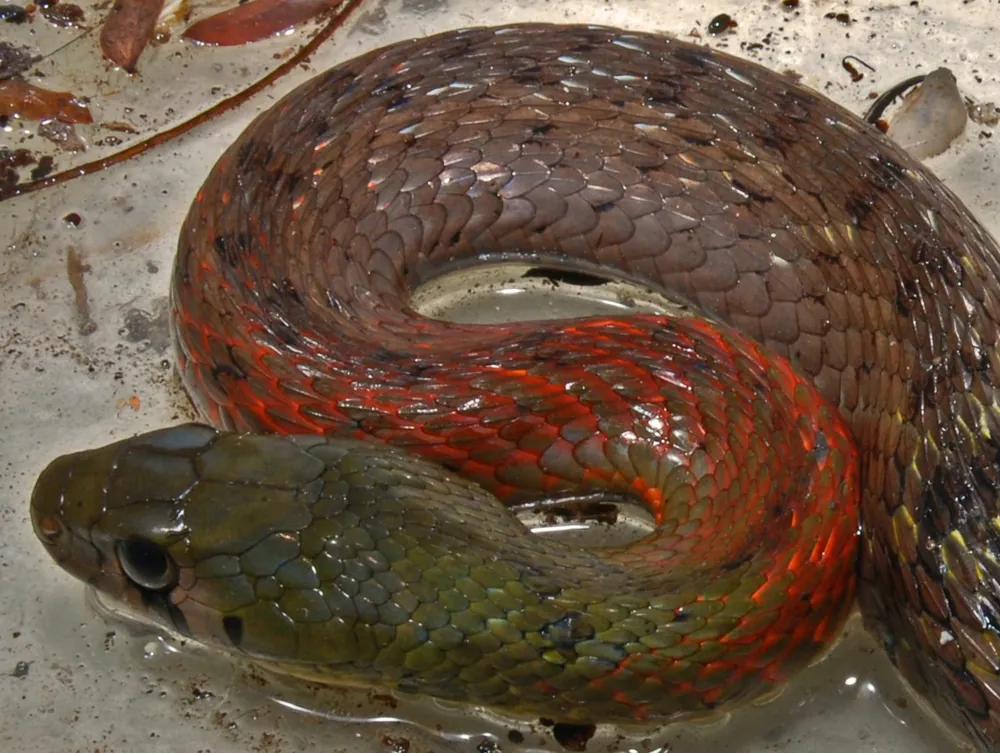
KaThe red-necked keelback is a snake from the Indonesian islands of Java and Sumatra. It is unusual because it is venomous, which is rare for snakes in its family, and it was only recently reclassified as dangerous to people.1



 Sɛdeɛ wobɛhunu no
Bɔre ahoɔden
Bɔre fi ne se mu ba bere a ɔka.
Ne bɔre yɛ dɛn?
This snake is rear-fanged, so its venom is delivered through grooved teeth at the back of the upper jaw rather than through hollow front fangs. Its venom can cause internal bleeding, including bleeding in the brain, nausea, and blood clotting problems such as disseminated intravascular coagulation. In animal tests, the venom caused kidney failure.1
Ne asiane ma nnipa te sɛn?
Asiane ma nnipa: Ɛyɛ denSɛ ɛka wo a, kɔ dɔkota nkyɛn. Ɛntaa nkum obi koraa.After one fatal and several near-fatal envenomations, the snake was reclassified as dangerous. Most bites to people involve the front teeth and cause no harmful effects, but rare bites from the rear fangs can be lethal. Recent reports describe severe envenomation and organ failure, affecting the kidneys and liver, after even brief bites.1
Ɛyɛ dɛn bere a ehu aka no?
When threatened, for example by being touched, it can burst its nuchal glands in the red neck, releasing stored toad toxins (bufotoxins) that cause fast heartbeat, drooling, convulsions and paralysis.1
 Sɛ ɛka a
- Care is needed when treating a bitten person. Injections should be avoided, as they may cause excessive bleeding.1
- Hohoro baabi a ɛkaa no, ma onipa no bo nnwo na hwehwɛ dɔkota mmoa. Awɔ bi (te sɛ boomslang) betumi akum nnɔnhwerew pii akyi.
Di kan frɛ wo ahohiahia nɔma (112, 000, 911). Yei yɛ mmoa a ɛdi kan ho akwankyerɛ, ɛnyɛ dɔkota afotuo. Mmoa a ɛdi kan ho nsɛm titiriw
 Hwɛ wo ho so
- Mfa wo nsa nka wiram aboa biara, nkyere no na mfa no nni agorɔ, sɛ ɔyɛ ketewa mpo, na sɛ ɛte sɛ ɔrededa anaa wawu mpo a.
- Ma no kwan. Sɛ wohyia baako a, ma wo bo nnwo, san w'akyi brɛoo na ma ɔnkɔ ne kwan.
- Sɛ baako ka wo a: ma wo bo nnwo, tena dinn, frɛ wo ahohiahia nɔma (112, 000, 911) anaa kɔ ayaresabea ntɛm. Kae sɛdeɛ na ɛte, mfonini bɛboa.
Ɛnhwehwɛ wo sɛ ɛbɛpira wo. Ɛde ne bɔre kyere aduane anaa ɛbɔ ne ho ban, na ɛpɛ sɛ ɛhinta sene biribiara. Nsɛm pii fa ahobammɔ ho
Wiase mu baabi bɛn?
Ne kɛseɛ te sɛn?
Ne tenten te sɛn?
 ne tenten te sɛ fie agyinamoa 2 a wɔde hwene ne dua to ntoatoasoɔ mu
 ne tenten te sɛ kwadu 5 a wɔde to ntoatoasoɔ mu
 ɛbɛtumi atu mita 100 wɔ anibu 71 mu (onipa a ɔwɔ ntɛm sen biara hia 9.6)
Red-necked keelback kɛseɛ te sɛn sɛ wode toto WO ho a?
Akontabuo kɛkɛ wɔ wo browser mu. Wɔnkora hwee, na wɔmfa hwee nkɔ baabiara.
Ne ntɛm te sɛn?


Nsɛm
It stores toxins from the toads it eats in glands in its neck, which it can release when threatened.1
Unusually for a member of the colubrid family, which is a large snake family, this species is venomous.1
Its venom ducts open onto grooved fangs at the back of the mouth, and chewing helps the venom enter a bite.1
During mating, several males may swarm around a single female.1
Atosɛm sɛefoɔ
Atosɛm: The red-necked keelback is harmless because it was once thought to be.
Nokorɛ: It is venomous. It was previously thought harmless, but after serious bites it was reclassified as dangerous.1
Baabi a nsɛm no fi
- Rhabdophis subminiatus (Wikipedia (CC BY-SA 4.0))
- Rhabdophis subminiatus (iNaturalist): din ne nkyekyɛmu.
- Venom Wiki: asiane gyinabea, kɛseɛ a ɛtaa yɛ ne ntɛm susuo no yɛ yɛn ankasa deɛ. Hwɛ sɛdeɛ yɛbu no: Sɛdeɛ yɛkyerɛ asiane gyinabea.
Nsɛm biara a ɛwɔ kratafa yi so wɔ nɔma a ɛkyerɛ ne fibea. Sɛ yɛfom biribi a, kafra, yɛyɛ mmoa ho akɔnnɔfoɔ, ɛnyɛ nyansahu nwoma. Ka kyerɛ yɛn wɔ [email protected] na yɛbɛsiesie.
 Ɔkɔm de akekantwerɛ no! Onipa baako na ɔyɛ Venom Wiki: ɛyɛ kwa, dawurubɔ nni so na biribiara nni so a ɛdi w'akyi. Akyɛdeɛ ketewa bi boa ma ɛkɔ so tena internet so.Ma akekantwere no aduane
Pii fi kuo korɔ no mu: Awɔ a wɔn bɔre se wɔ akyi
 Brown tree snakeAwɔ a wɔn bɔre se wɔ akyiƐyɛ yaw kɛkɛ
 Tiger keelbackAwɔ a wɔn bɔre se wɔ akyiƐtumi kum
 Green cat snakeAwɔ a wɔn bɔre se wɔ akyiƐyɛ yaw kɛkɛ
 Mangrove snakeAwɔ a wɔn bɔre se wɔ akyiƐyɛ yaw kɛkɛ
 Asian vine snakeAwɔ a wɔn bɔre se wɔ akyiƐnni asiane
 Golden tree snakeAwɔ a wɔn bɔre se wɔ akyiƐnni asiane
 Deathstalker
 Indian cobra
 Indian saw-scaled viper
 King cobra
 Puff adder
 Russell ɔnanka