
 Abibirem
 Asia
Asia Yuropu
 Amerika Anaafoɔ
 Australia ne Oceania
 Antarctica
 Pacific Po
 Atlantic Po
 India Po
 Arctic Po
 Mediterranean Po
 Po Kɔkɔɔ
 Caribbean Po
 Coral Po
 China Anaafoɔ Po
 Philippine Po
 Andaman Po
 Atifi Po
 Timor ne Arafura Po
 Bengal Ɛpo Ano
 California Ɛpo Ano
Sri Lankan ornamental tarantula
 Ka
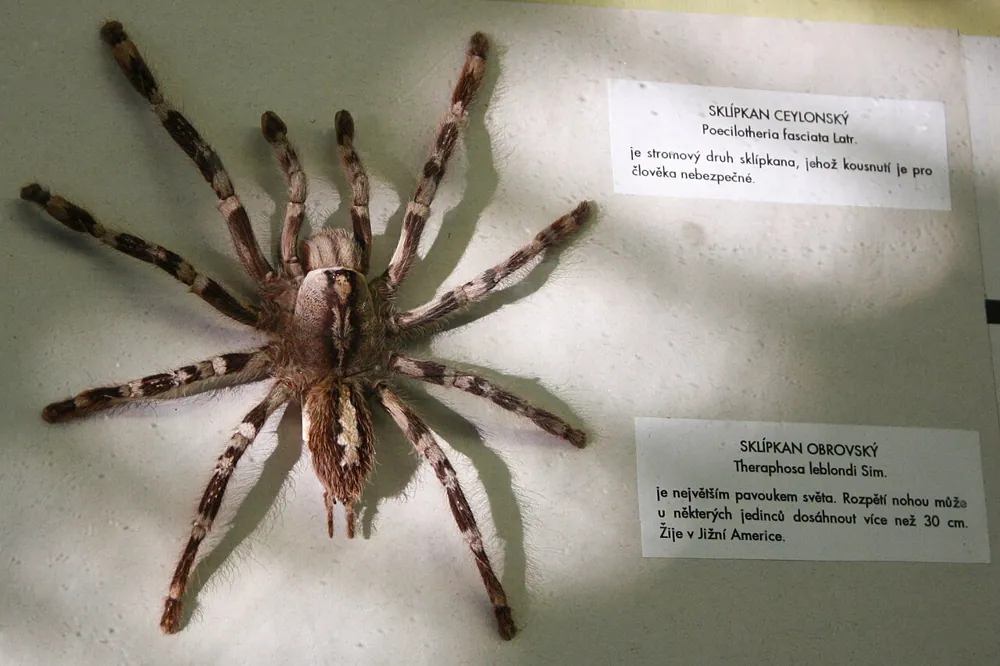
KaThe Sri Lankan ornamental tarantula is a large spider that lives in trees. It is found only in central Sri Lanka, in dry and intermediate zones of the island. It is special because it is rare: its small range has shrunk, and it is now listed as endangered.1
 Sɛdeɛ wobɛhunu no
- Females are black, white and grey, with cryptic markings on the legs and body.1
- Females have a narrow dark band on the thigh (femur) of the first pair of legs, and a thin broken band on the thigh of the fourth pair.1
- Males are a uniform brown with less intense markings.1
- Males have a dark black line down the abdomen, divided by diamond-shaped chevrons.1
Wɔtaa fa no sɛ: It is often grouped with other tiger spiders. It can be told apart by the very narrow dark band on the thigh of the first pair of legs, and by the thin broken band on the thigh of the fourth pair.1
Bɔre ahoɔden
Bɔre fi ne se mu ba bere a ɔka.
Ne asiane ma nnipa te sɛn?
Asiane ma nnipa: Ɛyɛ denSɛ ɛka wo a, kɔ dɔkota nkyɛn. Ɛntaa nkum obi koraa.Ɛyɛ dɛn bere a ehu aka no?
When disturbed, it becomes very defensive and quick to move.1
 Sɛ ɛka a
- Hohoro baabi a ɛkaa no na dwo. Hwehwɛ dɔkota mmoa sɛ yaw no mu yɛ den anaa onipa no ho ntɔ no a.
Di kan frɛ wo ahohiahia nɔma (112, 000, 911). Yei yɛ mmoa a ɛdi kan ho akwankyerɛ, ɛnyɛ dɔkota afotuo. Mmoa a ɛdi kan ho nsɛm titiriw
 Hwɛ wo ho so
- Mfa wo nsa nka wiram aboa biara, nkyere no na mfa no nni agorɔ, sɛ ɔyɛ ketewa mpo, na sɛ ɛte sɛ ɔrededa anaa wawu mpo a.
- Ma no kwan. Sɛ wohyia baako a, ma wo bo nnwo, san w'akyi brɛoo na ma ɔnkɔ ne kwan.
- Sɛ baako ka wo a: ma wo bo nnwo, tena dinn, frɛ wo ahohiahia nɔma (112, 000, 911) anaa kɔ ayaresabea ntɛm. Kae sɛdeɛ na ɛte, mfonini bɛboa.
Ɛnhwehwɛ wo sɛ ɛbɛpira wo. Ɛde ne bɔre kyere aduane anaa ɛbɔ ne ho ban, na ɛpɛ sɛ ɛhinta sene biribiara. Nsɛm pii fa ahobammɔ ho
Wiase mu baabi bɛn?
Ne kɛseɛ te sɛn?
Ne tenten te sɛn?
 ɛyɛ tiaa sen wo nsateaa ketewa
 ɛbɛtumi atu mita 100 wɔ anibu 180 mu (onipa a ɔwɔ ntɛm sen biara hia 9.6)
Sri Lankan ornamental tarantula kɛseɛ te sɛn sɛ wode toto WO ho a?
Akontabuo kɛkɛ wɔ wo browser mu. Wɔnkora hwee, na wɔmfa hwee nkɔ baabiara.
Ne ntɛm te sɛn?


Nsɛm
Males are nomadic, moving from place to place, while females stay in one home.1
In 2018 it was listed as an endangered species under the U.S. Endangered Species Act.1
Habitat loss is the main threat, and collection for the pet trade, pesticides and killing out of fear add to the pressure.1
Females are larger than males, and only males wander.1
Its natural range is small, with less than 500 square kilometres of area occupied.1
Baabi a nsɛm no fi
- Poecilotheria fasciata (Wikipedia (CC BY-SA 4.0))
- Poecilotheria fasciata (iNaturalist): din ne nkyekyɛmu.
- Venom Wiki: asiane gyinabea, kɛseɛ a ɛtaa yɛ ne ntɛm susuo no yɛ yɛn ankasa deɛ. Hwɛ sɛdeɛ yɛbu no: Sɛdeɛ yɛkyerɛ asiane gyinabea.
Nsɛm biara a ɛwɔ kratafa yi so wɔ nɔma a ɛkyerɛ ne fibea. Sɛ yɛfom biribi a, kafra, yɛyɛ mmoa ho akɔnnɔfoɔ, ɛnyɛ nyansahu nwoma. Ka kyerɛ yɛn wɔ [email protected] na yɛbɛsiesie.
 Ɔkɔm de akekantwerɛ no! Onipa baako na ɔyɛ Venom Wiki: ɛyɛ kwa, dawurubɔ nni so na biribiara nni so a ɛdi w'akyi. Akyɛdeɛ ketewa bi boa ma ɛkɔ so tena internet so.Ma akekantwere no aduane
Pii fi kuo korɔ no mu: Tarantula ne funnel-web
 Gooty sapphire tarantulaTarantula ne funnel-webƐhia dɔkota
 Indian ornamental tarantulaTarantula ne funnel-webƐhia dɔkota
 Cobalt blue tarantulaTarantula ne funnel-webƐyɛ yaw kɛkɛ
 Chinese bird spiderTarantula ne funnel-webƐhia dɔkota
 Chinese black earth tiger tarantulaTarantula ne funnel-webƐhia dɔkota
 Fringed ornamental tarantulaTarantula ne funnel-webƐhia dɔkota
 Deathstalker
 Indian cobra
 Indian saw-scaled viper
 King cobra
 Puff adder
 Russell ɔnanka