
 Abibirem
 Asia
Asia Yuropu
 Amerika Anaafoɔ
 Australia ne Oceania
 Antarctica
 Pacific Po
 Atlantic Po
 India Po
 Arctic Po
 Mediterranean Po
 Po Kɔkɔɔ
 Caribbean Po
 Coral Po
 China Anaafoɔ Po
 Philippine Po
 Andaman Po
 Atifi Po
 Timor ne Arafura Po
 Bengal Ɛpo Ano
 California Ɛpo Ano
Tadpole madtom
 Nsɔe a bɔre wom
The tadpole madtom is a small freshwater fish that lives in slow, weedy waters in Canada and the United States. It has two spines near its chest that carry a venom, which it uses to defend itself from predators. Its name comes partly from its rounded tail fin, which makes it look a little like a tadpole.1



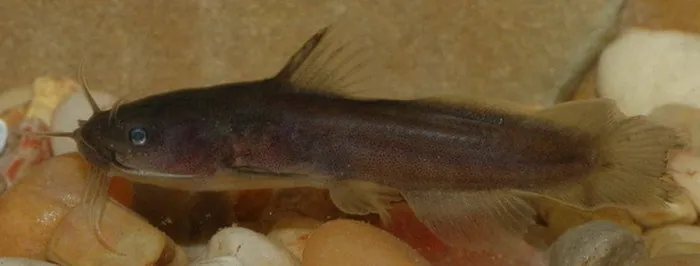
 Sɛdeɛ wobɛhunu no
- Dark brown back with lighter brown sides and a yellow or white belly1
- A dark horizontal streak along each side, from bands of dark pigment on the jaws1
- A large, round tail fin that is joined to the small fin on its back, giving it a tadpole-like shape1
- Two spines on the pectoral (chest) fins, which carry venom1
Bɔre ahoɔden
Nsɔe a ano yɛ nnam na ɛkura bɔre no. Sɛ wotiatia so anaa wosɔ mu a, ɛyɛ yaw.
Ne bɔre yɛ dɛn?
Two pectoral spines transmit an anti-predatory venom. The spines are used to deter predators that get stuck by them.1
Ne asiane ma nnipa te sɛn?
Asiane ma nnipa: Ɛyɛ yawƐtumi yɛ yaw paa, nanso ɛkame ayɛ sɛ ɛnyɛ asiane kɛseɛ da.Ɛyɛ dɛn bere a ehu aka no?
When startled, it darts about in all directions, and it uses its venomous spines against predators.1
 Sɛ ne nsɔe hyɛ wo mu a
- Fa kuro no hyɛ nsuo hyew mu, ɛnyɛ hyew sene deɛ onipa no betumi agyina a ɛnhye no (fa wo ankasa wo nsa sɔ hwɛ), simma 30 kɔsi 90. Hwehwɛ dɔkota mmoa, titiriw ma stonefish ne stingray.
Di kan frɛ wo ahohiahia nɔma (112, 000, 911). Yei yɛ mmoa a ɛdi kan ho akwankyerɛ, ɛnyɛ dɔkota afotuo. Mmoa a ɛdi kan ho nsɛm titiriw
 Hwɛ wo ho so
- Mfa wo nsa nka wiram aboa biara, nkyere no na mfa no nni agorɔ, sɛ ɔyɛ ketewa mpo, na sɛ ɛte sɛ ɔrededa anaa wawu mpo a.
- Ma no kwan. Sɛ wohyia baako a, ma wo bo nnwo, san w'akyi brɛoo na ma ɔnkɔ ne kwan.
- Sɛ ne nsɔe hyɛ wo mu a: ma wo bo nnwo, tena dinn, frɛ wo ahohiahia nɔma (112, 000, 911) anaa kɔ ayaresabea ntɛm. Kae sɛdeɛ na ɛte, mfonini bɛboa.
Ɛnhwehwɛ wo sɛ ɛbɛpira wo. Ɛde ne bɔre kyere aduane anaa ɛbɔ ne ho ban, na ɛpɛ sɛ ɛhinta sene biribiara. Nsɛm pii fa ahobammɔ ho
Wiase mu baabi bɛn?
Ne kɛseɛ te sɛn?
Ne tenten te sɛn?
 ne tenten te sɛ agodeɛ blɔk 4 a wɔde to ntoatoasoɔ mu
 ɛbɛtumi aguare aguare tare kɛseɛ tenten (50 m) wɔ anibu 47 mu
Tadpole madtom kɛseɛ te sɛn sɛ wode toto WO ho a?
Akontabuo kɛkɛ wɔ wo browser mu. Wɔnkora hwee, na wɔmfa hwee nkɔ baabiara.
Ne ntɛm te sɛn?
Nsɛm
It does not build a nest. It sometimes lays its eggs on submerged rubbish such as drink cans.1
Males sometimes use abandoned crayfish burrows as places to house eggs.1
Breeding males develop swollen lips and enlarged muscles on top of the head.1
Researchers in Wisconsin found that its stomach contents were about 44% insects and 28% small crustaceans.1
Atosɛm sɛefoɔ
Atosɛm: It is a tadpole.
Nokorɛ: It is a fish. Its rounded tail fin gives it the appearance of a tadpole, which is where part of its name comes from.1
Ma bɔre ho animdefoɔ
- Nyansahu din
- Noturus gyrinus
- Kuo
- Apataa a wɔwɔ bɔre
- Abusua
- Ictaluridae2
- Nhyehyɛeɛ (Order)
- Siluriformes
- Asaase akɛseɛ
- Amerika Atifi
- Mmofra nketewa
- The female lays several clutches of 75 to 200 eggs during the breeding season, usually in June or July. The eggs are attached to solid objects such as rocks, logs or vegetation, and the male guards them until they hatch.1
- Sɛdeɛ ɔte wɔ kwaem
- Secure in most areas. Critically endangered in Pennsylvania, and considered vulnerable in several other regions.1
- Asiane ma nnipa
- 2 / 5: Ɛyɛ yaw3
Baabi a nsɛm no fi
- Tadpole madtom (Wikipedia (CC BY-SA 4.0))
- Noturus gyrinus (iNaturalist): din ne nkyekyɛmu.
- Venom Wiki: asiane gyinabea, kɛseɛ a ɛtaa yɛ ne ntɛm susuo no yɛ yɛn ankasa deɛ. Hwɛ sɛdeɛ yɛbu no: Sɛdeɛ yɛkyerɛ asiane gyinabea.
Nsɛm biara a ɛwɔ kratafa yi so wɔ nɔma a ɛkyerɛ ne fibea. Sɛ yɛfom biribi a, kafra, yɛyɛ mmoa ho akɔnnɔfoɔ, ɛnyɛ nyansahu nwoma. Ka kyerɛ yɛn wɔ [email protected] na yɛbɛsiesie.
 Ɔkɔm de akekantwerɛ no! Onipa baako na ɔyɛ Venom Wiki: ɛyɛ kwa, dawurubɔ nni so na biribiara nni so a ɛdi w'akyi. Akyɛdeɛ ketewa bi boa ma ɛkɔ so tena internet so.Ma akekantwere no aduane
Pii fi kuo korɔ no mu: Apataa a wɔwɔ bɔre
 Channel catfishApataa a wɔwɔ bɔreƐyɛ yaw kɛkɛMfa wo nsa nka
 Brown bullheadApataa a wɔwɔ bɔreƐyɛ yaw kɛkɛMfa wo nsa nka
 Carolina madtomApataa a wɔwɔ bɔreƐyɛ yaw kɛkɛMfa wo nsa nka
 Margined madtomApataa a wɔwɔ bɔreƐyɛ yaw kɛkɛMfa wo nsa nka
 StonecatApataa a wɔwɔ bɔreƐyɛ yaw kɛkɛMfa wo nsa nka
 Reef stonefishApataa a wɔwɔ bɔreƐtumi kumMfa wo nsa nka
 Terciopelo
 Eastern coral snake
 Eastern diamondback rattlesnake
 Eyelash viper
 Timber rattlesnake
 Western diamondback rattlesnake