
 Abibirem
 Asia
Asia Yuropu
 Amerika Anaafoɔ
 Australia ne Oceania
 Antarctica
 Pacific Po
 Atlantic Po
 India Po
 Arctic Po
 Mediterranean Po
 Po Kɔkɔɔ
 Caribbean Po
 Coral Po
 China Anaafoɔ Po
 Philippine Po
 Andaman Po
 Atifi Po
 Timor ne Arafura Po
 Bengal Ɛpo Ano
 California Ɛpo Ano
White widow
 Ka
KaThe white widow is a spider that is light-coloured, from beige to white, unlike most of its dark relatives. It lives in dry steppes and deserts across North Africa, the Middle East and central Asia. Its bite is venomous and can be medically significant, so it is worth knowing what it looks like.1
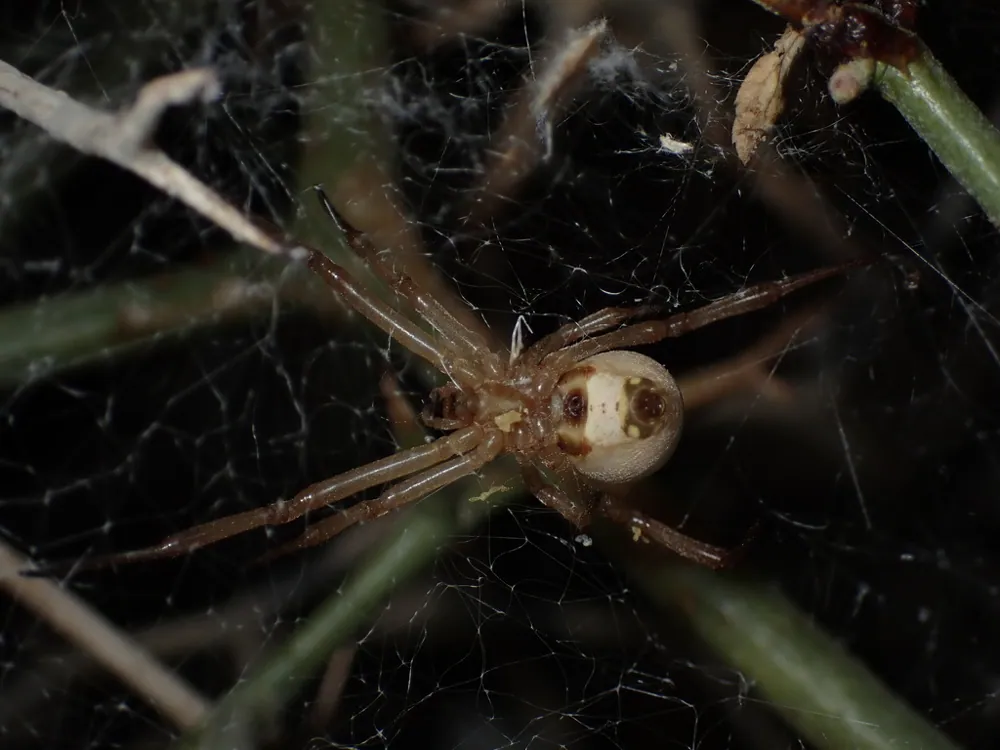
 Sɛdeɛ wobɛhunu no
- Light-coloured, with a colouring ranging from beige to white1
- Darker legs than the body1
- No bright red markings, unlike other widow spiders such as the black widow or redback spider1
- Otherwise similar in shape to other spiders of the genus Latrodectus1
Wɔtaa fa no sɛ: Most widow spiders are dark, and the white widow is distinguished mainly by its pale colouring and lack of red markings. Other than colour, it resembles other Latrodectus spiders.1
Bɔre ahoɔden
Bɔre fi ne se mu ba bere a ɔka.
Ne bɔre yɛ dɛn?
Its venom is neurotoxic in type, meaning it acts on the nerves, as is typical of Latrodectus species. Toxicology studies report that its venom is similar in structure to that of the Mediterranean black widow, L. tredecimguttatus. It is considered less toxic than the bites of L. mactans or L. hasselti.1
Ne asiane ma nnipa te sɛn?
Asiane ma nnipa: Ɛyɛ yawƐtumi yɛ yaw paa, nanso ɛkame ayɛ sɛ ɛnyɛ asiane kɛseɛ da.The bite is medically significant and can injure humans. It can kill children and people who are infirm, although it is not nearly as toxic as the bites of some other widow spiders. A poster by the Egyptian Society of Natural Toxins describes its venom as moderately venomous.1
 Sɛ ɛka a
- Hohoro baabi a ɛkaa no na fa ice pack hyɛ so ma yaw no. Hwehwɛ dɔkota mmoa sɛ yaw no mu yɛ den, ɛtrɛtrɛw anaa onipa no ho ntɔ no a.
Di kan frɛ wo ahohiahia nɔma (112, 000, 911). Yei yɛ mmoa a ɛdi kan ho akwankyerɛ, ɛnyɛ dɔkota afotuo. Mmoa a ɛdi kan ho nsɛm titiriw
 Hwɛ wo ho so
- Mfa wo nsa nka wiram aboa biara, nkyere no na mfa no nni agorɔ, sɛ ɔyɛ ketewa mpo, na sɛ ɛte sɛ ɔrededa anaa wawu mpo a.
- Ma no kwan. Sɛ wohyia baako a, ma wo bo nnwo, san w'akyi brɛoo na ma ɔnkɔ ne kwan.
- Sɛ baako ka wo a: ma wo bo nnwo, tena dinn, frɛ wo ahohiahia nɔma (112, 000, 911) anaa kɔ ayaresabea ntɛm. Kae sɛdeɛ na ɛte, mfonini bɛboa.
Ɛnhwehwɛ wo sɛ ɛbɛpira wo. Ɛde ne bɔre kyere aduane anaa ɛbɔ ne ho ban, na ɛpɛ sɛ ɛhinta sene biribiara. Nsɛm pii fa ahobammɔ ho
Wiase mu baabi bɛn?
Ne kɛseɛ te sɛn?
Ne tenten te sɛn?
 ne tenten bɛyɛ sɛ paper clip
White widow kɛseɛ te sɛn sɛ wode toto WO ho a?
Akontabuo kɛkɛ wɔ wo browser mu. Wɔnkora hwee, na wɔmfa hwee nkɔ baabiara.
Ne ntɛm te sɛn?


Nsɛm
Males are sometimes cannibalised by the female after mating.1
After maturity, male widow spiders do not feed and spend most of their lives searching for females, which is why they are smaller than females.1
Widow spider males generally live with a female for a long period and provide energy-demanding courtship displays.1
The white widow is comparatively rare compared to other widow spiders in its region.1
Baabi a nsɛm no fi
- Latrodectus pallidus (Wikipedia (CC BY-SA 4.0))
- Latrodectus pallidus (iNaturalist): din ne nkyekyɛmu.
- Venom Wiki: asiane gyinabea, kɛseɛ a ɛtaa yɛ ne ntɛm susuo no yɛ yɛn ankasa deɛ. Hwɛ sɛdeɛ yɛbu no: Sɛdeɛ yɛkyerɛ asiane gyinabea.
Nsɛm biara a ɛwɔ kratafa yi so wɔ nɔma a ɛkyerɛ ne fibea. Sɛ yɛfom biribi a, kafra, yɛyɛ mmoa ho akɔnnɔfoɔ, ɛnyɛ nyansahu nwoma. Ka kyerɛ yɛn wɔ [email protected] na yɛbɛsiesie.
 Ɔkɔm de akekantwerɛ no! Onipa baako na ɔyɛ Venom Wiki: ɛyɛ kwa, dawurubɔ nni so na biribiara nni so a ɛdi w'akyi. Akyɛdeɛ ketewa bi boa ma ɛkɔ so tena internet so.Ma akekantwere no aduane
 Mediterranean black widow
 Six-eyed sand spider
 Brown widow
 Diving bell spider
 European yellow sac spider
 Noble false widow
 Deathstalker
 Indian cobra
 Indian saw-scaled viper
 King cobra
 Puff adder
 Russell ɔnanka