
 Bitten or stung?
 All animals
 Pick a continent
 Africa
 Asia
 Europe
 South America
 Australia & Oceania
 Antarctica
 Pacific Ocean
 Atlantic Ocean
 Indian Ocean
 Arctic Ocean
 Mediterranean Sea
 Red Sea
 Caribbean Sea
 Coral Sea
 South China Sea
 Philippine Sea
 Andaman Sea
 North Sea
 Timor & Arafura Sea
 Bay of Bengal
 Gulf of California
 Games
 Venom battle
 Animal race
 Field notebook
 Venom TOP lists
 Stay safe
 Surprise me

Anderson's crocodile newt
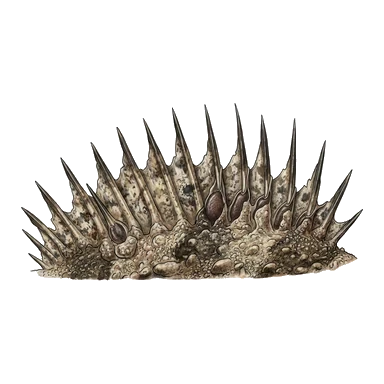 Venomous spines
Anderson's crocodile newt is a stout, dark salamander that lives in forests and wet places on the Ryukyu Islands of Japan. It is special because it can push its own ribs through its skin and glands to release a toxin at a threat.1
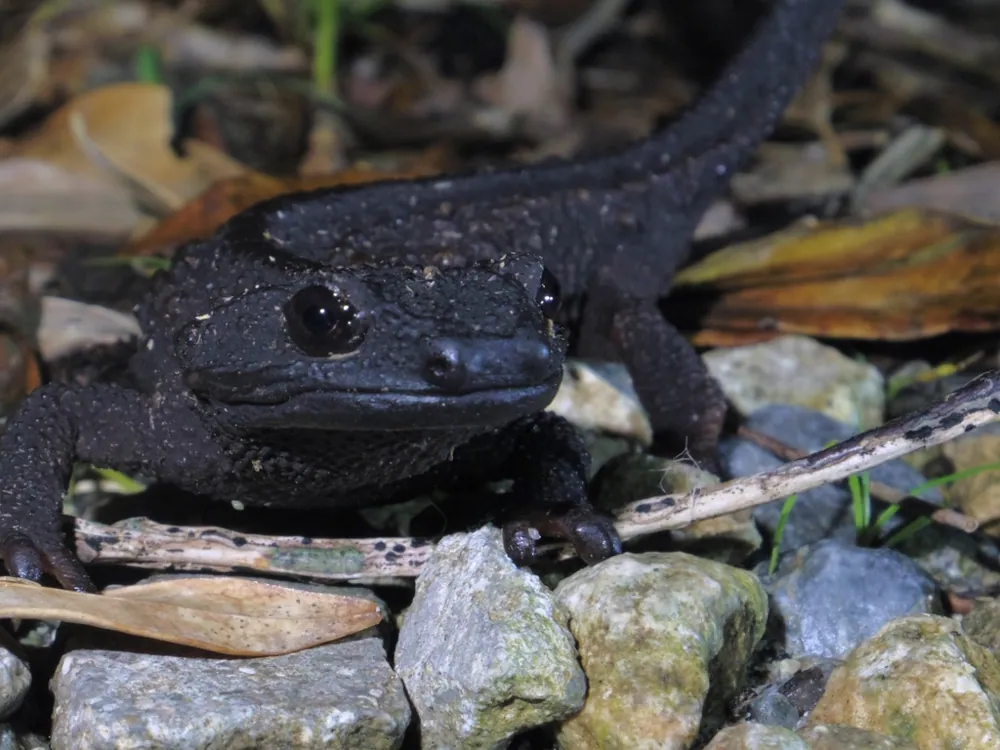
 How to recognise it
Venom power
Sharp spines carry the venom. Stepping on it or grabbing it hurts.
What does its venom do?
The newt's glands produce tetrodotoxin, a toxin that is released when the ribs puncture the skin and glands.1
How dangerous is it to people?
Danger to people: MildLike a bee sting or less. Basically harmless to people, unless the person is allergic.What does it do when it is scared?
When threatened, it uses its ribs to puncture its skin and glands, releasing its toxin at the attacker.1
 If its spines stab you
Call your emergency number at once if the person has trouble breathing, swelling of the face or throat, or feels faint.
- If someone touched one: wash the hands well and do not touch the eyes or mouth. If a child or pet licked or ate one: call your poison centre or emergency number.
This is general first aid guidance, not medical advice. Based on the first aid guidelines of the World Health Organization and the Australian Resuscitation Council. Facts come from public sources and may contain mistakes. When in doubt, always get medical help. First aid basics
 Stay safe
- Never touch, catch or tease a wild animal, even a small one, and even if it looks asleep or dead.
- Give it space. If you meet one, stay calm, step back slowly and let it go its own way.
- If it hurts you: wash the spot, stay calm and get medical help if the pain is strong or spreads, or the person feels unwell.
It is not out to get you. It uses its venom to catch food or to protect itself, and it would much rather hide. More about staying safe
Where in the world?
How big is it?
How long is it?
 as long as 2 bank cards end to end
How big is Anderson's crocodile newt compared to you?
Just maths in your browser. Nothing is saved or sent anywhere.
How fast is it?


Facts
It is one of few animals that can use its ribs to pierce its own skin and glands to deliver a defensive toxin.1
Its ribs have an unusual structure, lacking muscle attachments at their ends.1
Some of its glands can look lighter in colour than the skin around them, which may mean a higher concentration of toxin there.1
Paved roads with roadside gutters are reportedly leading to many of these newts ending up as roadkill.1
It is threatened by habitat loss and by collection for the illegal pet trade.1
It breeds from February to July, with activity peaking from March to May.1
For venom experts
- Scientific name
- Echinotriton andersoni
- Group
- Poison frogs, toads & newts
- Also called
- Anderson's newt, Ryukyu spiny newt, Japanese warty newt1
- Family
- Salamandridae2
- Order
- Caudata
- Continents
- Asia
- Babies
- The female lays a small clutch of eggs in leaf litter, humus soil, or under small objects such as leaves or rocks, usually no more than a metre or two from still water. The eggs hatch after 22 to 27 days, and the young leave the water as land-living adults after another 2 to 3 months.1
- Danger to people
- 1 / 5: Mild3
Where the facts come from
- Anderson's crocodile newt (Wikipedia (CC BY-SA 4.0))
- Echinotriton andersoni (iNaturalist): names and classification.
- Venom Wiki: the danger level, the typical size and the speed guess are our own. See how we work them out: How we rate danger.
Every fact on this page has a number that points to its source. If we got something wrong, sorry, we are animal fans, not a science journal. Tell us at [email protected] and we will fix it.
Get the Venom Wiki app
Every creature, every picture and the games in your pocket, even without internet.


 Support Venom Wiki Venom Wiki is a one-man project: free, with no ads and no cookies. A small tip helps keep it online.Feed the scorpion
More from the same group: Poison frogs, toads & newts
 Japanese fire-bellied newtPoison frogs, toads & newtsPainfulDo not touch
 Common toadPoison frogs, toads & newtsMild
 Oriental fire-bellied toadPoison frogs, toads & newtsMild
 Asian common toadPoison frogs, toads & newtsNeeds a doctorDo not touch
 Asiatic toadPoison frogs, toads & newtsPainfulDo not touch
 Emperor newtPoison frogs, toads & newtsPainfulDo not touch
 Indian cobra
 Indian saw-scaled viper
 King cobra
 Puff adder
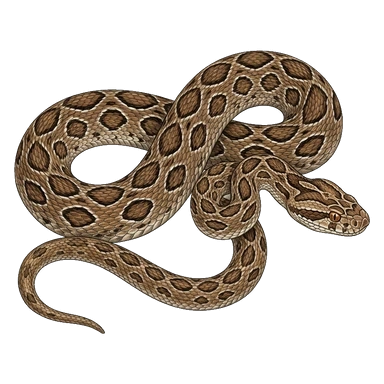 Russell's viper
 Asian giant hornet