
 Bitten or stung?
 All animals
 Pick a continent
 Africa
 Asia
 Europe
 South America
 Australia & Oceania
 Antarctica
 Pacific Ocean
 Atlantic Ocean
 Indian Ocean
 Arctic Ocean
 Mediterranean Sea
 Red Sea
 Caribbean Sea
 Coral Sea
 South China Sea
 Philippine Sea
 Andaman Sea
 North Sea
 Timor & Arafura Sea
 Bay of Bengal
 Gulf of California
 Games
 Venom battle
 Animal race
 Field notebook
 Venom TOP lists
 Stay safe
 Surprise me

Hardhead catfish
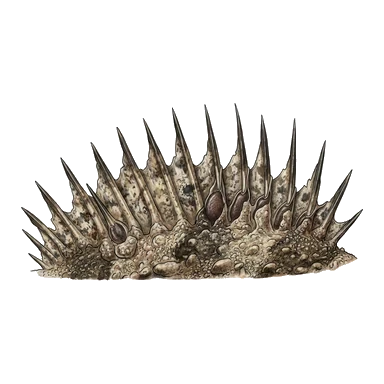 Venomous spinesEats: A bit of everythingTOP 50 · No. 34: HeaviestTOP 50 · No. 15: Longest living
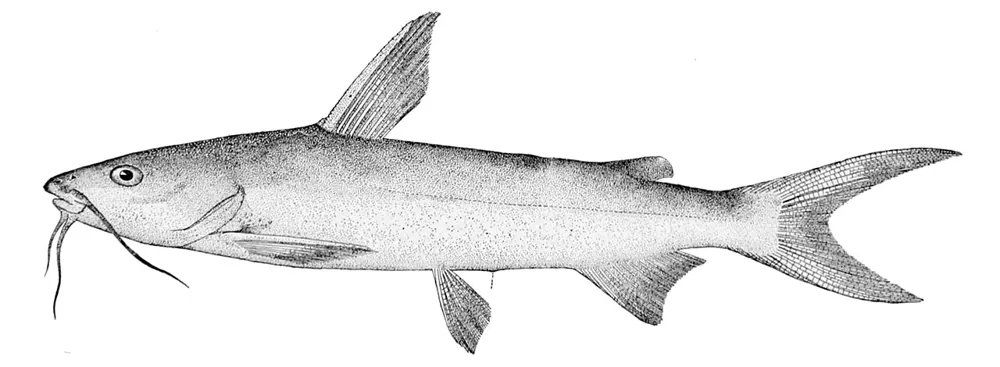
The hardhead catfish is a sea catfish that lives in shallow coastal waters of the northwest Atlantic and the Gulf of Mexico. It has sharp spines on its fins that can be venomous, so it is one to admire from a distance. Male hardhead catfish also carry their eggs in their mouths until they hatch.1
 How to recognise it
- Often dirty grey on top with white underneath.1
- Four barbels (whisker-like feelers) under the chin and two more at the corners of the mouth.1
- A hard, bony plate between the eyes and the dorsal fin.1
- Sharp, barbed, slime-covered spines on the dorsal and pectoral fins. The dorsal spine stands upright when the fish is excited.1
- Typically 25 to 30 cm long, and elongated in shape.1
Often confused with: The gafftopsail catfish looks very similar. The difference is that its dorsal and pectoral spines have a fleshy extension, like the fore-and-aft topsail of a ship.1
Venom power
Sharp spines carry the venom. Stepping on it or grabbing it hurts.
How dangerous is it to people?
Danger to people: PainfulIt can really hurt, but it is almost never serious.Its spines can cause painful wounds when the fish is handled. Anglers generally avoid catching it because of the risk from handling the fish and its spines, and because its flesh tastes fishy compared with popular game fish.1
What does it do when it is scared?
When it feels threatened or excited, its dorsal spine stands upright, and its sharp, slime-covered spines are its main defence.1
 If its spines stab you
Call your emergency number at once if the person has trouble breathing, swelling of the face or throat, or feels faint.
- Put the wound in hot water, about 45 °C: as hot as the helper can comfortably hold their own hand in, never hotter, for 30 to 90 minutes. Get medical help, especially for stonefish and stingrays.
This is general first aid guidance, not medical advice. Based on the first aid guidelines of the World Health Organization and the Australian Resuscitation Council. Facts come from public sources and may contain mistakes. When in doubt, always get medical help. First aid basics
 Stay safe
- Never touch, catch or tease a wild animal, even a small one, and even if it looks asleep or dead.
- Give it space. If you meet one, stay calm, step back slowly and let it go its own way.
- If it hurts you: wash the spot, stay calm and get medical help if the pain is strong or spreads, or the person feels unwell.
It is not out to get you. It uses its venom to catch food or to protect itself, and it would much rather hide. More about staying safe
Where in the world?
How big is it?
How long is it?
How heavy is it?
 as long as 4 bananas end to end
 about as heavy as a house cat
 could swim the length of a big swimming pool (50 m) in 30 seconds
How big is Hardhead catfish compared to you?
Just maths in your browser. Nothing is saved or sent anywhere.
How fast is it?
Facts
Male hardhead catfish are paternal mouthbrooders: they keep the eggs and young in their mouths, and do not feed while doing so.1
Some researchers suggest they may use low-frequency sounds to detect and avoid close obstacles, which is an unusual ability for a fish.1
They can make sounds by vibrating thin bones near the swim bladder, and by grinding their throat teeth or rubbing their pectoral spines. These sounds appear to be a fright response.1
Hardhead catfish respond to chemical alarm signals released by injured members of their own species, with their activity increasing right after the signal. They are the first marine catfish found to show this type of alarm reaction.1
They can live for over 24 years.1
For venom experts
- Scientific name
- Ariopsis felis
- Group
- Venomous fish
- Family
- Ariidae2
- Order
- Siluriformes
- Continents
- Atlantic Ocean, Gulf of Mexico, Caribbean Sea, The oceans
- Babies
- The male carries the eggs in his mouth until they hatch, which takes roughly 8 to 11 weeks in total. Females have 20 to 65 eggs per spawning.1
- Lifespan
- about 24 years1
- Danger to people
- 2 / 5: Painful3
Where the facts come from
- Hardhead catfish (Wikipedia (CC BY-SA 4.0))
- Ariopsis felis (iNaturalist): names and classification.
- Venom Wiki: the danger level, the typical size and the speed guess are our own. See how we work them out: How we rate danger.
Every fact on this page has a number that points to its source. If we got something wrong, sorry, we are animal fans, not a science journal. Tell us at [email protected] and we will fix it.
Get the Venom Wiki app
Every creature, every picture and the games in your pocket, even without internet.


 Support Venom Wiki Venom Wiki is a one-man project: free, with no ads and no cookies. A small tip helps keep it online.Feed the scorpion
More from the same group: Venomous fish
 Reef stonefish
 Red lionfish
 Estuarine stonefish
 Short-tail stingray
 Bluespotted ribbontail ray
 Common stingray

Also lives in: Atlantic Ocean
 Hawksbill sea turtleOther poisonous animalsCan kill
 Portuguese man o' warJellyfish & sea stingersNeeds a doctorDo not touch
 Blue sea dragonCone snails & octopusesPainful
 Greenland sharkOther poisonous animalsPainful
 Lion's mane jellyfishJellyfish & sea stingersPainfulDo not touch
 Common octopusCone snails & octopusesMild