
 Bitten or stung?
 All animals
 Pick a continent
 Africa
 Asia
 Europe
 South America
 Australia & Oceania
 Antarctica
 Pacific Ocean
 Atlantic Ocean
 Indian Ocean
 Arctic Ocean
 Mediterranean Sea
 Red Sea
 Caribbean Sea
 Coral Sea
 South China Sea
 Philippine Sea
 Andaman Sea
 North Sea
 Timor & Arafura Sea
 Bay of Bengal
 Gulf of California
 Games
 Venom battle
 Animal race
 Field notebook
 Venom TOP lists
 Stay safe
 Surprise me

Desert monitor
 Bites
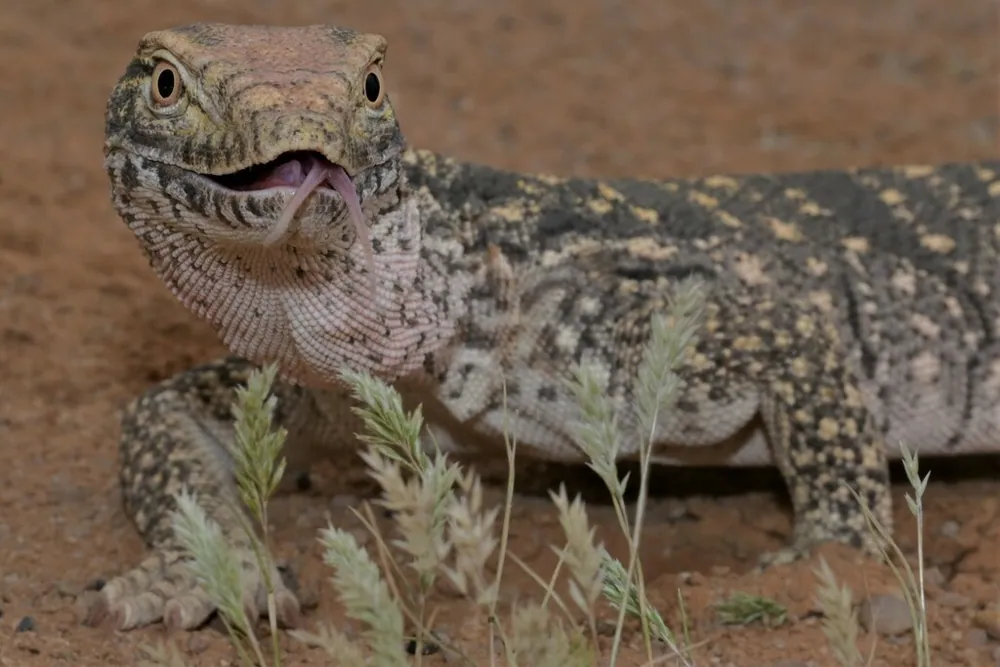
The desert monitor is a large lizard that lives across North Africa, Central Asia and parts of South Asia. It can grow to almost 2 metres long and hunts a wide range of animals, including snakes. Its bite can inject venom, which is why it is worth knowing about.1
 How to recognise it
- Body colour ranges from light brown and yellow to grey.1
- Many have horizontal bands on the back or tail, and yellow spots across the back.1
- Young lizards are bright orange with distinct bands across the back, which may fade as they mature.1
- Nostrils are slits set far back on the snout, closer to the eyes than to the tip of the snout.1
- Males are larger and more robust than females.1
Venom power
Venom comes out through its fangs or teeth when it bites.
What does its venom do?
Its bite can introduce venom through venom glands in the lower jaw. The venom has a neurotoxic effect, which attacks the nerves. In humans, symptoms can include nausea, vomiting, dizziness, muscle pain, a fast heartbeat, difficulty breathing and diarrhoea. Symptoms can start within about 20 minutes and last around 24 hours, although itching at the bite area can last for at least two months.1
How dangerous is it to people?
Danger to people: PainfulIt can really hurt, but it is almost never serious.What does it do when it is scared?
When its body temperature is below 21 °C and it is chased by a predator, it will not run away. Instead it holds its ground and becomes extremely aggressive.1
 If it bites
Call your emergency number at once if the person has trouble breathing, swelling of the face or throat, or feels faint.
- Wash the wound, keep the person calm and get medical help.
This is general first aid guidance, not medical advice. Based on the first aid guidelines of the World Health Organization and the Australian Resuscitation Council. Facts come from public sources and may contain mistakes. When in doubt, always get medical help. First aid basics
 Stay safe
- Never touch, catch or tease a wild animal, even a small one, and even if it looks asleep or dead.
- Give it space. If you meet one, stay calm, step back slowly and let it go its own way.
- If it hurts you: wash the spot, stay calm and get medical help if the pain is strong or spreads, or the person feels unwell.
It is not out to get you. It uses its venom to catch food or to protect itself, and it would much rather hide. More about staying safe
Where in the world?
How big is it?
How long is it?
 as long as 4 house cats nose to tail
 as long as 11 bananas end to end
 could cover 100 metres in 26 seconds (the fastest human needs 9.6)
How big is Desert monitor compared to you?
Just maths in your browser. Nothing is saved or sent anywhere.
How fast is it?

Facts
Their running speed depends on body temperature. It rises from a little over 1 metre per second at 21 °C to around 3 metres per second at 37 °C.1
Desert monitors are good swimmers and divers, and they sometimes enter water to hunt for food.1
They can live in cold places. The species is present as far north as south-west Kazakhstan, which makes it one of the few monitor lizards that tolerate cold temperatures.1
In Morocco, many desert monitors die after climbing into concrete rainwater wells called matfias and becoming trapped.1
Some populations in the Indian subspecies do not truly hibernate. Instead they slow down, become lethargic and stop feeding from December to March.1
Myth buster
Myth: Only snakes, Gila monsters and beaded lizards have venom.
Truth: Venom was once thought to be unique to these animals, but this is no longer the case. Venom glands are found in the lower jaws of most, if not all, monitor lizard species.1
For venom experts
- Scientific name
- Varanus griseus
- Group
- Venomous lizards
- Also called
- Agra Lizard1
- Family
- Varanidae2
- Order
- Squamata
- Continents
- Africa, Asia
- Babies
- It lays 10 to 20 eggs in a clutch. The eggs hatch after an average of 120 days, and the babies are about 25 cm long at birth.1
- Lifespan
- about 8 years1
- How it is doing in the wild
- CITES Appendix I1
- Danger to people
- 2 / 5: Painful3
Where the facts come from
- Desert monitor (Wikipedia (CC BY-SA 4.0))
- Varanus griseus (iNaturalist): names and classification.
- Venom Wiki: the danger level, the typical size and the speed guess are our own. See how we work them out: How we rate danger.
Every fact on this page has a number that points to its source. If we got something wrong, sorry, we are animal fans, not a science journal. Tell us at [email protected] and we will fix it.
Get the Venom Wiki app
Every creature, every picture and the games in your pocket, even without internet.


 Support Venom Wiki Venom Wiki is a one-man project: free, with no ads and no cookies. A small tip helps keep it online.Feed the scorpion
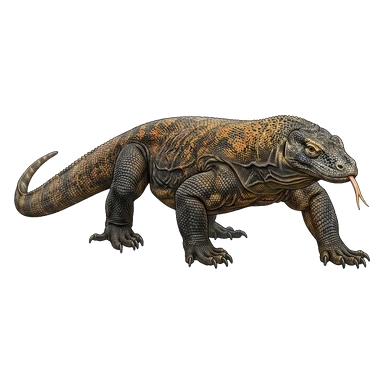 Komodo dragon
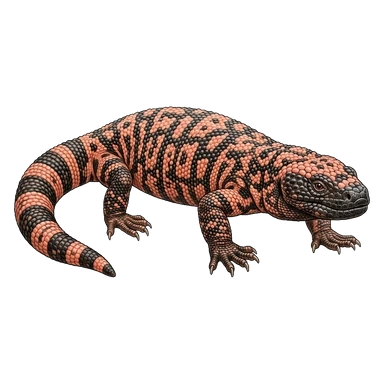 Gila monster
 Mexican beaded lizard
 Lace monitor
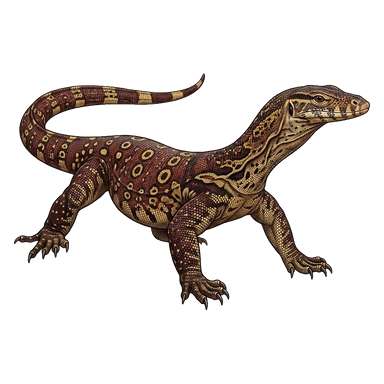 Perentie
 Spiny-tailed monitor
 Black mamba
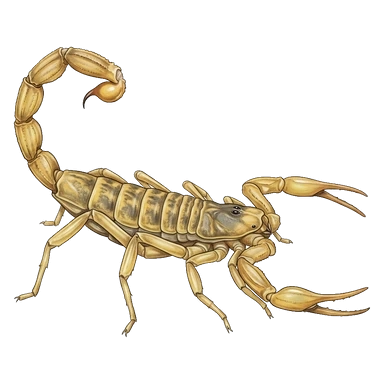 Deathstalker
 Egyptian cobra
 Puff adder
 Boomslang
 Fat-tailed scorpion