
 Bitten or stung?
 All animals
 Pick a continent
 Africa
 Asia
 Europe
 South America
 Australia & Oceania
 Antarctica
 Pacific Ocean
 Atlantic Ocean
 Indian Ocean
 Arctic Ocean
 Mediterranean Sea
 Red Sea
 Caribbean Sea
 Coral Sea
 South China Sea
 Philippine Sea
 Andaman Sea
 North Sea
 Timor & Arafura Sea
 Bay of Bengal
 Gulf of California
 Games
 Venom battle
 Animal race
 Field notebook
 Venom TOP lists
 Stay safe
 Surprise me

Plate fire coral
 Stings
Plate fire coral is a reef-building animal that looks like a coral but is actually a relative of jellyfish. It grows in shallow, sunny reef water across the Indo-Pacific, from the Red Sea and East Africa to northern Australia and French Polynesia. It matters because it helps build reefs and can give a painful burning sting.1

 How to recognise it
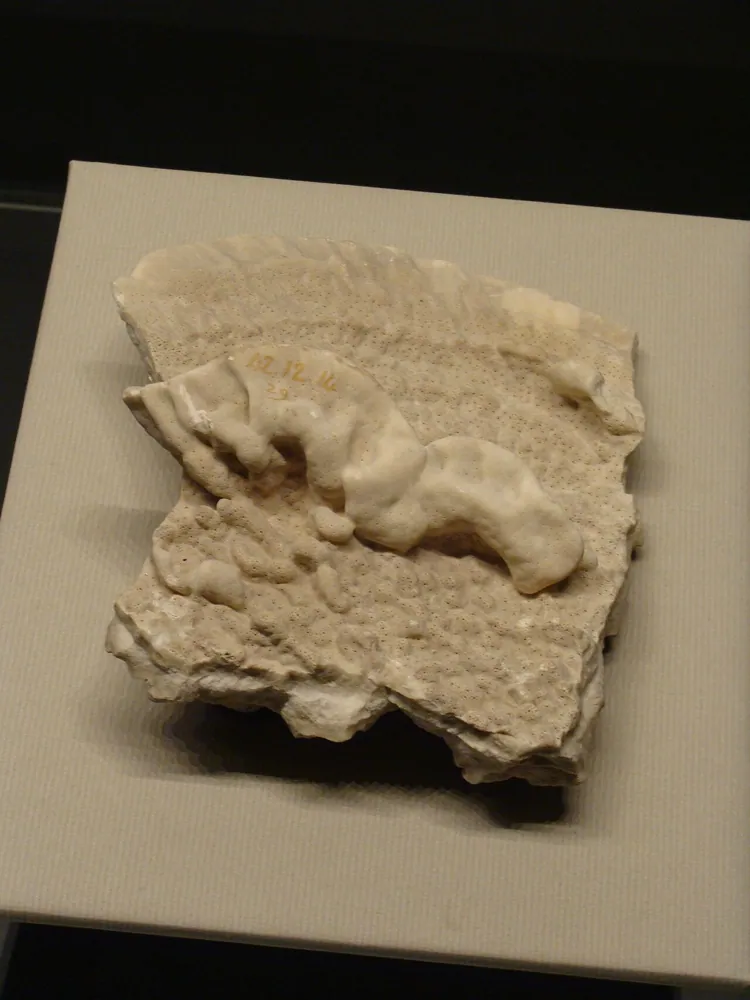
- Colonies are yellow-green or light-brown, and the tips may be white.1
- It usually grows in plate-like or blade-like forms, though it can also form branches, fans or encrusting layers.1
- Colonies often measure 200 to 300 cm across and can be up to 200 cm high.1
Often confused with: Other fire corals, such as Millepora dichotoma and Millepora exaesa, are often confused with it. Plate fire coral is generally plate-like or blade-like, which helps tell it apart from them.1
Venom power
Thousands of tiny stinging cells fire when something touches them.
What does its venom do?
Its defensive polyps carry stinging cells called nematocysts. Contact with them causes a burning sensation in humans.1
How dangerous is it to people?
Danger to people: PainfulIt can really hurt, but it is almost never serious.What does it do when it is scared?
Its defensive polyps have long tentacles that sting anything that touches them.1
 If it stings
Call your emergency number at once if the person has trouble breathing, swelling of the face or throat, or feels faint.
- Rinse the area with seawater or vinegar, not fresh water. Use a cold pack to ease the burning. Do not rub the skin. See a doctor if the rash spreads, blisters or gets infected.1
- Rinse the skin with seawater (not fresh water), lift off any bits with sticky tape and cool it with a wrapped cold pack. Get medical help if the pain is strong or spreads, or the person feels unwell.
This is general first aid guidance, not medical advice. Based on the first aid guidelines of the World Health Organization and the Australian Resuscitation Council. Facts come from public sources and may contain mistakes. When in doubt, always get medical help. First aid basics
 Stay safe
- Never touch, catch or tease a wild animal, even a small one, and even if it looks asleep or dead.
- Give it space. If you meet one, stay calm, step back slowly and let it go its own way.
- If it hurts you: wash the spot, stay calm and get medical help if the pain is strong or spreads, or the person feels unwell.
It is not out to get you. It uses its venom to catch food or to protect itself, and it would much rather hide. More about staying safe
Where in the world?
How big is it?
How long is it?
 as long as 3 dogs nose to tail
 as long as 17 bananas end to end
How big is Plate fire coral compared to you?
Just maths in your browser. Nothing is saved or sent anywhere.
Facts
Despite its name, plate fire coral is not a true coral. It belongs to the class Hydrozoa, which is separate from the stony and soft corals.1
It has two kinds of polyps: feeding polyps for catching food and defensive polyps with longer tentacles for protection.1
Its colonies can break into fragments during rough water, and these fragments can drift and start new colonies on nearby reefs.1
It can take many forms, including branches, fans, plates, blades and encrusting layers, and its shape depends on where it grows.1
It was once thought to have disappeared from the Eastern Pacific after bleaching events, but researchers later confirmed that its range extends back there.1
It helps build reefs in the Indo-Pacific region.1
Myth buster
Myth: Plate fire coral is a true coral.
Truth: It is a hydrozoan, not a true coral, and is separate from the stony and soft corals.1
For venom experts
- Scientific name
- Millepora platyphylla
- Group
- Jellyfish & sea stingers
- Also called
- blade fire coral1
- Family
- Milleporidae2
- Order
- Anthoathecata
- Continents
- Pacific Ocean, Indian Ocean, Red Sea, Coral Sea, Philippine Sea, Timor & Arafura Sea, Bay of Bengal, The oceans
- Babies
- It releases reproductive buds that send eggs and sperm into the water, where fertilisation happens outside the body. The free-swimming larvae settle and become polyps after about 1 day.1
- Danger to people
- 2 / 5: Painful3
Where the facts come from
- Millepora platyphylla (Wikipedia (CC BY-SA 4.0))
- Millepora platyphylla (iNaturalist): names and classification.
- Venom Wiki: the danger level, the typical size and the speed guess are our own. See how we work them out: How we rate danger.
Every fact on this page has a number that points to its source. If we got something wrong, sorry, we are animal fans, not a science journal. Tell us at [email protected] and we will fix it.
Get the Venom Wiki app
Every creature, every picture and the games in your pocket, even without internet.


 Support Venom Wiki Venom Wiki is a one-man project: free, with no ads and no cookies. A small tip helps keep it online.Feed the scorpion
More from the same group: Jellyfish & sea stingers
 Australian box jellyfishJellyfish & sea stingersDeadlyDo not touch
 Irukandji jellyfishJellyfish & sea stingersCan killDo not touch
 Portuguese man o' warJellyfish & sea stingersNeeds a doctorDo not touch
 Lion's mane jellyfishJellyfish & sea stingersPainfulDo not touch
 Moon jellyfishJellyfish & sea stingersMild
 Common kingslayerJellyfish & sea stingersCan killDo not touch
Also lives in: Pacific Ocean
 Geography coneCone snails & octopusesDeadly
 Greater blue-ringed octopusCone snails & octopusesDeadly
 Japanese pufferfishOther poisonous animalsDeadly
 Southern blue-ringed octopusCone snails & octopusesDeadly
 Hawksbill sea turtleOther poisonous animalsCan kill
 Reef stonefishVenomous fishCan killDo not touch