
 Bitten or stung?
 All animals
 Pick a continent
 Africa
 Asia
 Europe
 South America
 Australia & Oceania
 Antarctica
 Pacific Ocean
 Atlantic Ocean
 Indian Ocean
 Arctic Ocean
 Mediterranean Sea
 Red Sea
 Caribbean Sea
 Coral Sea
 South China Sea
 Philippine Sea
 Andaman Sea
 North Sea
 Timor & Arafura Sea
 Bay of Bengal
 Gulf of California
 Games
 Venom battle
 Animal race
 Field notebook
 Venom TOP lists
 Stay safe
 Surprise me

Red scorpionfish
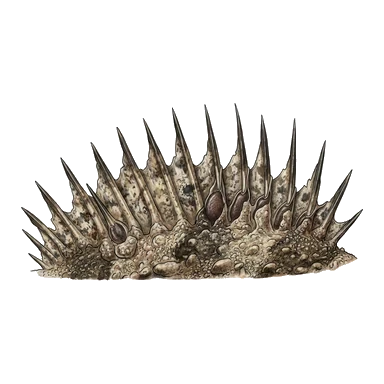 Venomous spines
The red scorpionfish is a sea fish with venomous spines along its back. It lives on rocky, sandy and muddy seabeds in the Mediterranean, the eastern Atlantic and the western Indian Ocean. It hides in burrows and caves by day and comes out at night to hunt.1
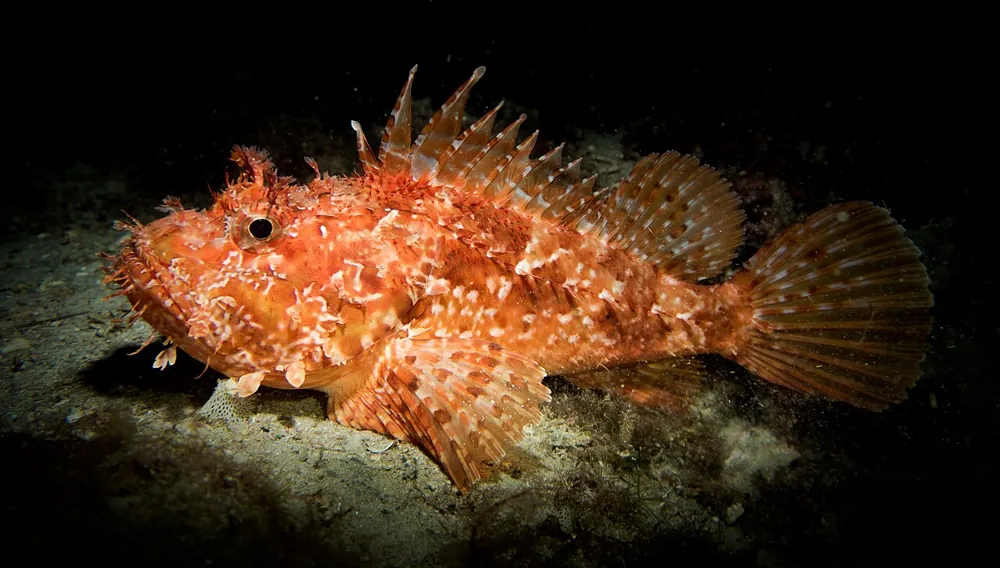
 How to recognise it
Venom power
Sharp spines carry the venom. Stepping on it or grabbing it hurts.
How dangerous is it to people?
Danger to people: SeriousIf its spines stab you, see a doctor. Deaths are very rare. If its spines stab you
Always call your emergency number first (for example 112 in Europe, 911 in North America, 000 in Australia).
- Get out of the water and rinse the wound. Soak it in hot water, as hot as the person can stand without burning (about 45 °C), for 30 to 90 minutes to ease the pain. See a doctor if spine pieces stay in the wound or it gets infected, and call the emergency number if the person faints or has trouble breathing.1
- Put the wound in hot water, about 45 °C: as hot as the helper can comfortably hold their own hand in, never hotter, for 30 to 90 minutes. Get medical help, especially for stonefish and stingrays.
This is general first aid guidance, not medical advice. Based on the first aid guidelines of the World Health Organization and the Australian Resuscitation Council. Facts come from public sources and may contain mistakes. When in doubt, always get medical help. First aid basics
 Stay safe
- Never touch, catch or tease a wild animal, even a small one, and even if it looks asleep or dead.
- Give it space. If you meet one, stay calm, step back slowly and let it go its own way.
- If its spines stab you: stay calm, keep still, call your emergency number (for example 112 in Europe, 911 in North America, 000 in Australia) or get to a hospital fast. Remember what it looked like, a photo helps.
It is not out to get you. It uses its venom to catch food or to protect itself, and it would much rather hide. More about staying safe
Where in the world?
How big is it?
How long is it?
How heavy is it?
 as long as 3 bananas end to end
 as long as 6 bank cards end to end
 about as heavy as a house cat
 could swim the length of a big swimming pool (50 m) in 90 seconds
How big is Red scorpionfish compared to you?
Just maths in your browser. Nothing is saved or sent anywhere.
How fast is it?

Facts
It is a traditional ingredient in Marseille bouillabaisse and Tuscan cacciucco.1
Its flesh is firm and flaky, often compared to lobster in flavour.1
It is the largest scorpionfish in the eastern Atlantic.1
The marine leech Pontobdella muricata uses it as a host.1
It is sedentary, solitary and does not migrate, so it stays in the same area.1
Myth buster
Myth: Scorpionfish feed on mud.
Truth: This idea came from old mistranslations of an ancient writer's note. It is a predator that feeds on other fish, crustaceans and molluscs.1
Where the facts come from
- Scorpaena scrofa (Wikipedia (CC BY-SA 4.0))
- Scorpaena scrofa (iNaturalist): names and classification.
- Venom Wiki: the danger level, the typical size and the speed guess are our own. See how we work them out: How we rate danger.
Every fact on this page has a number that points to its source. If we got something wrong, sorry, we are animal fans, not a science journal. Tell us at [email protected] and we will fix it.
Get the Venom Wiki app
Every creature, every picture and the games in your pocket, even without internet.


 Support Venom Wiki Venom Wiki is a one-man project: free, with no ads and no cookies. A small tip helps keep it online.Feed the scorpion
More from the same group: Venomous fish
 Reef stonefish
 Red lionfish
 Estuarine stonefish
 Short-tail stingray
 Bluespotted ribbontail ray
 Common stingray

Also lives in: Atlantic Ocean
 Hawksbill sea turtleOther poisonous animalsCan kill
 Portuguese man o' warJellyfish & sea stingersNeeds a doctorDo not touch
 Blue sea dragonCone snails & octopusesPainful
 Greenland sharkOther poisonous animalsPainful
 Lion's mane jellyfishJellyfish & sea stingersPainfulDo not touch
 Common octopusCone snails & octopusesMild