
 Bitten or stung?
 All animals
 Pick a continent
 Africa
 Asia
 Europe
 South America
 Australia & Oceania
 Antarctica
 Pacific Ocean
 Atlantic Ocean
 Indian Ocean
 Arctic Ocean
 Mediterranean Sea
 Red Sea
 Caribbean Sea
 Coral Sea
 South China Sea
 Philippine Sea
 Andaman Sea
 North Sea
 Timor & Arafura Sea
 Bay of Bengal
 Gulf of California
 Games
 Venom battle
 Animal race
 Field notebook
 Venom TOP lists
 Stay safe
 Surprise me

Wallace's giant bee
 Stings
Wallace's giant bee is a large black resin bee that lives on a few islands in Indonesia. It is the largest known living bee species, with a female wingspan of 63.5 mm. It was thought to be extinct until it was found again in 1981, and it is rarely seen.1
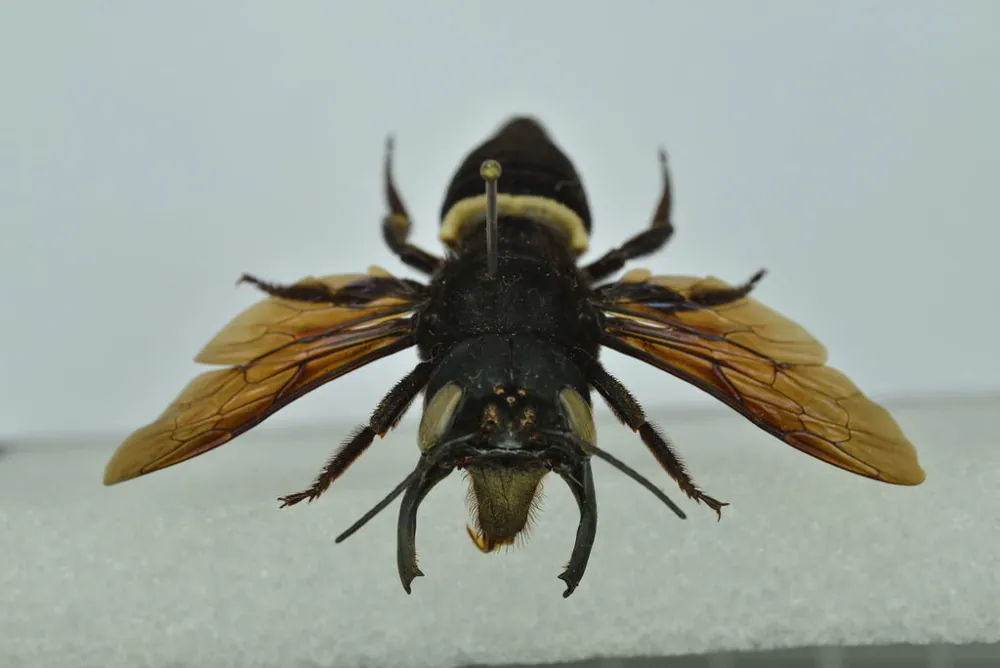
 How to recognise it
Venom power
Venom comes out through a stinger.
How dangerous is it to people?
Danger to people: MildLike a bee sting or less. Basically harmless to people, unless the person is allergic. If it stings
Call your emergency number at once if the person has trouble breathing, swelling of the face or throat, or feels faint.
- Scrape out a bee sting and cool the spot.
- If the person has trouble breathing, swelling of the face or throat, or feels faint, it is an allergic emergency: call your emergency number and use their adrenaline pen if they have one.
This is general first aid guidance, not medical advice. Based on the first aid guidelines of the World Health Organization and the Australian Resuscitation Council. Facts come from public sources and may contain mistakes. When in doubt, always get medical help. First aid basics
 Stay safe
- Never touch, catch or tease a wild animal, even a small one, and even if it looks asleep or dead.
- Give it space. If you meet one, stay calm, step back slowly and let it go its own way.
- If it hurts you: wash the spot, stay calm and get medical help if the pain is strong or spreads, or the person feels unwell.
It is not out to get you. It uses its venom to catch food or to protect itself, and it would much rather hide. More about staying safe
Where in the world?
How big is it?
How long is it?
 about as long as a paper clip
 could fly across a whole football pitch in 9.9 seconds
How big is Wallace's giant bee compared to you?
Just maths in your browser. Nothing is saved or sent anywhere.
How fast is it?


Facts
It is the largest known living bee species, with a female wingspan of 63.5 mm (2.5 in).1
It was believed to be extinct until several specimens were discovered in 1981.1
The female uses her large jaws to carry large balls of tree resin, which she gathers to build compartments inside the termite nest.1
A female was filmed and photographed in 2019 after she was found building her nest in a termite colony on Halmahera. She was then released.1
Two specimens collected in Indonesia in 2018 were sold on eBay, which highlighted how little legal protection the species has.1
The species is one of the 25 'most wanted' lost species in Global Wildlife Conservation's 'Search for Lost Species' initiative.1
Where the facts come from
- Megachile pluto (Wikipedia (CC BY-SA 4.0))
- Megachile pluto (iNaturalist): names and classification.
- Venom Wiki: the danger level, the typical size and the speed guess are our own. See how we work them out: How we rate danger.
Every fact on this page has a number that points to its source. If we got something wrong, sorry, we are animal fans, not a science journal. Tell us at [email protected] and we will fix it.
Get the Venom Wiki app
Every creature, every picture and the games in your pocket, even without internet.


 Support Venom Wiki Venom Wiki is a one-man project: free, with no ads and no cookies. A small tip helps keep it online.Feed the scorpion
 Asian giant hornet
 Common wasp
 European hornet
 Western honey bee
 Giant honey bee
 Asian hornet
 Indian cobra
 Indian saw-scaled viper
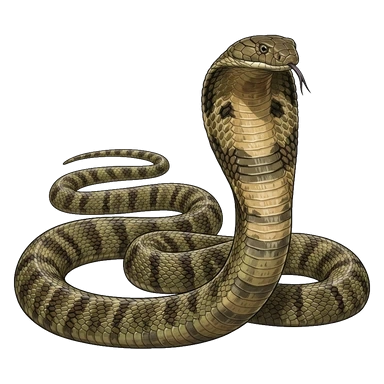 King cobra
 Puff adder
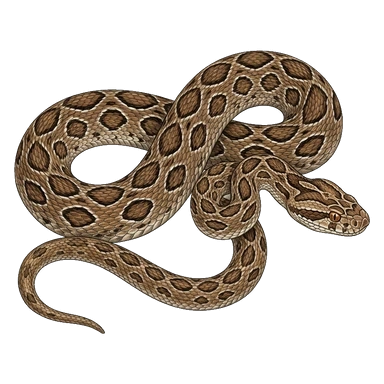 Russell's viper
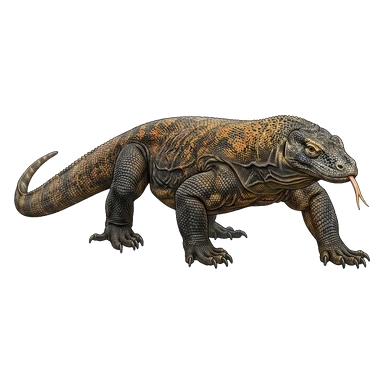 Komodo dragon