
 África
 Asia
Asia Europa
 Sudamérica
 Australia y Oceanía
 Antártida
 Océano Pacífico
 Océano Atlántico
 Océano Índico
 Océano Ártico
 Mar Mediterráneo
 Mar Rojo
 Mar Caribe
 Mar del Coral
 Mar de China Meridional
 Mar de Filipinas
 Mar de Andamán
 Mar del Norte
 Mar de Timor y de Arafura
 Golfo de Bengala
 Golfo de California
Blue button
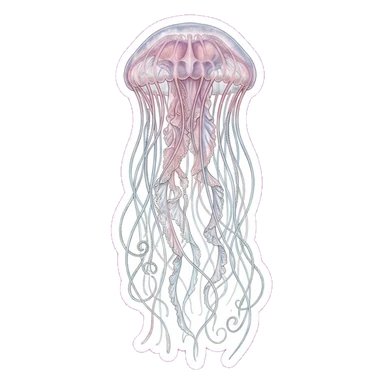 Tentáculos urticantes
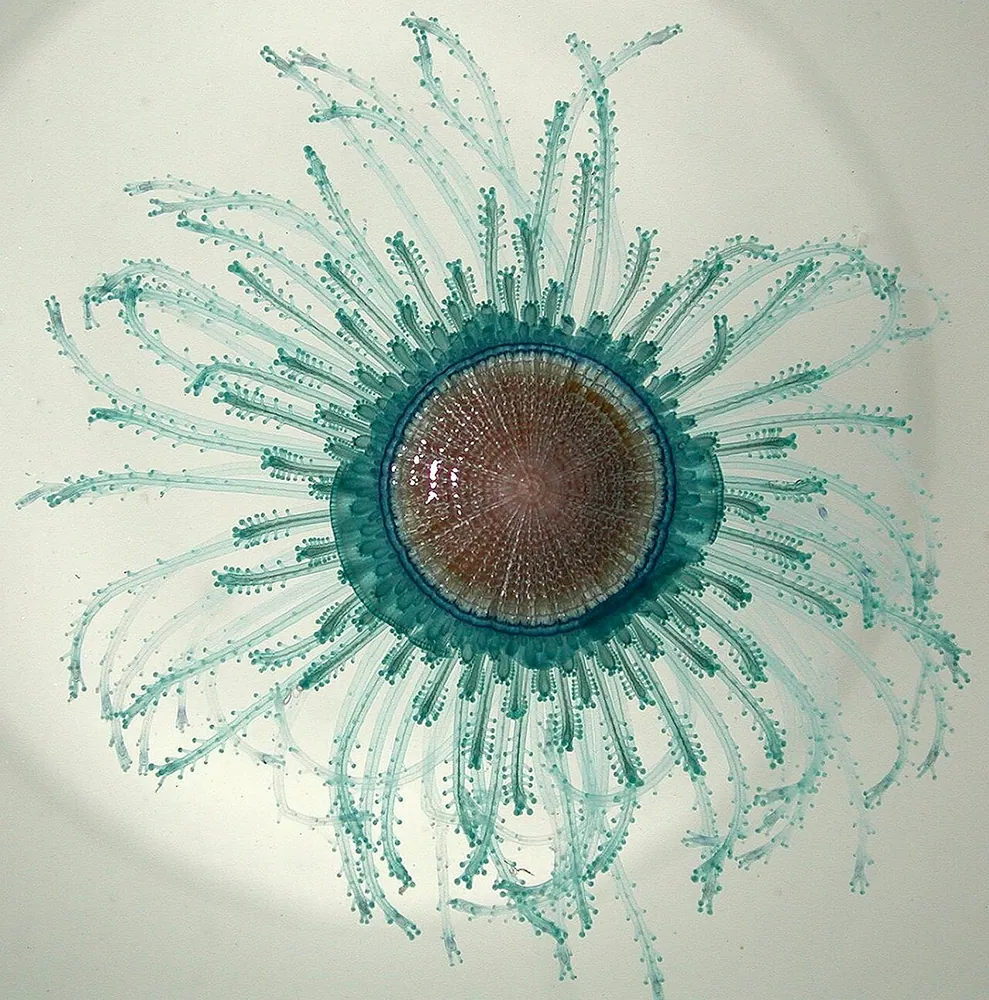
The blue button is a small sea creature that floats on the surface of warm oceans. It looks like a jellyfish, but it is really a colony of tiny animals called polyps. Its sting is not powerful, but it can cause slight skin irritation.1
 Cómo reconocerlo
- A round, almost flat, hard golden brown float about one inch (2.5 cm) wide1
- Bright blue turquoise to yellow polyps hanging from the float1
- Blue strands with knobs of stinging cells at the tips1
- Looks similar to a jellyfish, but each 'individual' is a colony of polyps1
Se confunde a menudo con: It looks superficially like a jellyfish. It is related to Velella and to the Portuguese man o' war, which are also colonial animals that float on the surface.1
Poder del veneno
Miles de células urticantes diminutas se disparan cuando algo las toca.
¿Qué hace su veneno?
It has stinging cells called nematocysts at the tips of its tentacle-like strands. The sting is not powerful and may cause slight irritation to human skin.1
¿Qué peligro tiene para las personas?
Peligro para las personas: LeveComo una picadura de abeja o menos. Prácticamente inofensivo para las personas.The sting is not powerful and may cause slight irritation. In recent years, the first recorded case of contact dermatitis (a skin rash caused by contact) from this species was reported in Japan.1
 Si pica
- Sal del agua y quita los tentáculos que queden (con guantes o un trapo).
- Para las cubomedusas tropicales: echa vinagre sobre las picaduras al menos 30 segundos, pide ayuda y prepárate para hacer RCP. Para fragatas portuguesas y la mayoría de las demás: aclara con agua de mar y luego agua caliente para el dolor.
Llama siempre primero a tu número de emergencias (112, 000, 911). Esto son pautas generales de primeros auxilios, no consejo médico. Primeros auxilios básicos
 Mantente a salvo
- Nunca toques, atrapes ni molestes a un animal salvaje, aunque sea pequeño y aunque parezca dormido o muerto.
- Déjale espacio. Si te encuentras uno, mantén la calma, retrocede despacio y deja que siga su camino.
- Si te pica: mantén la calma, no te muevas, llama a tu número de emergencias (112, 000, 911) o ve rápido a un hospital. Recuerda cómo era, una foto ayuda.
No va a por ti. Usa su veneno para cazar o defenderse, y prefiere mil veces esconderse. Más sobre cómo protegerte
¿En qué parte del mundo?
¿Qué tamaño tiene?
¿Cuánto mide?
 más o menos lo que mide un clip
¿Qué tamaño tiene Blue button comparado contigo?
Solo cálculos en tu navegador. No se guarda ni se envía nada a ningún sitio.
¿Qué velocidad alcanza?


Datos
Each apparent individual is actually a colony of hydrozoan polyps, not a single animal.1
Young Malabar trevally fish shelter under the floats and panic when removed from them.1
Young Malabar trevally fish appear to prefer a particular colony and will return to their own partner when separated and put back in the same tank.1
It is preyed on by sea slugs known as blue dragons and by violet sea-snails of the genus Janthina.1
The blue button has a single mouth under its float, which it uses for both eating and removing waste.1
Cazamitos
Mito: A blue button is a single jellyfish-like animal.
Verdad: Each blue button is a colony of hydrozoan polyps, which are related to anemones, corals and jellyfish.1
De dónde salen los datos
- Porpita porpita (Wikipedia (CC BY-SA 4.0))
- Porpita porpita (iNaturalist): nombres y clasificación.
- Venom Wiki: el nivel de peligro, el tamaño típico y la velocidad estimada son nuestros. Mira cómo los calculamos: Cómo valoramos el peligro.
Cada dato de esta página tiene un número que lleva a su fuente. Si nos hemos equivocado en algo, perdón, somos fans de los animales, no una revista científica. Escríbenos a [email protected] y lo arreglamos.
 ¡El escorpión tiene hambre! Venom Wiki es un proyecto de una sola persona: gratis, sin anuncios y sin rastreadores. Una pequeña propina ayuda a mantenerlo en línea.Alimenta al escorpión
Más del mismo grupo: Medusas y picadores marinos
 Australian box jellyfishMedusas y picadores marinosMortalNo tocar
 Irukandji jellyfishMedusas y picadores marinosPuede matarNo tocar
 Portuguese man o' warMedusas y picadores marinosNecesita médicoNo tocar
 Lion's mane jellyfishMedusas y picadores marinosSolo dueleNo tocar
 Moon jellyfishMedusas y picadores marinosInofensivo
 Common kingslayerMedusas y picadores marinosPuede matarNo tocar
También vive en: Océano Pacífico
 Geography coneCaracoles cono y pulposMortal
 Greater blue-ringed octopusCaracoles cono y pulposMortal
 Japanese pufferfishOtros animales tóxicosMortal
 Southern blue-ringed octopusCaracoles cono y pulposMortal
 Hawksbill sea turtleOtros animales tóxicosPuede matar
 Reef stonefishPeces venenososPuede matarNo tocar