
 África
 Asia
Asia Europa
 Sudamérica
 Australia y Oceanía
 Antártida
 Océano Pacífico
 Océano Atlántico
 Océano Índico
 Océano Ártico
 Mar Mediterráneo
 Mar Rojo
 Mar Caribe
 Mar del Coral
 Mar de China Meridional
 Mar de Filipinas
 Mar de Andamán
 Mar del Norte
 Mar de Timor y de Arafura
 Golfo de Bengala
 Golfo de California
Bluebottle
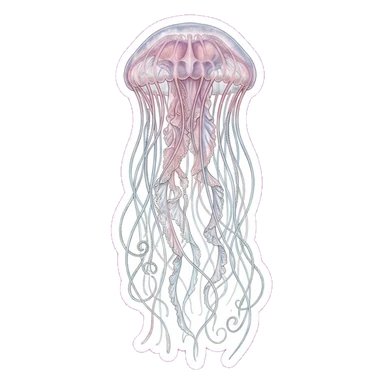 Tentáculos urticantes
The bluebottle is a floating sea creature that looks like a jellyfish, but it is actually a colony of many linked animals that work together. It drifts on the surface of warm oceans and often washes up on beaches in large numbers. Its long tentacle can cause painful stings, so it is important to know what it looks like.1
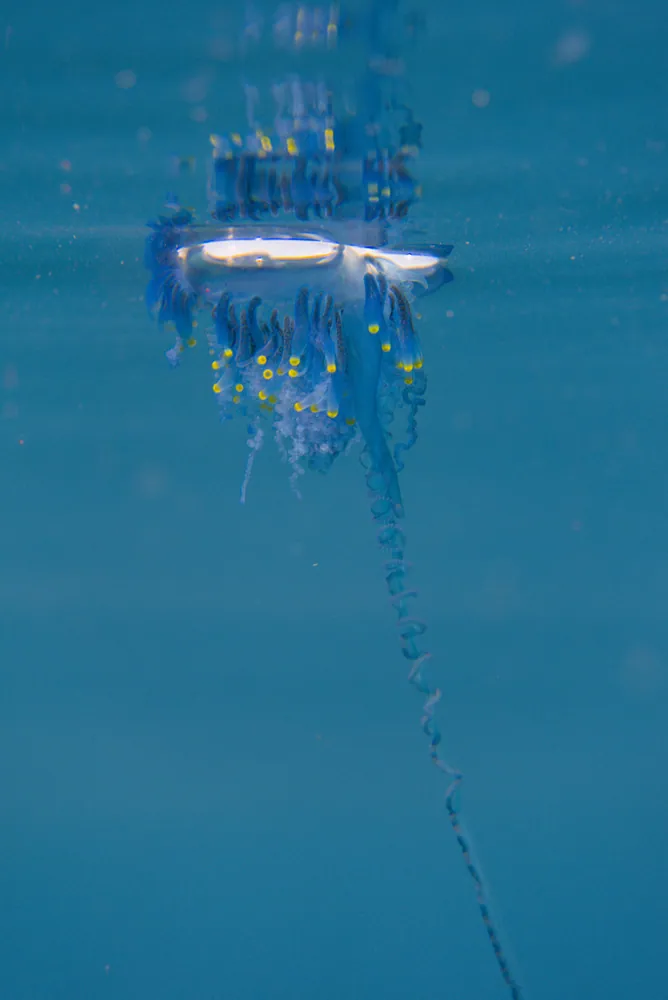
 Cómo reconocerlo
- A gas-filled float that sits on the surface, with a sail on top of it1
- A single long tentacle hanging below the float1
- A float about 16 cm across, smaller than the Atlantic Portuguese man o' war, whose float is about 30 cm1
- Often found in large groups called swarms1
- Often washed up in large numbers on beaches after strong winds1
Se confunde a menudo con: The Atlantic Portuguese man o' war (Physalia physalis) is closely related and looks similar. It has a larger float, about 30 cm across, while the bluebottle's float is about 16 cm. The bluebottle has a single long fishing tentacle.1
Poder del veneno
Miles de células urticantes diminutas se disparan cuando algo las toca.
¿Qué hace su veneno?
Its tentacle is covered in venomous cells called cnidocytes, which fire stinging threads called nematocysts. These toxic stinging cells cause painful injuries when they touch human skin. The stings can cause painful injuries at the beach.1
¿Qué peligro tiene para las personas?
Peligro para las personas: DolorosoPuede doler de verdad, pero casi nunca es grave.On Australia's east coast, 10,000 to 30,000 stings per year from animals of the genus Physalia are reported, and most incidents happen on the eastern coast. No deaths have been recorded from stings by this species. The Atlantic Portuguese man o' war has caused at least three deaths.1
 Si pica
- Sal del agua y quita los tentáculos que queden (con guantes o un trapo).
- Para las cubomedusas tropicales: echa vinagre sobre las picaduras al menos 30 segundos, pide ayuda y prepárate para hacer RCP. Para fragatas portuguesas y la mayoría de las demás: aclara con agua de mar y luego agua caliente para el dolor.
Llama siempre primero a tu número de emergencias (112, 000, 911). Esto son pautas generales de primeros auxilios, no consejo médico. Primeros auxilios básicos
 Mantente a salvo
- Nunca toques, atrapes ni molestes a un animal salvaje, aunque sea pequeño y aunque parezca dormido o muerto.
- Déjale espacio. Si te encuentras uno, mantén la calma, retrocede despacio y deja que siga su camino.
- Si te pica: mantén la calma, no te muevas, llama a tu número de emergencias (112, 000, 911) o ve rápido a un hospital. Recuerda cómo era, una foto ayuda.
No va a por ti. Usa su veneno para cazar o defenderse, y prefiere mil veces esconderse. Más sobre cómo protegerte
¿En qué parte del mundo?
¿Qué tamaño tiene?
¿Cuánto mide?
 mide como 2 piezas de construcción de juguete en fila
 podría nadar el largo de una piscina grande (50 m) en 180 segundos
¿Qué tamaño tiene Bluebottle comparado contigo?
Solo cálculos en tu navegador. No se guarda ni se envía nada a ningún sitio.
¿Qué velocidad alcanza?

Datos
It is not a single animal. It is a colony of four separate types of polyps and medusoids that work together.1
Its stinging cells can remain harmful on beaches for weeks or months if the sand stays moist.1
It moves across the sea using the wind, currents and tides, helped by the sail on top of its float.1
Para expertos en veneno
- Nombre científico
- Physalia utriculus
- Grupo
- Medusas y picadores marinos
- Familia
- Physaliidae2
- Orden
- Siphonophorae
- Continentes
- Océano Pacífico, Océano Índico, Océano Atlántico, Océano Antártico, Mar del Coral, Antártida, Mar de Timor y de Arafura, Golfo de Bengala, Los océanos
- Crías
- Its reproductive parts, called gonozooids, release eggs or sperm into the water.1
- Peligro para las personas
- 2 / 5: Doloroso3
De dónde salen los datos
- Physalia utriculus (Wikipedia (CC BY-SA 4.0))
- Physalia utriculus (iNaturalist): nombres y clasificación.
- Venom Wiki: el nivel de peligro, el tamaño típico y la velocidad estimada son nuestros. Mira cómo los calculamos: Cómo valoramos el peligro.
Cada dato de esta página tiene un número que lleva a su fuente. Si nos hemos equivocado en algo, perdón, somos fans de los animales, no una revista científica. Escríbenos a [email protected] y lo arreglamos.
 ¡El escorpión tiene hambre! Venom Wiki es un proyecto de una sola persona: gratis, sin anuncios y sin rastreadores. Una pequeña propina ayuda a mantenerlo en línea.Alimenta al escorpión
Más del mismo grupo: Medusas y picadores marinos
 Australian box jellyfishMedusas y picadores marinosMortalNo tocar
 Irukandji jellyfishMedusas y picadores marinosPuede matarNo tocar
 Portuguese man o' warMedusas y picadores marinosNecesita médicoNo tocar
 Lion's mane jellyfishMedusas y picadores marinosSolo dueleNo tocar
 Moon jellyfishMedusas y picadores marinosInofensivo
 Common kingslayerMedusas y picadores marinosPuede matarNo tocar
También vive en: Océano Pacífico
 Geography coneCaracoles cono y pulposMortal
 Greater blue-ringed octopusCaracoles cono y pulposMortal
 Japanese pufferfishOtros animales tóxicosMortal
 Southern blue-ringed octopusCaracoles cono y pulposMortal
 Hawksbill sea turtleOtros animales tóxicosPuede matar
 Reef stonefishPeces venenososPuede matarNo tocar