
 África
 Asia
Asia Europa
 Sudamérica
 Australia y Oceanía
 Antártida
 Océano Pacífico
 Océano Atlántico
 Océano Índico
 Océano Ártico
 Mar Mediterráneo
 Mar Rojo
 Mar Caribe
 Mar del Coral
 Mar de China Meridional
 Mar de Filipinas
 Mar de Andamán
 Mar del Norte
 Mar de Timor y de Arafura
 Golfo de Bengala
 Golfo de California
Spotted wolf spider
 Mordeduras
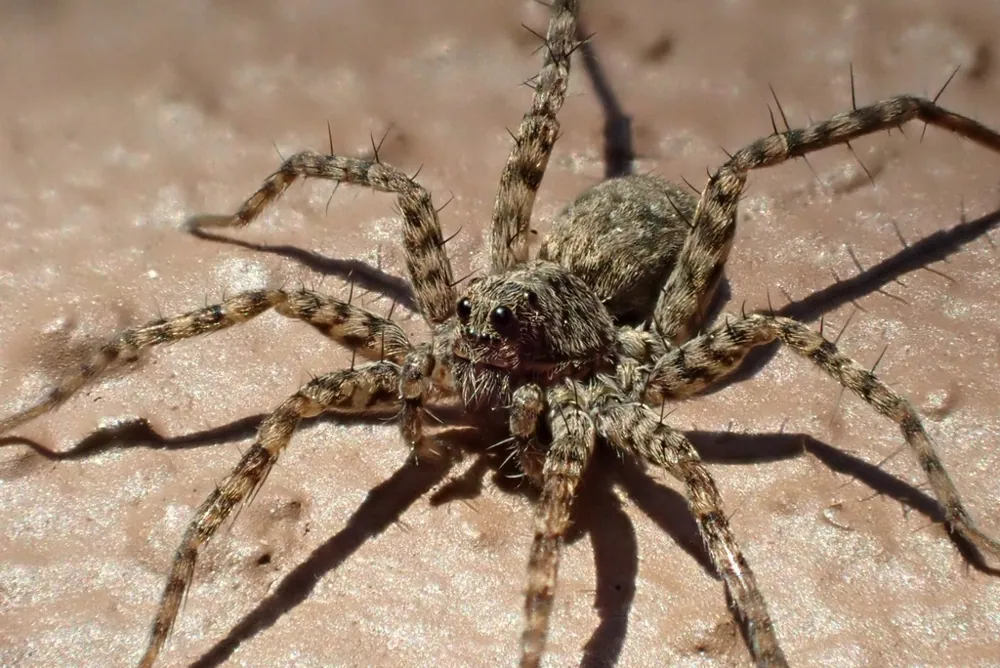
The spotted wolf spider is a small, brown ground spider that hunts on foot rather than in a web. It lives across central and north-western Europe and is common in the British Isles. It is a fast, active hunter that often hunts in daylight.1
 Cómo reconocerlo
- Adults are 5 mm to 8 mm long.1
- The body is brownish with darker brown markings or spots.1
- Females are usually slightly larger than males.1
- Eight eyes: two large and four smaller eyes face forward, and two more sit on top of the head.1
- It does not weave a web. It is often seen running in the open or on low plants.1
Poder del veneno
El veneno sale por sus colmillos o dientes cuando muerde.
¿Qué peligro tiene para las personas?
Peligro para las personas: LeveComo una picadura de abeja o menos. Prácticamente inofensivo para las personas. Si muerde
- Lava la mordedura y ponle hielo para el dolor. Busca ayuda médica si el dolor es fuerte, se extiende o la persona se encuentra mal.
Llama siempre primero a tu número de emergencias (112, 000, 911). Esto son pautas generales de primeros auxilios, no consejo médico. Primeros auxilios básicos
 Mantente a salvo
- Nunca toques, atrapes ni molestes a un animal salvaje, aunque sea pequeño y aunque parezca dormido o muerto.
- Déjale espacio. Si te encuentras uno, mantén la calma, retrocede despacio y deja que siga su camino.
- Si te muerde: mantén la calma, no te muevas, llama a tu número de emergencias (112, 000, 911) o ve rápido a un hospital. Recuerda cómo era, una foto ayuda.
No va a por ti. Usa su veneno para cazar o defenderse, y prefiere mil veces esconderse. Más sobre cómo protegerte
¿En qué parte del mundo?
¿Qué tamaño tiene?
¿Cuánto mide?
 tan pequeño que cabe en tu uña
¿Qué tamaño tiene Spotted wolf spider comparado contigo?
Solo cálculos en tu navegador. No se guarda ni se envía nada a ningún sitio.
¿Qué velocidad alcanza?


Datos
Mothers carry their young on their backs after they hatch, until the young moult for the second time.1
During courtship, the male raises himself high on his hind legs, stretches out and waves his palps, and moves closer to the female bit by bit.1
If the female rejects him, she lunges forward and the smaller male backs off, then returns a few seconds later to display again.1
It relies heavily on its eyesight to locate and stalk prey.1
It is often active very early in spring and between March and July, and it warms itself in the sunshine on patches of bare soil.1
Para expertos en veneno
- Nombre científico
- Pardosa amentata
- Grupo
- Arañas
- Familia
- Lycosidae2
- Orden
- Araneae
- Continentes
- Europa
- Crías
- The female carries her eggs in a round silk sac beneath her abdomen. After hatching, the spiderlings ride on her back until their second moult, when they can fend for themselves.1
- Peligro para las personas
- 1 / 5: Leve3
De dónde salen los datos
- Pardosa amentata (Wikipedia (CC BY-SA 4.0))
- Pardosa amentata (iNaturalist): nombres y clasificación.
- Venom Wiki: el nivel de peligro, el tamaño típico y la velocidad estimada son nuestros. Mira cómo los calculamos: Cómo valoramos el peligro.
Cada dato de esta página tiene un número que lleva a su fuente. Si nos hemos equivocado en algo, perdón, somos fans de los animales, no una revista científica. Escríbenos a [email protected] y lo arreglamos.
 ¡El escorpión tiene hambre! Venom Wiki es un proyecto de una sola persona: gratis, sin anuncios y sin rastreadores. Una pequeña propina ayuda a mantenerlo en línea.Alimenta al escorpión
Más del mismo grupo: Arañas
 Mediterranean black widow
 Diving bell spider
 European yellow sac spider
 Noble false widow
 Tarantula wolf spider
 Daddy long-legs spider
También vive en: Europa
 Common European adderVíborasNecesita médico
 Spanish flyOtros animales tóxicosNecesita médicoNo tocar
 Common waspAbejas, avispas y avisponesSolo duele
 European hornetAbejas, avispas y avisponesSolo duele
 Fire salamanderRanas venenosas, sapos y tritonesSolo dueleNo tocar
 Western honey beeAbejas, avispas y avisponesSolo duele