
 Afrika
 Asia
Asia Europa
 Hego Amerika
 Australia eta Ozeania
 Antartika
 Ozeano Barea
 Ozeano Atlantikoa
 Ozeano Indikoa
 Ozeano Artikoa
 Mediterraneo itsasoa
 Itsaso Gorria
 Karibe itsasoa
 Koralen itsasoa
 Hego Txinako itsasoa
 Filipinetako itsasoa
 Andaman itsasoa
 Ipar itsasoa
 Timor eta Arafura itsasoak
 Bengalako golkoa
 Kaliforniako golkoa
Castellana
 Koska
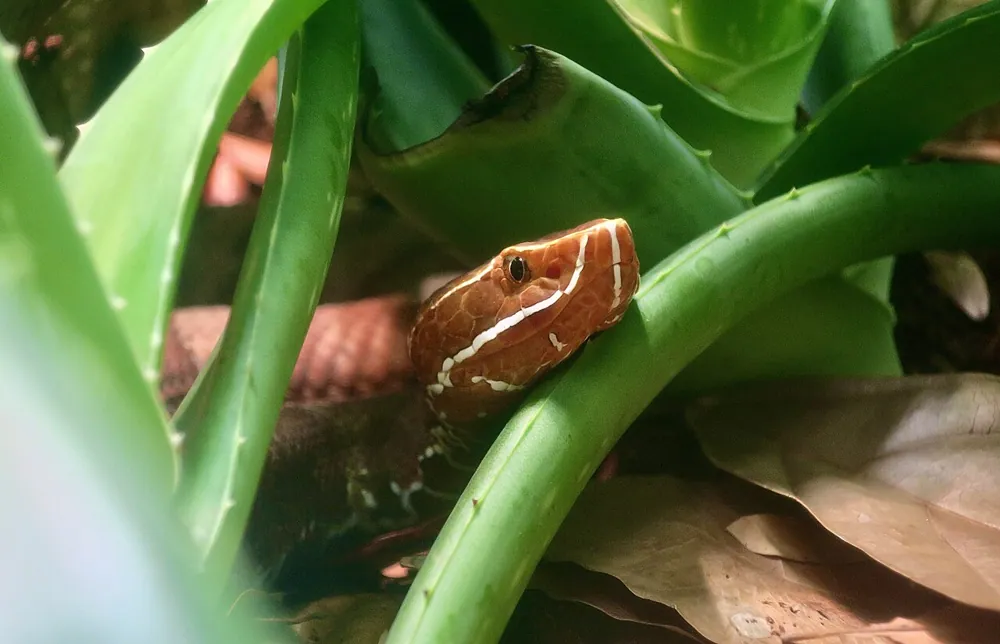
KoskaCastellana is a rare pit viper, a venomous snake that lives in dry forests on the Pacific side of Central America. It is a stout, medium-sized snake. Scientists know little about its bites, but lab tests suggest its venom is highly toxic.1



 Nola ezagutu
- A stout, medium-sized snake, up to 96 cm long including the tail.1
- Light to medium reddish-brown body with broad brown crossbands: 10 to 14 in males and 13 to 17 in females.1
- Two pale stripes on each side of the head.1
- Chin and throat are orange or orange-brown, lighter than the belly.1
- Large adult males are often very dark. Young snakes are paler, sometimes bright red.1
Askotan honekin nahasten da: Copperheads lack the two pale stripes on each side of the face, and cottonmouths lack the loreal scale (a small scale between the eye and nostril). Other cantils have a lower face stripe that runs straight and unbroken, while in this species it dips below the pit.1
Pozoi-ahalmena
Pozoia letaginetatik edo hortzetatik ateratzen da kosk egiten duenean.
Zer egiten du bere pozoiak?
Lab tests suggest the venom is highly toxic and similar to that of its close relative Agkistrodon bilineatus, and potentially lethal. No clinical reports of bites had been published as of 1999, so the effects on people are not well documented.1
Zein arriskutsua da pertsonentzat?
Arriskua pertsonentzat: Oso arriskutsuaTratamendurik jasotzen ez duen pertsona bat hil dezake.No clinical reports of bites had been published as of 1999, so there is little human data on its danger. Lab analysis suggests the venom could be lethal.1
 Kosk egiten badu
- Eutsi pertsona geldi eta lasai, eduki koska jasotako gorputz-adarra bihotzaren mailan, kendu eraztunak eta gauza estuak, eta joan ospitalera azkar.
Deitu beti lehenik zure larrialdi-zenbakira (112, 000, 911). Lehen sorospenei buruzko orientabide orokorra da hau, ez mediku-aholkua. Lehen sorospenen oinarriak
 Egon seguru
- Ez ukitu, ez harrapatu eta ez zirikatu inoiz animalia basati bat, txikia izan arren, eta lo edo hilda dagoela badirudi ere.
- Utzi tartea. Bat aurkitzen baduzu, egon lasai, egin atzera poliki eta utzi bere bidetik joaten.
- Batek kosk egiten badizu: egon lasai, egon geldi, deitu zure larrialdi-zenbakira (112, 000, 911) edo joan ospitalera azkar. Gogoratu nolakoa zen, argazki batek laguntzen du.
Ez dabil zure atzetik. Pozoia janaria harrapatzeko edo bere burua babesteko erabiltzen du, eta askoz nahiago du ezkutatu. Seguru egoteari buruz gehiago
Munduko zein tokitan?
Zein handia da?
Zein luzea da?
 2 etxeko katu muturretik buztanera jarrita bezain luzea
 5 banana bata bestearen atzetik jarrita bezain luzea
 100 metro 100 segundotan egin litzake (gizakirik azkarrenak 9,6 behar ditu)
Zein handia da Castellana ZUREKIN alderatuta?
Matematika hutsa zure nabigatzailean. Ez da ezer gordetzen, ezta inora bidaltzen ere.
Zein azkarra da?


Datuak
Its diet changes as it grows: young snakes eat cold-blooded prey such as frogs and lizards, while adults eat warm-blooded prey such as mice and rats.1
It is a rare snake, found only along a narrow strip of lowland less than 400 km long.1
In the 1990s, searches in the Gulf of Fonseca area of Honduras found very few, or possibly no, snakes.1
Pozoi-adituentzat
- Izen zientifikoa
- Agkistrodon howardgloydi
- Taldea
- Sugegorri zulodunak
- Familia
- Viperidae2
- Ordena
- Squamata
- Kontinenteak
- Ipar Amerika
- Kumeak
- It gives birth to live young (viviparous), with females giving birth in the rainy season from May to August.1
- Nola dagoen naturan
- Endangered (2013 assessment, which has no political or legal standing)1
- Arriskua pertsonentzat
- 4 / 5: Oso arriskutsua3
Datuak nondik datozen
- Agkistrodon howardgloydi (Wikipedia (CC BY-SA 4.0))
- Agkistrodon howardgloydi (iNaturalist): izenak eta sailkapena.
- Venom Wiki: arrisku-maila, ohiko tamaina eta abiadura-kalkulua geureak dira. Ikusi nola kalkulatzen ditugun: Nola baloratzen dugun arriskua.
Orrialde honetako datu bakoitzak zenbaki bat du, bere iturrira eramaten zaituena. Zerbait gaizki badugu, barkatu, animalien zaleak gara, ez zientzia-aldizkari bat. Esaiguzu [email protected] helbidean eta konponduko dugu.
 Eskorpioia gose da! Venom Wiki pertsona bakar baten proiektua da: doakoa, iragarkirik eta jarraitzailerik gabe. Eskupeko txiki batek sarean mantentzen laguntzen du.Elikatu eskorpioia
 Terciopelo
 Eyelash viper
 Cottonmouth
 Eastern copperhead
 Cantil
 Central American bushmaster
 Eastern coral snake
 Eastern diamondback rattlesnake
 Timber rattlesnake
 Western diamondback rattlesnake
 Arizona bark scorpion
 Brown recluse