
 Afrika
 Asia
Asia Europa
 Hego Amerika
 Australia eta Ozeania
 Antartika
 Ozeano Barea
 Ozeano Atlantikoa
 Ozeano Indikoa
 Ozeano Artikoa
 Mediterraneo itsasoa
 Itsaso Gorria
 Karibe itsasoa
 Koralen itsasoa
 Hego Txinako itsasoa
 Filipinetako itsasoa
 Andaman itsasoa
 Ipar itsasoa
 Timor eta Arafura itsasoak
 Bengalako golkoa
 Kaliforniako golkoa
Common house spider
 Koska
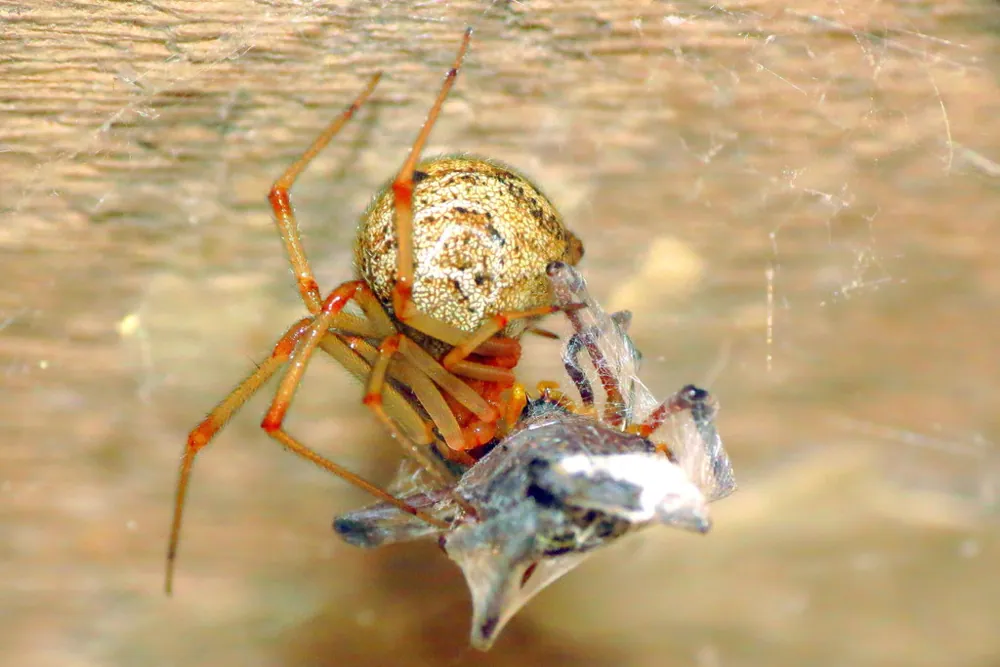
KoskaThe common house spider is a small spider that lives in and around human homes. It spins messy three-dimensional webs in dark corners and catches household insects. It is found in many parts of the world, and its bite is not known to be dangerous to people.1



 Nola ezagutu
- Its colour varies from tan to nearly black, often with patterns of different shades on the body.1
- Females are usually 5 to 6 mm long, and males are usually 3.8 to 4.7 mm long.1
- With legs outspread, it can measure 2.5 cm or more across.1
- Its webs are three-dimensional and built in dark corners.1
Askotan honekin nahasten da: Its body shape is similar to that of widow spiders. Males have a less bulbous (rounded) abdomen than females.1
Pozoi-ahalmena
Pozoia letaginetatik edo hortzetatik ateratzen da kosk egiten duenean.
Zer egiten du bere pozoiak?
It has neurotoxic venom, which attacks the nerves. Its bites are less severe than those of other theridiids (a family of cobweb spiders).1
Zein arriskutsua da pertsonentzat?
Arriskua pertsonentzat: ArinaErle-ziztada bat bezala edo gutxiago. Ia kaltegabea pertsonentzat.Its bites are not known to be dangerous to humans. It bites people only in self-defence, when it is grabbed and squeezed.1
Zer egiten du beldurtzen denean?
It runs to a secure hiding place when it senses movement, and if cornered it plays dead as a last resort.1
 Kosk egiten badu
- Garbitu koska eta jarri izotz-poltsa bat gainean minerako. Lortu mediku-laguntza mina handia bada, zabaltzen bada edo pertsona gaizki sentitzen bada.
Deitu beti lehenik zure larrialdi-zenbakira (112, 000, 911). Lehen sorospenei buruzko orientabide orokorra da hau, ez mediku-aholkua. Lehen sorospenen oinarriak
 Egon seguru
- Ez ukitu, ez harrapatu eta ez zirikatu inoiz animalia basati bat, txikia izan arren, eta lo edo hilda dagoela badirudi ere.
- Utzi tartea. Bat aurkitzen baduzu, egon lasai, egin atzera poliki eta utzi bere bidetik joaten.
- Batek kosk egiten badizu: egon lasai, egon geldi, deitu zure larrialdi-zenbakira (112, 000, 911) edo joan ospitalera azkar. Gogoratu nolakoa zen, argazki batek laguntzen du.
Ez dabil zure atzetik. Pozoia janaria harrapatzeko edo bere burua babesteko erabiltzen du, eta askoz nahiago du ezkutatu. Seguru egoteari buruz gehiago
Munduko zein tokitan?
Zein handia da?
Zein luzea da?
 zure azazkalaren gainean esertzeko bezain txikia
Zein handia da Common house spider ZUREKIN alderatuta?
Matematika hutsa zure nabigatzailean. Ez da ezer gordetzen, ezta inora bidaltzen ere.
Zein azkarra da?


Datuak
The assassin bug Stenolemus lanipes apparently feeds only on its young, though it can also eat adults.1
When food dries out, it usually drops it to the floor to free up space in its web, rather than rebuilding the web.1
It has poor eyesight and cannot detect movement more than three to four inches away.1
Males and females often share the same web for long periods, though females sometimes fight when they meet.1
Mito-hauslea
Mitoa: Common house spiders are dangerous to people.
Egia: Their venom is neurotoxic, but their bites are not known to be dangerous to humans. They bite only when grabbed and squeezed.1
Pozoi-adituentzat
- Izen zientifikoa
- Parasteatoda tepidariorum
- Taldea
- Armiarmak
- Familia
- Theridiidae2
- Ordena
- Araneae
- Kontinenteak
- Ipar Amerika, Hego Amerika
- Kumeak
- Females hang their spherical egg sacs in their webs, with clutches averaging 149 eggs. The young stay in the mother's web for several days after hatching.1
- Arriskua pertsonentzat
- 1 / 5: Arina3
Datuak nondik datozen
- Parasteatoda tepidariorum (Wikipedia (CC BY-SA 4.0))
- Parasteatoda tepidariorum (iNaturalist): izenak eta sailkapena.
- Venom Wiki: arrisku-maila, ohiko tamaina eta abiadura-kalkulua geureak dira. Ikusi nola kalkulatzen ditugun: Nola baloratzen dugun arriskua.
Orrialde honetako datu bakoitzak zenbaki bat du, bere iturrira eramaten zaituena. Zerbait gaizki badugu, barkatu, animalien zaleak gara, ez zientzia-aldizkari bat. Esaiguzu [email protected] helbidean eta konponduko dugu.
 Eskorpioia gose da! Venom Wiki pertsona bakar baten proiektua da: doakoa, iragarkirik eta jarraitzailerik gabe. Eskupeko txiki batek sarean mantentzen laguntzen du.Elikatu eskorpioia
 Brazilian wandering spider
 Brown recluse
 Southern black widow
 Amazon wandering spider
 Chilean recluse
 Northern black widow
 Terciopelo
 Eastern coral snake
 Eastern diamondback rattlesnake
 Eyelash viper
 Timber rattlesnake
 Western diamondback rattlesnake