
 Afrika
 Asia
Asia Europa
 Hego Amerika
 Australia eta Ozeania
 Antartika
 Ozeano Barea
 Ozeano Atlantikoa
 Ozeano Indikoa
 Ozeano Artikoa
 Mediterraneo itsasoa
 Itsaso Gorria
 Karibe itsasoa
 Koralen itsasoa
 Hego Txinako itsasoa
 Filipinetako itsasoa
 Andaman itsasoa
 Ipar itsasoa
 Timor eta Arafura itsasoak
 Bengalako golkoa
 Kaliforniako golkoa
Giant desert centipede
 Koska
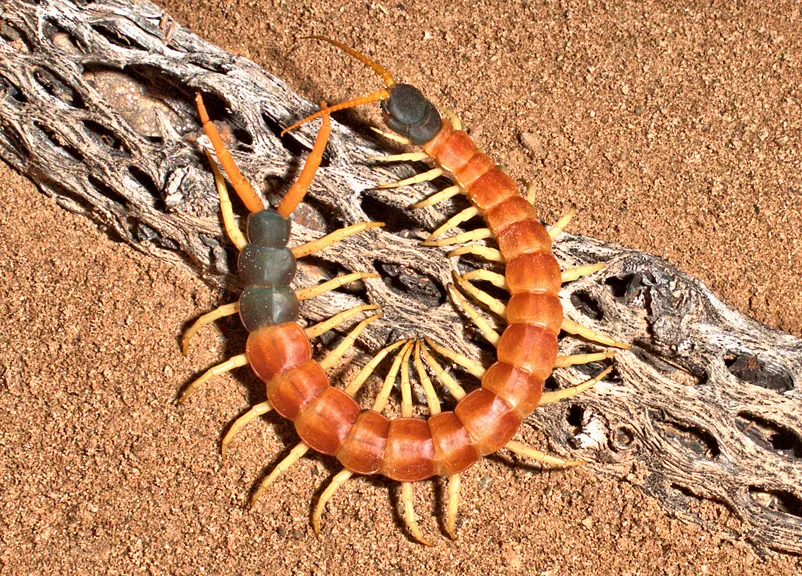
KoskaThe giant desert centipede is the largest centipede in North America. It lives in dry deserts and rocky woodlands in the southwestern United States and northern Mexico. Its bright colours warn predators to keep away, and its bite is very painful.1



 Nola ezagutu
Pozoi-ahalmena
Pozoia letaginetatik edo hortzetatik ateratzen da kosk egiten duenean.
Zer egiten du bere pozoiak?
Its venom is similar to that of other Scolopendra centipedes. It acts as a cytolysin, which damages cell membranes and ruptures cells, and it contains heart-affecting (cardiotoxic) proteins. The exact effects of the venom have not been fully studied, because it is hard to collect in useful amounts and breaks down quickly once processed.1
Zein arriskutsua da pertsonentzat?
Arriskua pertsonentzat: MingarriaBenetan min handia eman dezake, baina ia inoiz ez da larria.Bites cause sharp, searing pain and swelling in people, and there have never been any confirmed deaths from this species. Occasional symptoms include nausea, headache and localised skin death (necrosis). Severe cases, including kidney failure from muscle breakdown and heart attack, have been reported from Scolopendra bites in general.1
Zer egiten du beldurtzen denean?
Its bright warning colours are a signal to predators to leave it alone.1
 Kosk egiten badu
- Garbitu koska, hoztu edo sartu ur epelean minerako, eta lortu mediku-laguntza okerrera egiten badu.
Deitu beti lehenik zure larrialdi-zenbakira (112, 000, 911). Lehen sorospenei buruzko orientabide orokorra da hau, ez mediku-aholkua. Lehen sorospenen oinarriak
 Egon seguru
- Ez ukitu, ez harrapatu eta ez zirikatu inoiz animalia basati bat, txikia izan arren, eta lo edo hilda dagoela badirudi ere.
- Utzi tartea. Bat aurkitzen baduzu, egon lasai, egin atzera poliki eta utzi bere bidetik joaten.
- Batek kosk egiten badizu: egon lasai, egon geldi, deitu zure larrialdi-zenbakira (112, 000, 911) edo joan ospitalera azkar. Gogoratu nolakoa zen, argazki batek laguntzen du.
Ez dabil zure atzetik. Pozoia janaria harrapatzeko edo bere burua babesteko erabiltzen du, eta askoz nahiago du ezkutatu. Seguru egoteari buruz gehiago
Munduko zein tokitan?
Zein handia da?
Zein luzea da?
 6 eraikuntza-bloke ilaran jarrita bezain luzea
 100 metro 190 segundotan egin litzake (gizakirik azkarrenak 9,6 behar ditu)
Zein handia da Giant desert centipede ZUREKIN alderatuta?
Matematika hutsa zure nabigatzailean. Ez da ezer gordetzen, ezta inora bidaltzen ere.
Zein azkarra da?


Datuak
It can grab small flying insects out of the air.1
It is the largest centipede found in North America.1
Its colours change between variants, and the red-headed form found in Arkansas, Missouri and Texas is especially well known.1
It is a slow-growing species that can live for more than a decade.1
It grows slowly, and it keeps the same number of body segments for its whole life.1
Mito-hauslea
Mitoa: A bite from this centipede is deadly.
Egia: No deaths from its bites have been confirmed. For people, the bite usually causes sharp pain and swelling in the area bitten.1
Datuak nondik datozen
- Scolopendra heros (Wikipedia (CC BY-SA 4.0))
- Scolopendra heros (iNaturalist): izenak eta sailkapena.
- Venom Wiki: arrisku-maila, ohiko tamaina eta abiadura-kalkulua geureak dira. Ikusi nola kalkulatzen ditugun: Nola baloratzen dugun arriskua.
Orrialde honetako datu bakoitzak zenbaki bat du, bere iturrira eramaten zaituena. Zerbait gaizki badugu, barkatu, animalien zaleak gara, ez zientzia-aldizkari bat. Esaiguzu [email protected] helbidean eta konponduko dugu.
 Eskorpioia gose da! Venom Wiki pertsona bakar baten proiektua da: doakoa, iragarkirik eta jarraitzailerik gabe. Eskupeko txiki batek sarean mantentzen laguntzen du.Elikatu eskorpioia
Talde bereko gehiago: Ehunzangoak
 Common desert centipedeEhunzangoakMin ematen du, besterik ez
 Green centipedeEhunzangoakMin ematen du, besterik ez
 Haitian giant centipedeEhunzangoakMin ematen du, besterik ez
 Eastern red centipedeEhunzangoakKaltegabea
 Florida blue centipedeEhunzangoakKaltegabea
 Peruvian giant centipedeEhunzangoakMedikua behar du
 Terciopelo
 Eastern coral snake
 Eastern diamondback rattlesnake
 Eyelash viper
 Timber rattlesnake
 Western diamondback rattlesnake