
 Afirik
 Aazi
Aazi Orop
Orop Amerik Sud
 Ostarali e Oseyani
 Antarktik
 Geeci Pasifik
 Geeci Atlantik
 Geeci Enndo
 Geeci Arktik
 Geeci Mediteraane
 Geeci Boɗeewi
 Geeci Karayib
 Geeci Korayl
 Geeci Siin Sud
 Geeci Filipiin
 Geeci Andaman
 Geeci Nord
 Geeci Timor e Arafura
 Gulf Bengal
 Gulf Kaliforni
Bandy-bandy
 Ŋatgol
The bandy-bandy is a small, glossy snake with bold black and white rings that go all the way round its body. It lives in Australia, mostly along the east coast. It is venomous, but its venom is weak and it is generally considered harmless to people.1

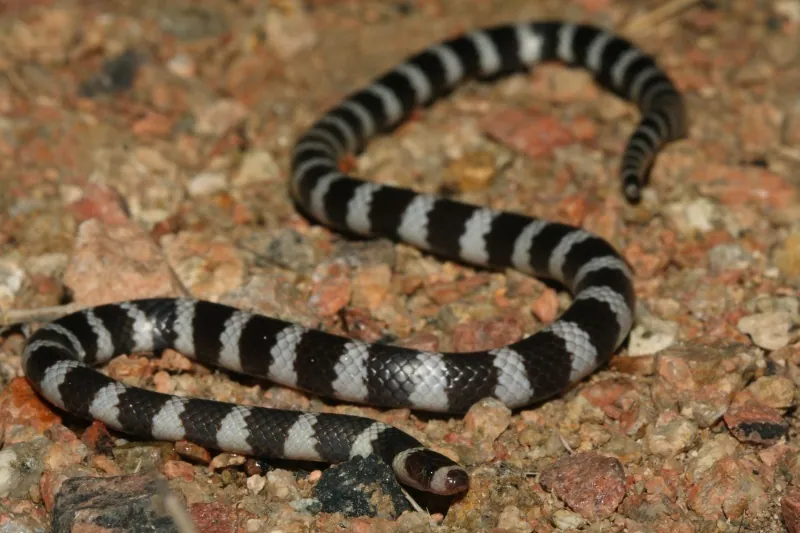
 Hono anndirtee ngal
- Smooth, glossy scales1
- Sharply contrasting black and white rings that continue right around the body1
- A short tail with a blunt tip, unlike other elapid snakes1
- Usually 50 to 60 cm long including the tail1
No jiibondiree e: Other bandy-bandy species look similar and live in different regions. They are told apart by the presence of a pair of small scales on the head (internasals), the number of black bands on the body and tail, and the number of belly scales.1
Doole tooke ŋatgol
Tooke no yaltira ñiiƴe mum tuma ngal ŋatata.
Ko honɗun tooke mum waɗata (ŋatgol walla jukkugol)?
Bandy-bandy venom is weak, and its effects are mostly limited to the area around the bite. Its mouth is small and it is not aggressive, so it rarely bites people.1
Hono musiiba mum heewiri e yimɓe?
Musiiba e yimɓe: MuusɗoNo waawi muusugol sanne, kono ko ɓadii kala tuma ɗum wonataa musiiba mawɗo.The bandy-bandy is generally considered harmless to people because of its small mouth and inoffensive nature.1
 Si no ŋata
- Haɓɓugol tiiɗngol e dartingol: taar bande elastik tiiɗnde e dow nokku ŋataaɗo on, refti e dow koyngal walla jungo on fow, haɓɓu attelle, haɗu neɗɗo on dillagol fey haa ballal hewta.
- Wota a loot nokku ŋataaɗo on: lopitaan no waawi ƴeewugol tooke heddiiɗo e nguru ngam suɓagol sérum antivenimeux moƴƴo.
Adii fow noddu nimero ballal (112, 000, 911). Ɗum ko anndinal ballal adiingal, wanaa saaraangal doktoro. Ko adii nder ballal adiingal
 Reen hoore maa
- Wota a meem, wota a nanngu, wota a jalnu kullal ladde haa abada, hay si ko tokooso, hay si no yi'ee no ɗaanii walla maayii.
- Accu ngal nokku. Si a fotti e ngal, deeƴu, ruttu ɓaawo seeɗa seeɗa, accu ngal yaha laawol mum.
- Si gooto e majji ŋatii ma: deeƴu, wota a dillu, noddu nimero ballal (112, 000, 911) walla yahu lopitaan law. Jogo e hakkille no ngal nanndi, natal no walla.
Ngal faalaaka gaañugol ma. Ngal no huutora tooke mum ngam nanngugol ñaamdu walla reenugol hoore mum, ngal ɓuri yiɗugol suuɗaade. Ko ɓeydi fii reenugol hoore maa
Hoto nder aduna?
Hono mawniri?
Hono juutiri?
 juuti no banaanaaji 3 jokkondirɗi
 no waawi taccugol meeteruuji 100 nder segonde 58 (neɗɗo ɓurɗo yaawugol sokli 9,6)
Hono Bandy-bandy mawniri, si fooɗondiraama e AN?
Ko limoore tun nder navigateur maa. Alaa ko danndetee walla ko neldetee ka nokku woo.
Hono yaawiri?


Humpito
Blind snakes can be bigger than the bandy-bandy that eats them. Bandy-bandies have been seen with prey sticking out of their mouths while they slowly digest it.1
Bandy-bandies can follow the chemical trail of a blind snake. In one study they followed trails for an average of 0.93 metres, and some followed a full 1.4-metre trail.1
Bandy-bandies are also called hoop snakes because of their striking rings.1
Females are much larger than males. In one study, the mean snout-vent length was 54.4 cm for females and 39.2 cm for males.1
Unlike other elapid snakes, the bandy-bandy has a blunt tail tip.1
Ngam ganduɓe tooke
Ɗo humpitooji ɗin iwri
- Bandy-bandy (Wikipedia (CC BY-SA 4.0))
- Vermicella annulata (iNaturalist): inɗe e ŋoordingol (classification).
- Venom Wiki: tolno musiiba, mawnugol aadaajo e miijo yaawugol ko amen. Ndaar no min ƴeewtirta ɗum: Hono min tolnirta musiiba.
Kala humpito nder ngoo hello no jogii limoore hollirnde iwdi mum. Si min juumii, yaafo, min ko yiɗɓe kulle, wanaa jaaynde ganndal. Haalan min e [email protected], min feewnitan.
 Yaare nden no weelaa! Venom Wiki ko golle neɗɗo gooto: ko yoɓetaake, alaa piiblisite, alaa reweteeɓe. Kopporde tokooso no walla heddingol ɗum e enternet.Ñaamnu yaare nden
Ko ɓeydi e fedde wootere: Ɓoɗɗi Ostarali
 Taipan daande geeci
 Death adder heewndi
 Mboddi ooleeri fuunaange
 Taipan wulaa
 Mboddi Tiigar
 Collett's snake
No hoɗi kadi nder: Ostarali e Oseyani
 Araañee funnel-web SidneeTaranteeli e funnel-webWaroowo
 Redback spiderAraañeejiNo sokli doktoro
 Brown tree snakeƁoɗɗi ñiiƴe ɓaawoNo muusi tun
 Hooded pitohuiKulle goɗɗe tookeeje ɓannduNo muusi tunWota a meem
 PlatypusKulle muynooje (mammifères) tookeNo muusi tun
 Northern tree-dwelling funnel-web spiderTaranteeli e funnel-webWaroowo