
 Afirik
 Aazi
Aazi Orop
Orop Amerik Sud
 Ostarali e Oseyani
 Antarktik
 Geeci Pasifik
 Geeci Atlantik
 Geeci Enndo
 Geeci Arktik
 Geeci Mediteraane
 Geeci Boɗeewi
 Geeci Karayib
 Geeci Korayl
 Geeci Siin Sud
 Geeci Filipiin
 Geeci Andaman
 Geeci Nord
 Geeci Timor e Arafura
 Gulf Bengal
 Gulf Kaliforni
Colorado River toad
 Tooke nder nguru mumNo ñaama: TeewuTookeejo ɓanndu, wanaa naatnoowo tooke
The Colorado River toad is a large toad of the deserts of the southwestern United States and northwestern Mexico. It is famous for the toxic, mind-altering secretions it releases from glands in its skin when threatened. These secretions can be deadly if swallowed, so it should be left alone.1


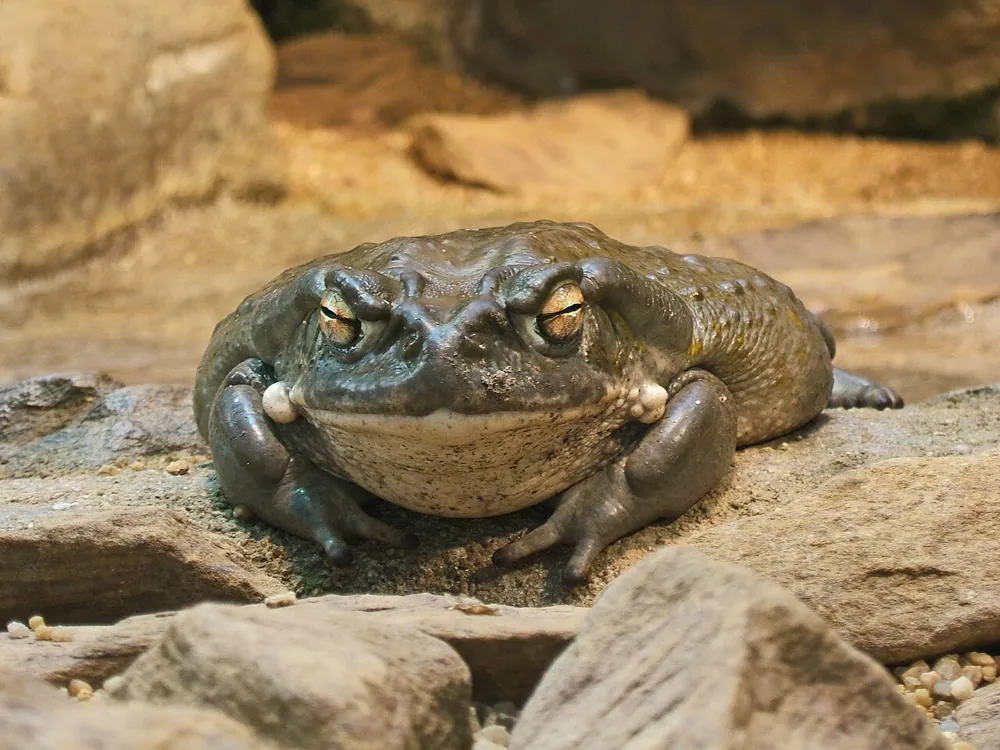
 Hono anndirtee ngal
Doole tooke
Nguru mum ko tooke. No musiiba meemugol ngal, meemugol ngal e ɗemngal walla ñaamugol ngal.
Ko honɗun tooke ɓanndu mum waɗata?
The toad releases poison from glands in its skin, including the large parotoid glands behind the eyes. The poison contains psychoactive compounds, including 5-MeO-DMT and bufotenin, which affect the brain. It also contains digoxin-like cardiac glycosides, which act on the heart, and ingesting the poison can be fatal. In one reported case, a young woman who drank a tea made from toad preparation began vomiting and had difficulty breathing soon after, and died about two and a half hours later.1
Hono musiiba mum heewiri e yimɓe?
Musiiba e yimɓe: Musiiba mawɗoSi neɗɗo meemii walla ñaamii ngal, yahu ka doktoro. Maayde no famɗi sanne.The poison is potent enough to kill a grown dog, and dogs that attack toads have been paralysed or killed. Several cases of human poisoning from swallowing toad secretions or eggs have been reported, and at least one death from the ch'an su preparation has been recorded. The toad has also been linked to poisoning and at least one death from the use of related toad preparations as street drugs.1
Ko honɗun ngal waɗata si ngal hulii?
When threatened, it releases toxins from glands in its skin.1
 Si neɗɗo meemii walla ñaamii ngal
- Si neɗɗo meemii gooto e majji: loot juuɗe ɗen no moƴƴi, wota meem gite walla hunuko. Si paykun walla kullal suudu meemii gooto e ɗemngal walla ñaamii gooto: noddu centre antipoison walla nimero ballal.
Adii fow noddu nimero ballal (112, 000, 911). Ɗum ko anndinal ballal adiingal, wanaa saaraangal doktoro. Ko adii nder ballal adiingal
 Reen hoore maa
- Wota a meem, wota a nanngu, wota a jalnu kullal ladde haa abada, hay si ko tokooso, hay si no yi'ee no ɗaanii walla maayii.
- Accu ngal nokku. Si a fotti e ngal, deeƴu, ruttu ɓaawo seeɗa seeɗa, accu ngal yaha laawol mum.
- Si a meemii walla a ñaamii ngal: wota a moomtu gite maa walla hunuko maa, loot juuɗe maa, heɓu ballal doktoro.
Ngal faalaaka gaañugol ma. Tooke mum woodi tun ngam wota huunde ñaam ngal. Ko ɓeydi fii reenugol hoore maa
Hoto nder aduna?
Hono mawniri?
Hono juutiri?
 juuti no kaaɗe mahirɗe 6 e diisa gooto
 no waawi taccugol meeteruuji 100 nder segonde 180 (neɗɗo ɓurɗo yaawugol sokli 9,6)
Hono Colorado River toad mawniri, si fooɗondiraama e AN?
Ko limoore tun nder navigateur maa. Alaa ko danndetee walla ko neldetee ka nokku woo.
Hono yaawiri?


Humpito
It is the only toad species in which bufotenin is present in large enough amounts to have a psychoactive effect.1
Raccoons have learned to pull a toad away from water by its back leg, turn it over and feed on its belly, which keeps them away from the poison glands.1
Unlike most vertebrates, it gets most of its water by absorbing it across its belly through a special area of skin called the seat patch.1
A female can lay up to 8,000 eggs.1
It is the largest toad in the United States, apart from the non-native cane toad.1
Bonnoowo fenaandeeji
Fenaande: Licking or smoking the toad's secretions is a safe way to get high or to treat illness.
Goonga: Swallowing the secretions has caused poisonings and deaths. Claims about its therapeutic use are unverified, and the US National Park Service has warned people not to handle or lick the toad.1
Ngam ganduɓe tooke
- Innde ganndal
- Incilius alvarius
- Fedde
- Paaɓe tooke, krapooji e tritonuuji
- Ɓesngu
- Bufonidae2
- Ordre
- Anura
- Leyɗe mawɗe
- Amerik Nord
- Ɓiɓɓe tokosɓe
- Females lay eggs in ponds, slow-moving streams, temporary pools or man-made structures that hold water, and can lay up to 8,000 eggs in a long tube of jelly.1
- Hono ngal woniri nder ladde
- Listed as threatened in New Mexico and California. A June 2025 study found that persistent trapping in Mexico has decimated several populations and put the species at risk of extinction.1
- Musiiba e yimɓe
- 3 / 5: Musiiba mawɗo3
Ɗo humpitooji ɗin iwri
- Colorado River toad (Wikipedia (CC BY-SA 4.0))
- Incilius alvarius (iNaturalist): inɗe e ŋoordingol (classification).
- Venom Wiki: tolno musiiba, mawnugol aadaajo e miijo yaawugol ko amen. Ndaar no min ƴeewtirta ɗum: Hono min tolnirta musiiba.
Kala humpito nder ngoo hello no jogii limoore hollirnde iwdi mum. Si min juumii, yaafo, min ko yiɗɓe kulle, wanaa jaaynde ganndal. Haalan min e [email protected], min feewnitan.
 Yaare nden no weelaa! Venom Wiki ko golle neɗɗo gooto: ko yoɓetaake, alaa piiblisite, alaa reweteeɓe. Kopporde tokooso no walla heddingol ɗum e enternet.Ñaamnu yaare nden
Ko ɓeydi e fedde wootere: Paaɓe tooke, krapooji e tritonuuji
 Cane toadPaaɓe tooke, krapooji e tritonuujiNo sokli doktoroWota a meem
 Strawberry poison-dart frogPaaɓe tooke, krapooji e tritonuujiNo muusi tunWota a meem
 California newtPaaɓe tooke, krapooji e tritonuujiNo waawi warugolWota a meem
 Rough-skinned newtPaaɓe tooke, krapooji e tritonuujiNo waawi warugolWota a meem
 Panamanian golden frogPaaɓe tooke, krapooji e tritonuujiNo sokli doktoroWota a meem
 Eastern newtPaaɓe tooke, krapooji e tritonuujiNo muusi tunWota a meem
 Terciopelo
 Eastern coral snake
 Eastern diamondback rattlesnake
 Eyelash viper
 Timber rattlesnake
 Western diamondback rattlesnake