
 Afirik
 Aazi
Aazi Orop
Orop Amerik Sud
 Ostarali e Oseyani
 Antarktik
 Geeci Pasifik
 Geeci Atlantik
 Geeci Enndo
 Geeci Arktik
 Geeci Mediteraane
 Geeci Boɗeewi
 Geeci Karayib
 Geeci Korayl
 Geeci Siin Sud
 Geeci Filipiin
 Geeci Andaman
 Geeci Nord
 Geeci Timor e Arafura
 Gulf Bengal
 Gulf Kaliforni
Panamanian golden frog
 Tooke nder nguru mum
The Panamanian golden frog is a bright yellow-gold toad that lives only in Panama. It sits on the mountain streams and cloud forests of the west-central part of the country. It is a national symbol, and it is also one of the most endangered amphibians in the world.1

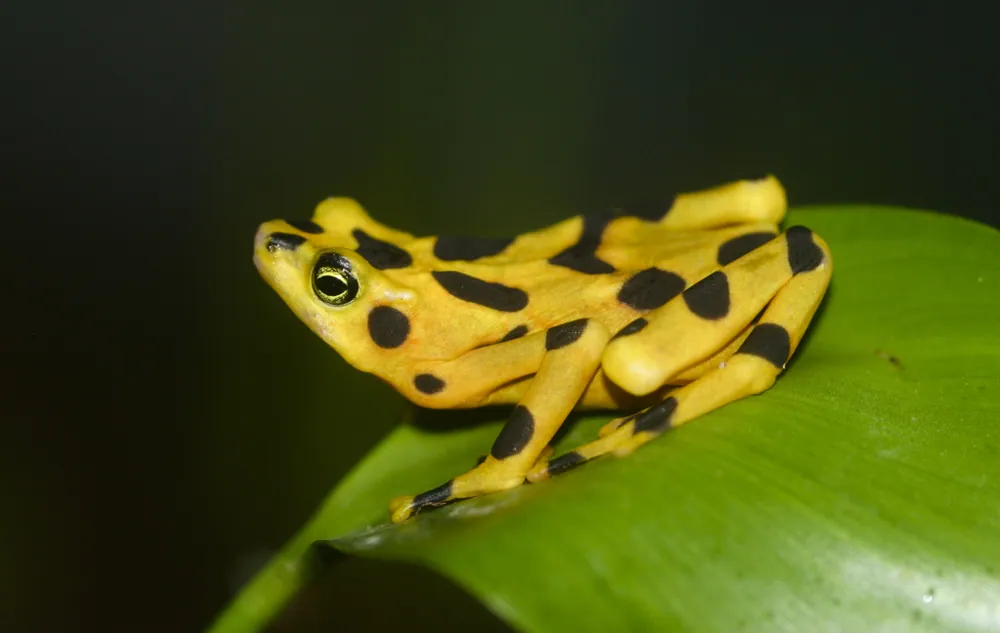
 Hono anndirtee ngal
Doole tooke
Nguru mum ko tooke. No musiiba meemugol ngal, meemugol ngal e ɗemngal walla ñaamugol ngal.
Ko honɗun tooke ɓanndu mum waɗata?
It is poisonous rather than venomous, because its toxins work on contact with the skin and are not injected. The toxin is water-soluble and affects the nerve cells of anyone who touches it. Large doses can be fatal within 20 to 30 minutes, after convulsions that stop breathing and blood circulation.1
Hono musiiba mum heewiri e yimɓe?
Musiiba e yimɓe: Musiiba mawɗoSi neɗɗo meemii walla ñaamii ngal, yahu ka doktoro. Maayde no famɗi sanne.Its toxin affects the nerve cells of anyone who comes into contact with it, and large doses can be fatal. Because it is critically endangered, the frog should be left alone in the wild.1
Ko honɗun ngal waɗata si ngal hulii?
When a predator approaches, it waves and lifts its foot to show its bright colours, which warn of its toxicity. If the predator keeps coming, the waving and calls increase in speed and volume.1
 Si neɗɗo meemii walla ñaamii ngal
- Si neɗɗo meemii gooto e majji: loot juuɗe ɗen no moƴƴi, wota meem gite walla hunuko. Si paykun walla kullal suudu meemii gooto e ɗemngal walla ñaamii gooto: noddu centre antipoison walla nimero ballal.
Adii fow noddu nimero ballal (112, 000, 911). Ɗum ko anndinal ballal adiingal, wanaa saaraangal doktoro. Ko adii nder ballal adiingal
 Reen hoore maa
- Wota a meem, wota a nanngu, wota a jalnu kullal ladde haa abada, hay si ko tokooso, hay si no yi'ee no ɗaanii walla maayii.
- Accu ngal nokku. Si a fotti e ngal, deeƴu, ruttu ɓaawo seeɗa seeɗa, accu ngal yaha laawol mum.
- Si a meemii walla a ñaamii ngal: wota a moomtu gite maa walla hunuko maa, loot juuɗe maa, heɓu ballal doktoro.
Ngal faalaaka gaañugol ma. Tooke mum woodi tun ngam wota huunde ñaam ngal. Ko ɓeydi fii reenugol hoore maa
Hoto nder aduna?
Hono mawniri?
Hono juutiri?
Hono teddiri?

 juuti no kaaɗe mahirɗe 2 e diisa gooto
 hoyɗo no feewi, a nanataa ɗum e jungo maa
 no waawi taccugol meeteruuji 100 nder segonde 90 (neɗɗo ɓurɗo yaawugol sokli 9,6)
Hono Panamanian golden frog mawniri, si fooɗondiraama e AN?
Ko limoore tun nder navigateur maa. Alaa ko danndetee walla ko neldetee ka nokku woo.
Hono yaawiri?


Humpito
It is able to communicate by waving its feet, a bit like semaphore, as well as by sound.1
It is an 'earless' frog with no eardrums, yet it can still hear sounds and work out where they come from.1
Its toxins are powerful enough that some predators avoid it, though a few snakes can cope with its poison.1
Tadpoles have black and gold colouring, which helps protect them from the sun.1
It was filmed in the wild for the last time in 2006 for the BBC series Life in Cold Blood.1
Bonnoowo fenaandeeji
Fenaande: It is a frog.
Goonga: Despite its common name, it is a true toad, a member of the family Bufonidae.1
Ngam ganduɓe tooke
- Innde ganndal
- Atelopus zeteki
- Fedde
- Paaɓe tooke, krapooji e tritonuuji
- Ɓesngu
- Bufonidae2
- Ordre
- Anura
- Leyɗe mawɗe
- Amerik Nord
- Ɓiɓɓe tokosɓe
- Eggs are laid in shallow streams and hatch after 2 to 10 days. The tadpoles then take 6 to 7 months to grow.1
- Duuɓi nguurndam
- wona duuɓi 121
- Hono ngal woniri nder ladde
- Critically Endangered (IUCN). It may have been extinct in the wild since 2007.1
- Musiiba e yimɓe
- 3 / 5: Musiiba mawɗo3
Ɗo humpitooji ɗin iwri
- Panamanian golden frog (Wikipedia (CC BY-SA 4.0))
- Atelopus zeteki (iNaturalist): inɗe e ŋoordingol (classification).
- Venom Wiki: tolno musiiba, mawnugol aadaajo e miijo yaawugol ko amen. Ndaar no min ƴeewtirta ɗum: Hono min tolnirta musiiba.
Kala humpito nder ngoo hello no jogii limoore hollirnde iwdi mum. Si min juumii, yaafo, min ko yiɗɓe kulle, wanaa jaaynde ganndal. Haalan min e [email protected], min feewnitan.
 Yaare nden no weelaa! Venom Wiki ko golle neɗɗo gooto: ko yoɓetaake, alaa piiblisite, alaa reweteeɓe. Kopporde tokooso no walla heddingol ɗum e enternet.Ñaamnu yaare nden
Ko ɓeydi e fedde wootere: Paaɓe tooke, krapooji e tritonuuji
 Cane toadPaaɓe tooke, krapooji e tritonuujiNo sokli doktoroWota a meem
 Strawberry poison-dart frogPaaɓe tooke, krapooji e tritonuujiNo muusi tunWota a meem
 California newtPaaɓe tooke, krapooji e tritonuujiNo waawi warugolWota a meem
 Rough-skinned newtPaaɓe tooke, krapooji e tritonuujiNo waawi warugolWota a meem
 Colorado River toadPaaɓe tooke, krapooji e tritonuujiNo sokli doktoroWota a meem
 Eastern newtPaaɓe tooke, krapooji e tritonuujiNo muusi tunWota a meem
 Terciopelo
 Eastern coral snake
 Eastern diamondback rattlesnake
 Eyelash viper
 Timber rattlesnake
 Western diamondback rattlesnake