
 Afirik
 Aazi
Aazi Orop
Orop Amerik Sud
 Ostarali e Oseyani
 Antarktik
 Geeci Pasifik
 Geeci Atlantik
 Geeci Enndo
 Geeci Arktik
 Geeci Mediteraane
 Geeci Boɗeewi
 Geeci Karayib
 Geeci Korayl
 Geeci Siin Sud
 Geeci Filipiin
 Geeci Andaman
 Geeci Nord
 Geeci Timor e Arafura
 Gulf Bengal
 Gulf Kaliforni
Estuarine stonefish
 Gaaɗe tooke
The estuarine stonefish is a fish that looks like a stone lying on the seabed. It lives in shallow reefs and estuaries across the Indo-Pacific, including northern Australia. It is considered one of the most dangerous venomous fish in the world, so it is important to know what it looks like.1



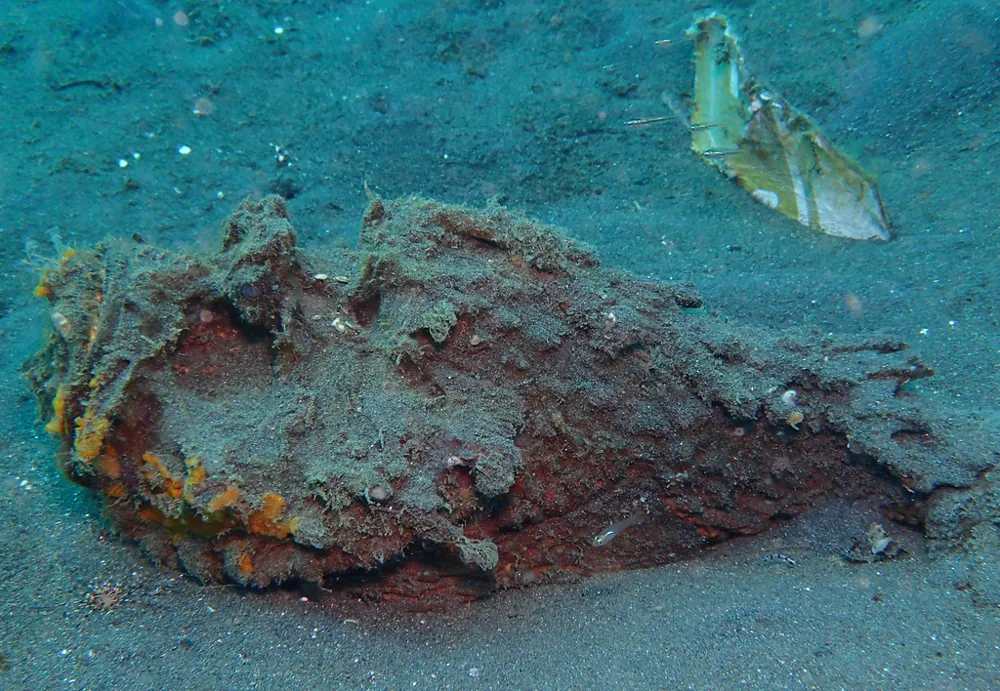
 Hono anndirtee ngal
- Drab brownish-grey, reddish or greenish-brown colour1
- Skin has no scales and is covered in warts, often with filamentous algae growing on it1
- Head is flattened, with small eyes set high and pointing upwards, and a deep pit behind and under each eye1
- Large, almost vertical mouth with fringing cirri on the lips1
- Camouflaged to look like a stone resting on the bottom; it has no bright warning colours1
- Grows to a maximum of 60 cm1
Doole tooke ŋatgol
Gaaɗe ceeɓɗe no njogii tooke. Yaabugol e mum walla nanngugol ɗum no muusi.
Ko honɗun tooke mum waɗata (ŋatgol walla jukkugol)?
Each fin spine has two venom-producing glands. The venom affects the cardiovascular and neuromuscular systems. The sting is extremely painful and has been known to be lethal.1
Hono musiiba mum heewiri e yimɓe?
Musiiba e yimɓe: Musiiba sanneNo waawi warugol neɗɗo mo safraaka.It is considered one of the most dangerous venomous fishes. Stings are extremely painful and have been known to be fatal. Since European settlement, there have been no recorded deaths in Australia from stonefish venom, but deaths have been recorded elsewhere in its range.1
 Kabaaru moƴƴo: doktoroɓe no njogii lekki (sérum antivenimeux) walla safaara ngam ɗum.1
Ko honɗun ngal waɗata si ngal hulii?
When disturbed, it erects its venomous spines, which inject venom if the fish is stepped on.1
 Si gaaɗe mum tuƴii ma
- Antivenom can be given after envenomation. Immersing the sting wound in hot water can be used to denature the venom.1
- Waɗ gaañande nden nder ndiyam guleeɗam, guleeɗam no neɗɗo on waawi muñugol tawa sumaani (ƴeewto e jungo maa hoore), miniti 30 haa 90. Heɓu ballal doktoro, ɓuri noon fii liƴƴi kaaƴe e raayi.
Adii fow noddu nimero ballal (112, 000, 911). Ɗum ko anndinal ballal adiingal, wanaa saaraangal doktoro. Ko adii nder ballal adiingal
 Reen hoore maa
- Wota a meem, wota a nanngu, wota a jalnu kullal ladde haa abada, hay si ko tokooso, hay si no yi'ee no ɗaanii walla maayii.
- Accu ngal nokku. Si a fotti e ngal, deeƴu, ruttu ɓaawo seeɗa seeɗa, accu ngal yaha laawol mum.
- Si gaaɗe mum tuƴii ma: deeƴu, wota a dillu, noddu nimero ballal (112, 000, 911) walla yahu lopitaan law. Jogo e hakkille no ngal nanndi, natal no walla.
Ngal faalaaka gaañugol ma. Ngal no huutora tooke mum ngam nanngugol ñaamdu walla reenugol hoore mum, ngal ɓuri yiɗugol suuɗaade. Ko ɓeydi fii reenugol hoore maa
Hoto nder aduna?
Hono mawniri?
Hono juutiri?
 juuti no banaanaaji 3 jokkondirɗi
 no waawi yoowugol juutde pisin mawɗo (50 m) nder segonde 90
Hono Estuarine stonefish mawniri, si fooɗondiraama e AN?
Ko limoore tun nder navigateur maa. Alaa ko danndetee walla ko neldetee ka nokku woo.
Hono yaawiri?


Humpito
It can tolerate being out of the water for up to 24 hours.1
It scoops out a shallow hollow in the seabed with its large pectoral fins and curls its tail around its body to hide.1
It is camouflaged to look like a stone, unlike many venomous animals that use bright warning colours.1
Females are larger than males.1
Bonnoowo fenaandeeji
Fenaande: The species name horrida refers to its dangerous spines.
Goonga: The name means "dreadful" or "frightful" and alludes to its appearance, not its venomous spines.1
Ɗo humpitooji ɗin iwri
- Synanceia horrida (Wikipedia (CC BY-SA 4.0))
- Synanceia horrida (iNaturalist): inɗe e ŋoordingol (classification).
- Venom Wiki: tolno musiiba, mawnugol aadaajo e miijo yaawugol ko amen. Ndaar no min ƴeewtirta ɗum: Hono min tolnirta musiiba.
Kala humpito nder ngoo hello no jogii limoore hollirnde iwdi mum. Si min juumii, yaafo, min ko yiɗɓe kulle, wanaa jaaynde ganndal. Haalan min e [email protected], min feewnitan.
 Yaare nden no weelaa! Venom Wiki ko golle neɗɗo gooto: ko yoɓetaake, alaa piiblisite, alaa reweteeɓe. Kopporde tokooso no walla heddingol ɗum e enternet.Ñaamnu yaare nden
Ko ɓeydi e fedde wootere: Liƴƴi tooke
 Reef stonefishLiƴƴi tookeNo waawi warugolWota a meem
 Red lionfishLiƴƴi tookeNo sokli doktoroWota a meem
 Short-tail stingrayLiƴƴi tookeNo waawi warugol
 Striped eel catfishLiƴƴi tookeNo waawi warugolWota a meem
 Bluespotted ribbontail rayLiƴƴi tookeNo sokli doktoro
 Common stingrayLiƴƴi tookeNo sokli doktoro
No hoɗi kadi nder: Geeci Enndo
 Meduusi kaaɗe OstaraliMeduusiiji e kulle geeci jukkoojeWaroowoWota a meem
 Kokiyaasi kone jeografiKokiyaasi kone e pulpuujiWaroowo
 Pulpu mawɗo koode bulaajeKokiyaasi kone e pulpuujiWaroowo
 Pulpu koode bulaaje sudKokiyaasi kone e pulpuujiWaroowo
 Hawksbill sea turtleKulle goɗɗe tookeeje ɓannduNo waawi warugol
 Irukandji jellyfishMeduusiiji e kulle geeci jukkoojeNo waawi warugolWota a meem