
 Afirik
 Aazi
Aazi Orop
Orop Amerik Sud
 Ostarali e Oseyani
 Antarktik
 Geeci Pasifik
 Geeci Atlantik
 Geeci Enndo
 Geeci Arktik
 Geeci Mediteraane
 Geeci Boɗeewi
 Geeci Karayib
 Geeci Korayl
 Geeci Siin Sud
 Geeci Filipiin
 Geeci Andaman
 Geeci Nord
 Geeci Timor e Arafura
 Gulf Bengal
 Gulf Kaliforni
Mojave rattlesnake
 Ŋatgol
The Mojave rattlesnake is a venomous pit viper that lives in the deserts of the southwestern United States and northern Mexico. Its venom is among the most studied of any rattlesnake, and it varies a lot from one population to another. Knowing how to recognise it helps people in its range stay safe.1


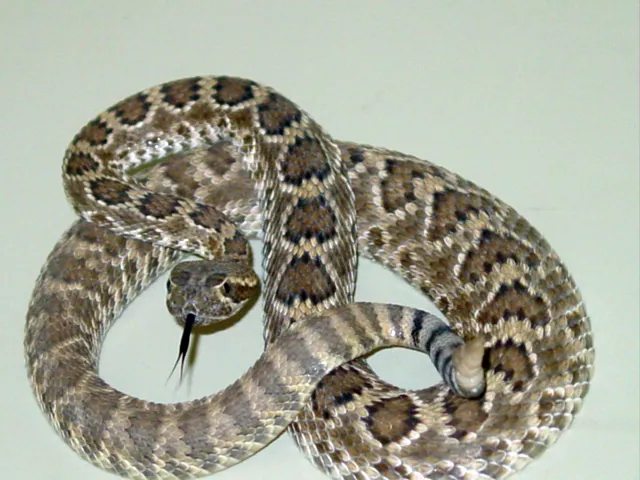
 Hono anndirtee ngal
- Has a row of large diamond-shaped blotches along the back, without the dark speckling found on the Western Diamond-backed Rattlesnake.1
- The diamonds usually lack the white edges seen on most Western Diamond-backed Rattlesnakes.1
- The tail has pale and dark rings, and the dark rings are often narrower than the pale ones.1
- The rattle is usually yellow and black, or entirely yellow.1
- Its back colour ranges from green to brown, grey or yellowish, so colour alone is not a reliable guide.1
No jiibondiree e: It closely resembles the Western Diamond-backed Rattlesnake, which lives in the same areas. The Mojave rattlesnake has no dark speckling on its back, usually lacks white edges on the diamonds, has a facial stripe that bends toward the neck rather than meeting the mouth, and usually has a yellow or bicoloured rattle rather than a black one. No single trait reliably separates the two.1
Doole tooke ŋatgol
Tooke no yaltira ñiiƴe mum tuma ngal ŋatata.
Ko honɗun tooke mum waɗata (ŋatgol walla jukkugol)?
Its venom comes in two main types. Venom A contains Mojave toxin, a neurotoxic venom that attacks the nerves and can cause delayed respiratory paralysis, meaning the muscles used for breathing fail, with little or no local tissue damage. Venom B has no Mojave toxin and instead contains tissue-destroying enzymes called metalloproteinases.1
Hono musiiba mum heewiri e yimɓe?
Musiiba e yimɓe: Musiiba sanneNo waawi warugol neɗɗo mo safraaka.For decades this snake has been described as one of the deadliest rattlesnakes, and some sources call it the most dangerous snake in the United States. The danger depends on the population, because the neurotoxic venom is not found everywhere in its range. Some animals in between produce a mix of both venom types.1
Ko honɗun ngal waɗata si ngal hulii?
It is shy and tends to avoid confrontation, but it will strike and bite vigorously when disturbed, especially if surprised or if there is no nearby vegetation or burrow to escape into.1
 Si no ŋata
- Haɗu neɗɗo on dillagol, deeƴnu mo, jogo koyngal walla jungo ŋataaɗo on e toownde ɓernde, ittu baagiiji e ko tiiɗi fow, yahra mo lopitaan law.
Adii fow noddu nimero ballal (112, 000, 911). Ɗum ko anndinal ballal adiingal, wanaa saaraangal doktoro. Ko adii nder ballal adiingal
 Reen hoore maa
- Wota a meem, wota a nanngu, wota a jalnu kullal ladde haa abada, hay si ko tokooso, hay si no yi'ee no ɗaanii walla maayii.
- Accu ngal nokku. Si a fotti e ngal, deeƴu, ruttu ɓaawo seeɗa seeɗa, accu ngal yaha laawol mum.
- Si gooto e majji ŋatii ma: deeƴu, wota a dillu, noddu nimero ballal (112, 000, 911) walla yahu lopitaan law. Jogo e hakkille no ngal nanndi, natal no walla.
Ngal faalaaka gaañugol ma. Ngal no huutora tooke mum ngam nanngugol ñaamdu walla reenugol hoore mum, ngal ɓuri yiɗugol suuɗaade. Ko ɓeydi fii reenugol hoore maa
Hoto nder aduna?
Hono mawniri?
Hono juutiri?
 juuti no ulluuɗi suudu 2,5, hinere haa lawol
 juuti no banaanaaji 7 jokkondirɗi
 no waawi taccugol meeteruuji 100 nder segonde 97 (neɗɗo ɓurɗo yaawugol sokli 9,6)
Hono Mojave rattlesnake mawniri, si fooɗondiraama e AN?
Ko limoore tun nder navigateur maa. Alaa ko danndetee walla ko neldetee ka nokku woo.
Hono yaawiri?


Humpito
Bonnoowo fenaandeeji
Fenaande: Every Mojave rattlesnake bite is extraordinarily deadly.
Goonga: The reputation for deadliness comes mainly from the neurotoxic venom, which is found in most populations but not all. Venom from some populations is non-neurotoxic and mainly destroys tissue.1
Ngam ganduɓe tooke
- Innde ganndal
- Crotalus scutulatus
- Fedde
- Ɓoɗɗi wulloowi
- Ɓesngu
- Viperidae2
- Ordre
- Squamata
- Leyɗe mawɗe
- Amerik Nord
- Ɓiɓɓe tokosɓe
- It bears live young, usually between 2 and 17 (average about eight), from July through September.1
- Hono ngal woniri nder ladde
- Least Concern (IUCN Red List)1
- Musiiba e yimɓe
- 4 / 5: Musiiba sanne3
Ɗo humpitooji ɗin iwri
- Crotalus scutulatus (Wikipedia (CC BY-SA 4.0))
- Crotalus scutulatus (iNaturalist): inɗe e ŋoordingol (classification).
- Venom Wiki: tolno musiiba, mawnugol aadaajo e miijo yaawugol ko amen. Ndaar no min ƴeewtirta ɗum: Hono min tolnirta musiiba.
Kala humpito nder ngoo hello no jogii limoore hollirnde iwdi mum. Si min juumii, yaafo, min ko yiɗɓe kulle, wanaa jaaynde ganndal. Haalan min e [email protected], min feewnitan.
 Yaare nden no weelaa! Venom Wiki ko golle neɗɗo gooto: ko yoɓetaake, alaa piiblisite, alaa reweteeɓe. Kopporde tokooso no walla heddingol ɗum e enternet.Ñaamnu yaare nden
Ko ɓeydi e fedde wootere: Ɓoɗɗi wulloowi
 Eastern diamondback rattlesnakeƁoɗɗi wulloowiNo waawi warugol
 Timber rattlesnakeƁoɗɗi wulloowiNo waawi warugol
 Western diamondback rattlesnakeƁoɗɗi wulloowiNo waawi warugol
 SidewinderƁoɗɗi wulloowiNo sokli doktoro
 Aruba rattlesnakeƁoɗɗi wulloowiNo sokli doktoro
 Black-tailed rattlesnakeƁoɗɗi wulloowiNo sokli doktoro
 Terciopelo
 Eastern coral snake
 Eyelash viper
 Arizona bark scorpion
 Brown recluse
 Cane toad