
 Afirik
 Aazi
Aazi Orop
Orop Amerik Sud
 Ostarali e Oseyani
 Antarktik
 Geeci Pasifik
 Geeci Atlantik
 Geeci Enndo
 Geeci Arktik
 Geeci Mediteraane
 Geeci Boɗeewi
 Geeci Karayib
 Geeci Korayl
 Geeci Siin Sud
 Geeci Filipiin
 Geeci Andaman
 Geeci Nord
 Geeci Timor e Arafura
 Gulf Bengal
 Gulf Kaliforni
South American rattlesnake
 Ŋatgol
The South American rattlesnake is a large, highly venomous pit viper. It lives across much of South America, except the Andes Mountains, and also on some Caribbean islands. It is the most widely spread member of its genus, which is why it matters to people in so many places.1


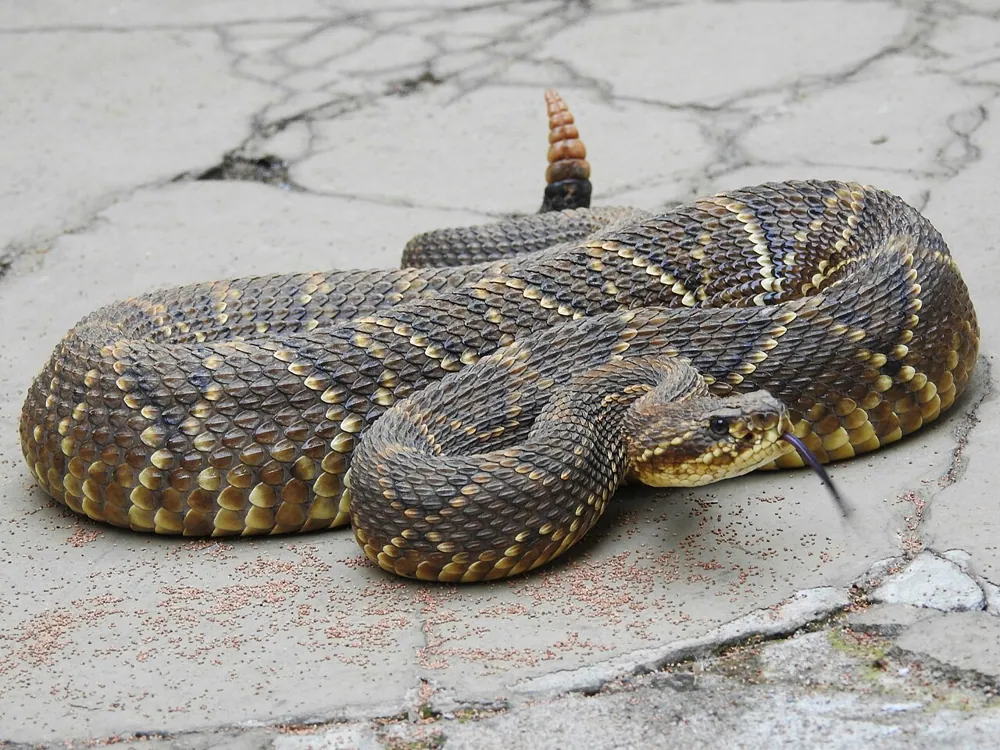
 Hono anndirtee ngal
- Two distinct stripes start at the base of the head, and the colour between the lines is lighter than the stripes.1
- Body colour and pattern vary, but most have 18 to 32 dark diamond or rhombic spots along the back.1
- The head has a dark brown bar at the top and a dark band behind the eye.1
- The tail is usually grey, with dark, faint crossed bands.1
- The belly is white or yellowish with light grey spots, getting darker towards the tail.1
Doole tooke ŋatgol
Tooke no yaltira ñiiƴe mum tuma ngal ŋatata.
Ko honɗun tooke mum waɗata (ŋatgol walla jukkugol)?
Its venom contains neurotoxins, which attack the nerves, and myotoxins, which damage muscle. These cause progressive paralysis, including impaired or lost vision, hearing problems, drooping eyelids and weakness in the neck muscles, which can become so limp that the head appears broken. Breathing can eventually be stopped by paralysis, and the muscle damage can cause dark urine.1
Hono musiiba mum heewiri e yimɓe?
Musiiba e yimɓe: Musiiba sanneNo waawi warugol neɗɗo mo safraaka.It is a highly venomous snake. The mortality rate is 72% for bite cases without specific serum treatment, and 11% for cases with it. Acute kidney failure is considered the main cause of death.1
 Kabaaru moƴƴo: doktoroɓe no njogii lekki (sérum antivenimeux) walla safaara ngam ɗum.1
Ko honɗun ngal waɗata si ngal hulii?
It is highly alert and gives little warning before it strikes, but it is seldom aggressive towards people.1
 Si no ŋata
- Specific serum treatment (antivenom) greatly lowers the death rate, so a bite needs urgent hospital care to give it.1
- Haɗu neɗɗo on dillagol, deeƴnu mo, jogo koyngal walla jungo ŋataaɗo on e toownde ɓernde, ittu baagiiji e ko tiiɗi fow, yahra mo lopitaan law.
Adii fow noddu nimero ballal (112, 000, 911). Ɗum ko anndinal ballal adiingal, wanaa saaraangal doktoro. Ko adii nder ballal adiingal
 Reen hoore maa
- Wota a meem, wota a nanngu, wota a jalnu kullal ladde haa abada, hay si ko tokooso, hay si no yi'ee no ɗaanii walla maayii.
- Accu ngal nokku. Si a fotti e ngal, deeƴu, ruttu ɓaawo seeɗa seeɗa, accu ngal yaha laawol mum.
- Si gooto e majji ŋatii ma: deeƴu, wota a dillu, noddu nimero ballal (112, 000, 911) walla yahu lopitaan law. Jogo e hakkille no ngal nanndi, natal no walla.
Ngal faalaaka gaañugol ma. Ngal no huutora tooke mum ngam nanngugol ñaamdu walla reenugol hoore mum, ngal ɓuri yiɗugol suuɗaade. Ko ɓeydi fii reenugol hoore maa
Hoto nder aduna?
Hono mawniri?
Hono juutiri?
 juuti no ulluuɗi suudu 4, hinere haa lawol
 juuti no banaanaaji 11 jokkondirɗi
 no waawi taccugol meeteruuji 100 nder segonde 90 (neɗɗo ɓurɗo yaawugol sokli 9,6)
Hono South American rattlesnake mawniri, si fooɗondiraama e AN?
Ko limoore tun nder navigateur maa. Alaa ko danndetee walla ko neldetee ka nokku woo.
Hono yaawiri?


Humpito
The lethal dose for a 60 kg human is possibly 18 mg, while a snake's venom yield is 20 to 100 mg.1
Crotoxin, a neurotoxin, makes up about 48.5% to 89.4% of the venom proteins in one subspecies, though it is typically 60% to 70%.1
It is the most widely distributed member of its genus, and seven subspecies are currently recognised.1
It is more active at dusk and in the early hours of the morning.1
Males compete for access to females from the end of summer, with mating in autumn and the young born the following spring or summer.1
Bonnoowo fenaandeeji
Fenaande: Yellow venom means the bite damages blood and tissue, and white venom means it attacks the nerves.
Goonga: Venom colour does not determine the type. Colour depends on pigments in the venom, not on whether it is haemorrhagic or neurotoxic.1
Ngam ganduɓe tooke
- Innde ganndal
- Crotalus durissus
- Fedde
- Ɓoɗɗi wulloowi
- Ɓesngu
- Viperidae2
- Ordre
- Squamata
- Leyɗe mawɗe
- Amerik Sud
- Ɓiɓɓe tokosɓe
- It gives birth to live young (ovoviviparous), usually four to eight at a time. In Roraima, Brazil, gestation has been reported to last five months, with up to 14 young.1
- Musiiba e yimɓe
- 4 / 5: Musiiba sanne3
Ɗo humpitooji ɗin iwri
- Crotalus durissus (Wikipedia (CC BY-SA 4.0))
- Crotalus durissus (iNaturalist): inɗe e ŋoordingol (classification).
- Venom Wiki: tolno musiiba, mawnugol aadaajo e miijo yaawugol ko amen. Ndaar no min ƴeewtirta ɗum: Hono min tolnirta musiiba.
Kala humpito nder ngoo hello no jogii limoore hollirnde iwdi mum. Si min juumii, yaafo, min ko yiɗɓe kulle, wanaa jaaynde ganndal. Haalan min e [email protected], min feewnitan.
 Yaare nden no weelaa! Venom Wiki ko golle neɗɗo gooto: ko yoɓetaake, alaa piiblisite, alaa reweteeɓe. Kopporde tokooso no walla heddingol ɗum e enternet.Ñaamnu yaare nden
Ko ɓeydi e fedde wootere: Ɓoɗɗi wulloowi
 Uracoan rattlesnakeƁoɗɗi wulloowiNo sokli doktoro
 Eastern diamondback rattlesnakeƁoɗɗi wulloowiNo waawi warugol
 Timber rattlesnakeƁoɗɗi wulloowiNo waawi warugol
 Western diamondback rattlesnakeƁoɗɗi wulloowiNo waawi warugol
 SidewinderƁoɗɗi wulloowiNo sokli doktoro
 Mojave rattlesnakeƁoɗɗi wulloowiNo waawi warugol
 Faaɓru tooke kaŋŋe
 Terciopelo
 Brazilian wandering spider
 Eyelash viper
 Golden lancehead
 South American bushmaster