
 Afirik
 Aazi
Aazi Orop
Orop Amerik Sud
 Ostarali e Oseyani
 Antarktik
 Geeci Pasifik
 Geeci Atlantik
 Geeci Enndo
 Geeci Arktik
 Geeci Mediteraane
 Geeci Boɗeewi
 Geeci Karayib
 Geeci Korayl
 Geeci Siin Sud
 Geeci Filipiin
 Geeci Andaman
 Geeci Nord
 Geeci Timor e Arafura
 Gulf Bengal
 Gulf Kaliforni
South Australian cobbler
 Gaaɗe tooke
The South Australian cobbler is a marine fish with venomous spines on its head and fins. It lives along the temperate southern coasts of Australia, in shallow water and seagrass beds. Its spines make it a fish to keep well clear of.1



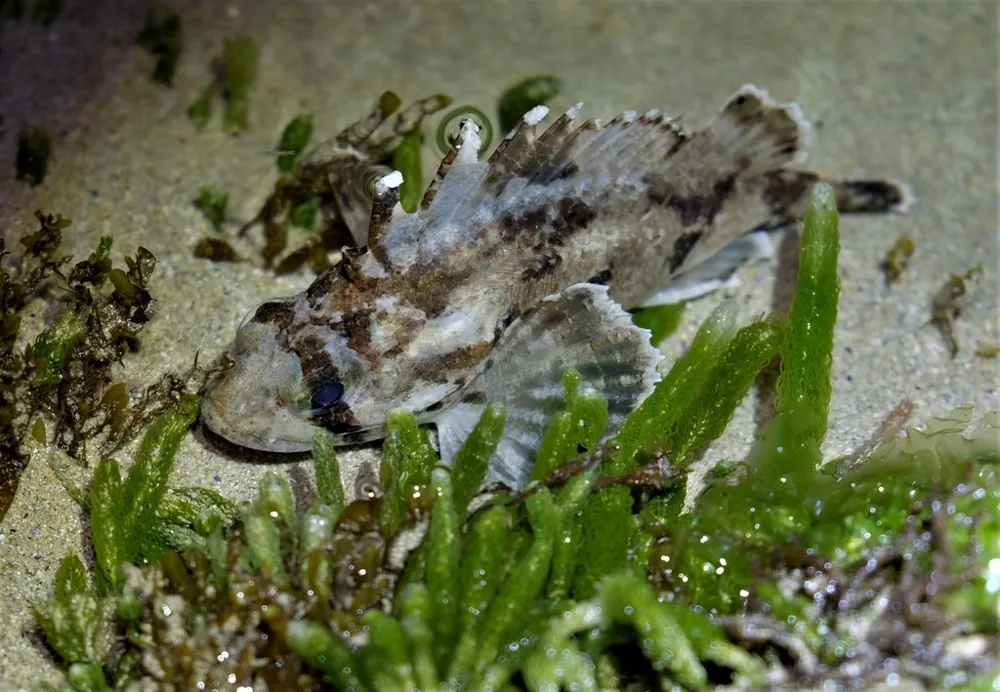
 Hono anndirtee ngal
- Mottled pattern of brown to dark brown blotches on the upper body, fading to pale underneath1
- The blotches are less obvious in larger fish1
- An obvious dark blotch on the dorsal fin, between the 4th and 7th spines1
- A dark, oblong spot near the base of the pectoral fin1
- Mostly scaleless body, with scales only along the lateral line1
Doole tooke ŋatgol
Gaaɗe ceeɓɗe no njogii tooke. Yaabugol e mum walla nanngugol ɗum no muusi.
Ko honɗun tooke mum waɗata (ŋatgol walla jukkugol)?
The venom is carried in spines on the head (infraorbital and preopercular bones) and in the dorsal, anal and pectoral fins. Stings cause severe pain and swelling around the affected area, along with nausea, sweating, paralysis of the limbs and fainting. In the worst cases the venom can affect the cardiovascular system, which controls the heart and blood flow.1
Hono musiiba mum heewiri e yimɓe?
Musiiba e yimɓe: Musiiba mawɗoSi gaaɗe mum tuƴii ma, yahu ka doktoro. Maayde no famɗi sanne.People who have been stung by this fish rarely die. Symptoms can nevertheless be severe.1
Ko honɗun ngal waɗata si ngal hulii?
It is well defended by venomous spines on its head and fins.1
 Si gaaɗe mum tuƴii ma
- Waɗ gaañande nden nder ndiyam guleeɗam, guleeɗam no neɗɗo on waawi muñugol tawa sumaani (ƴeewto e jungo maa hoore), miniti 30 haa 90. Heɓu ballal doktoro, ɓuri noon fii liƴƴi kaaƴe e raayi.
Adii fow noddu nimero ballal (112, 000, 911). Ɗum ko anndinal ballal adiingal, wanaa saaraangal doktoro. Ko adii nder ballal adiingal
 Reen hoore maa
- Wota a meem, wota a nanngu, wota a jalnu kullal ladde haa abada, hay si ko tokooso, hay si no yi'ee no ɗaanii walla maayii.
- Accu ngal nokku. Si a fotti e ngal, deeƴu, ruttu ɓaawo seeɗa seeɗa, accu ngal yaha laawol mum.
- Si gaaɗe mum tuƴii ma: deeƴu, wota a dillu, noddu nimero ballal (112, 000, 911) walla yahu lopitaan law. Jogo e hakkille no ngal nanndi, natal no walla.
Ngal faalaaka gaañugol ma. Ngal no huutora tooke mum ngam nanngugol ñaamdu walla reenugol hoore mum, ngal ɓuri yiɗugol suuɗaade. Ko ɓeydi fii reenugol hoore maa
Hono mawniri?
Hono juutiri?
 juuti no kaaɗe mahirɗe 7 e diisa gooto
 no waawi yoowugol juutde pisin mawɗo (50 m) nder segonde 40
Hono South Australian cobbler mawniri, si fooɗondiraama e AN?
Ko limoore tun nder navigateur maa. Alaa ko danndetee walla ko neldetee ka nokku woo.
Hono yaawiri?
Humpito
It can live for more than 14 years, and large individuals are much older than other species of the same size, because it grows slowly.1
It spends the day motionless and hunts at night, waiting for prey to come close.1
Its genus, Gymnapistes, comes from a Greek word meaning 'bare' or 'naked', which refers to its mostly scaleless body.1
Ngam ganduɓe tooke
- Innde ganndal
- Gymnapistes marmoratus
- Fedde
- Liƴƴi tooke
- Ɓesngu
- Synanceiidae2
- Ordre
- Perciformes
- Leyɗe mawɗe
- Geeci Enndo, Geeci Sud, Antarktik, Oseyanuuji
- Ɓiɓɓe tokosɓe
- Fish reach sexual maturity at 2 to 4 years old. In late winter and early spring, adults gather in very large groups in deeper water, thought to be spawning aggregations.1
- Duuɓi nguurndam
- wona duuɓi 141
- Musiiba e yimɓe
- 3 / 5: Musiiba mawɗo3
Ɗo humpitooji ɗin iwri
- South Australian cobbler (Wikipedia (CC BY-SA 4.0))
- Gymnapistes marmoratus (iNaturalist): inɗe e ŋoordingol (classification).
- Venom Wiki: tolno musiiba, mawnugol aadaajo e miijo yaawugol ko amen. Ndaar no min ƴeewtirta ɗum: Hono min tolnirta musiiba.
Kala humpito nder ngoo hello no jogii limoore hollirnde iwdi mum. Si min juumii, yaafo, min ko yiɗɓe kulle, wanaa jaaynde ganndal. Haalan min e [email protected], min feewnitan.
 Yaare nden no weelaa! Venom Wiki ko golle neɗɗo gooto: ko yoɓetaake, alaa piiblisite, alaa reweteeɓe. Kopporde tokooso no walla heddingol ɗum e enternet.Ñaamnu yaare nden
Ko ɓeydi e fedde wootere: Liƴƴi tooke
 Reef stonefishLiƴƴi tookeNo waawi warugolWota a meem
 Red lionfishLiƴƴi tookeNo sokli doktoroWota a meem
 Estuarine stonefishLiƴƴi tookeNo waawi warugolWota a meem
 Short-tail stingrayLiƴƴi tookeNo waawi warugol
 Striped eel catfishLiƴƴi tookeNo waawi warugolWota a meem
 Bluespotted ribbontail rayLiƴƴi tookeNo sokli doktoro
No hoɗi kadi nder: Geeci Enndo
 Meduusi kaaɗe OstaraliMeduusiiji e kulle geeci jukkoojeWaroowoWota a meem
 Kokiyaasi kone jeografiKokiyaasi kone e pulpuujiWaroowo
 Pulpu mawɗo koode bulaajeKokiyaasi kone e pulpuujiWaroowo
 Pulpu koode bulaaje sudKokiyaasi kone e pulpuujiWaroowo
 Hawksbill sea turtleKulle goɗɗe tookeeje ɓannduNo waawi warugol
 Irukandji jellyfishMeduusiiji e kulle geeci jukkoojeNo waawi warugolWota a meem