
 Afirik
 Aazi
Aazi Orop
Orop Amerik Sud
 Ostarali e Oseyani
 Antarktik
 Geeci Pasifik
 Geeci Atlantik
 Geeci Enndo
 Geeci Arktik
 Geeci Mediteraane
 Geeci Boɗeewi
 Geeci Karayib
 Geeci Korayl
 Geeci Siin Sud
 Geeci Filipiin
 Geeci Andaman
 Geeci Nord
 Geeci Timor e Arafura
 Gulf Bengal
 Gulf Kaliforni
Textile cone
 Jukkugol
The textile cone is a venomous sea snail. It is a mollusc with a patterned shell, and it hunts other snails at night. It lives in warm seas around Africa, Australia and the Pacific, and it can sting people, so it is important to know it.1

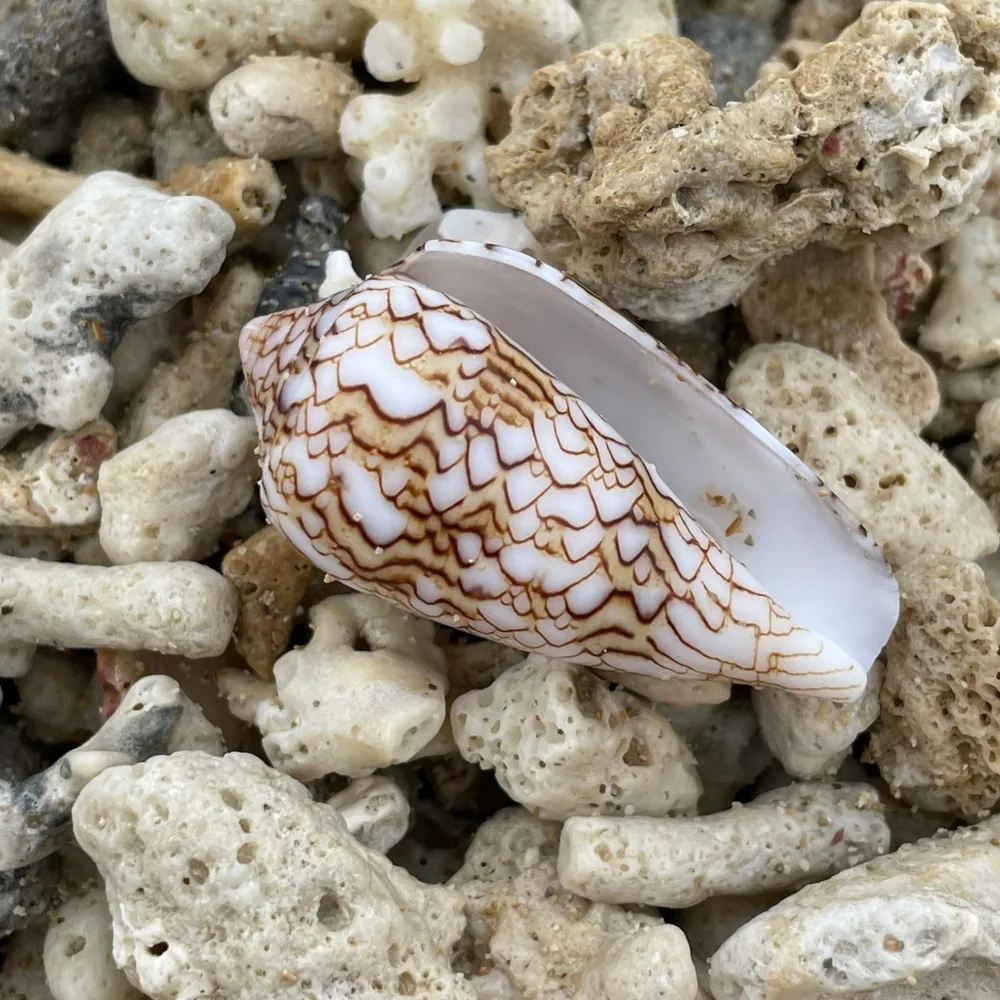
 Hono anndirtee ngal
Doole tooke ŋatgol
Tooke no yaltira jukkere.
Ko honɗun tooke mum waɗata (ŋatgol walla jukkugol)?
Its venom is a conotoxin, a mix of toxins injected through the harpoon-like radular tooth. The venom contains the neurotoxin RPRFamide, which attacks the nerves.1
Hono musiiba mum heewiri e yimɓe?
Musiiba e yimɓe: Musiiba sanneNo waawi warugol neɗɗo mo safraaka.Several human deaths have been attributed to this species. A 2004 report linked about 30 human deaths to cone snails as a group. Live animals should be handled carefully or not at all, and anyone handling one without protecting exposed skin is at risk.1
 Si no jukka
- Haɓɓugol tiiɗngol e dartingol: taar bande elastik tiiɗnde e dow nokku ŋataaɗo on, refti e dow koyngal walla jungo on fow, haɓɓu attelle, haɗu neɗɗo on dillagol fey haa ballal hewta.
- Pulpu koode bulaaje walla kokiyaasi kone no waawi haɗugol neɗɗo foofagol tuma o fini: noddu ballal, hebulo foofnugol mo (bouche-à-bouche) haa ambilaasi ndin hewta, ɓe nanngoo.
Adii fow noddu nimero ballal (112, 000, 911). Ɗum ko anndinal ballal adiingal, wanaa saaraangal doktoro. Ko adii nder ballal adiingal
 Reen hoore maa
- Wota a meem, wota a nanngu, wota a jalnu kullal ladde haa abada, hay si ko tokooso, hay si no yi'ee no ɗaanii walla maayii.
- Accu ngal nokku. Si a fotti e ngal, deeƴu, ruttu ɓaawo seeɗa seeɗa, accu ngal yaha laawol mum.
- Si gooto e majji jukkii ma: deeƴu, wota a dillu, noddu nimero ballal (112, 000, 911) walla yahu lopitaan law. Jogo e hakkille no ngal nanndi, natal no walla.
Ngal faalaaka gaañugol ma. Ngal no huutora tooke mum ngam nanngugol ñaamdu walla reenugol hoore mum, ngal ɓuri yiɗugol suuɗaade. Ko ɓeydi fii reenugol hoore maa
Hoto nder aduna?
Hono mawniri?
Hono juutiri?
 juuti no kaaɗe mahirɗe 5 e diisa gooto
 ɓuri kokiyaasi ngesa leelugol
Hono Textile cone mawniri, si fooɗondiraama e AN?
Ko limoore tun nder navigateur maa. Alaa ko danndetee walla ko neldetee ka nokku woo.
Hono yaawiri?

Humpito
Its shell pattern is made by natural cellular automata, and it resembles Wolfram's rule 30 pattern.1
The pigment cells that make the pattern sit in a narrow band along the shell's lip, and each cell responds to its neighbours.1
Its proboscis can reach any part of its own shell.1
In Australia it is most common in northern Queensland, but sightings are spreading south into New South Wales as ocean temperatures warm with climate change.1
Its larvae drift in the current for about 16 days before settling on the bottom of the sea.1
Ngam ganduɓe tooke
- Innde ganndal
- Conus textile
- Fedde
- Kokiyaasi kone e pulpuuji
- Ɓesngu
- Conidae2
- Ordre
- Neogastropoda
- Leyɗe mawɗe
- Geeci Enndo, Geeci Pasifik, Geeci Korayl, Geeci Boɗeewi, Geeci Filipiin, Geeci Arabi e Gulf Persik, Geeci Timor e Arafura, Gulf Bengal, Oseyanuuji
- Ɓiɓɓe tokosɓe
- The female lays several hundred eggs at a time. They hatch after about 16 or 17 days, and the larvae float in the current for about 16 days before settling on the sea floor at about 1.5 mm long.1
- Musiiba e yimɓe
- 4 / 5: Musiiba sanne3
Ɗo humpitooji ɗin iwri
- Conus textile (Wikipedia (CC BY-SA 4.0))
- Conus textile (iNaturalist): inɗe e ŋoordingol (classification).
- Venom Wiki: tolno musiiba, mawnugol aadaajo e miijo yaawugol ko amen. Ndaar no min ƴeewtirta ɗum: Hono min tolnirta musiiba.
Kala humpito nder ngoo hello no jogii limoore hollirnde iwdi mum. Si min juumii, yaafo, min ko yiɗɓe kulle, wanaa jaaynde ganndal. Haalan min e [email protected], min feewnitan.
 Yaare nden no weelaa! Venom Wiki ko golle neɗɗo gooto: ko yoɓetaake, alaa piiblisite, alaa reweteeɓe. Kopporde tokooso no walla heddingol ɗum e enternet.Ñaamnu yaare nden
Ko ɓeydi e fedde wootere: Kokiyaasi kone e pulpuuji
 Geography coneKokiyaasi kone e pulpuujiWaroowo
 Greater blue-ringed octopusKokiyaasi kone e pulpuujiWaroowo
 Southern blue-ringed octopusKokiyaasi kone e pulpuujiWaroowo
 Blue sea dragonKokiyaasi kone e pulpuujiNo muusi tun
 Common octopusKokiyaasi kone e pulpuujiAlaa musiiba
 Giant Pacific octopusKokiyaasi kone e pulpuujiAlaa musiiba
No hoɗi kadi nder: Geeci Enndo
 Australian box jellyfishMeduusiiji e kulle geeci jukkoojeWaroowoWota a meem
 Hawksbill sea turtleKulle goɗɗe tookeeje ɓannduNo waawi warugol
 Irukandji jellyfishMeduusiiji e kulle geeci jukkoojeNo waawi warugolWota a meem
 Reef stonefishLiƴƴi tookeNo waawi warugolWota a meem
 Crown-of-thorns starfishUrsenuuji, koode geeci e ngilɗiNo sokli doktoroWota a meem
 Portuguese man o' warMeduusiiji e kulle geeci jukkoojeNo sokli doktoroWota a meem