
 Afirik
 Aazi
Aazi Orop
Orop Amerik Sud
 Ostarali e Oseyani
 Antarktik
 Geeci Pasifik
 Geeci Atlantik
 Geeci Enndo
 Geeci Arktik
 Geeci Mediteraane
 Geeci Boɗeewi
 Geeci Karayib
 Geeci Korayl
 Geeci Siin Sud
 Geeci Filipiin
 Geeci Andaman
 Geeci Nord
 Geeci Timor e Arafura
 Gulf Bengal
 Gulf Kaliforni
White-tailed spider
 Ŋatgol
The white-tailed spider is a slim, long-legged spider that lives in southern and eastern Australia. It gets its name from the whitish tip at the end of its abdomen. It hunts other spiders at night rather than spinning a web, and it can bite people.1

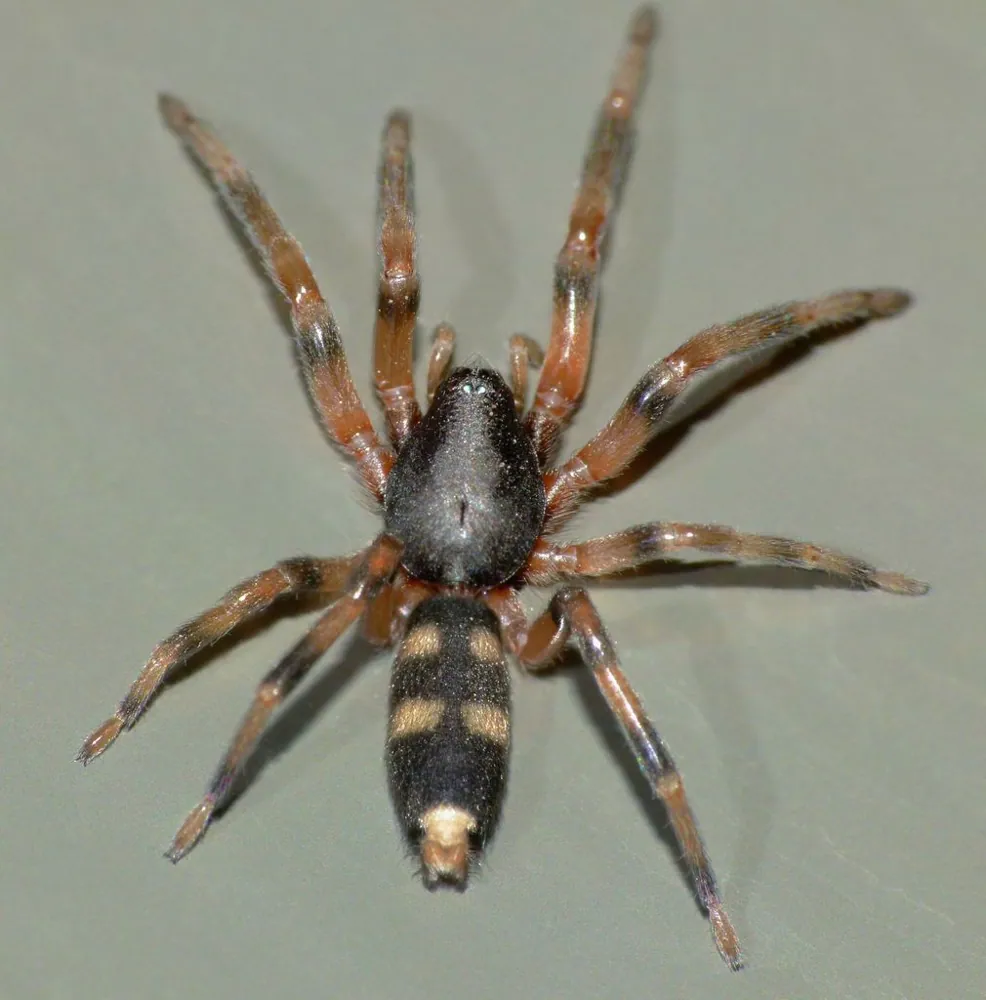
 Hono anndirtee ngal
- Slender spider with a dark reddish to grey, cigar-shaped body1
- Dark orange-brown legs with bands1
- Grey abdomen with two pairs of faint white spots1
- Usually a distinct white spot at the tip of the abdomen, just above the spinnerets (the silk-producing organs)1
- Does not build a web1
No jiibondiree e: Lampona murina is very similar to Lampona cylindrata. The two are not easily told apart without microscopic examination. Several other spider species also have a white mark at the end of the abdomen and are called white-tails.1
Doole tooke ŋatgol
Tooke no yaltira ñiiƴe mum tuma ngal ŋatata.
Ko honɗun tooke mum waɗata (ŋatgol walla jukkugol)?
The bite injects venom. Typical effects are a small red or discoloured bump that burns or itches, along with local pain and swelling. Rarely, the bite causes nausea, vomiting, malaise (a general feeling of being unwell) or headache. These symptoms are generally mild and go away over time.1
Hono musiiba mum heewiri e yimɓe?
Musiiba e yimɓe: MuusɗoNo waawi muusugol sanne, kono ko ɓadii kala tuma ɗum wonataa musiiba mawɗo.Bites are generally mild. In a study of 130 confirmed white-tailed spider bites, there were no necrotic ulcers (areas of dead tissue) and no confirmed infections. The effects were mainly local, such as pain, a red mark, swelling and itching.1
 Si no ŋata
- Loot nokku ŋataaɗo on, waɗ galaasi e dow mum ngam muusu. Heɓu ballal doktoro si muusu ngu no tiiɗi, no saakoo, walla neɗɗo on no yi'a o selliraali.
Adii fow noddu nimero ballal (112, 000, 911). Ɗum ko anndinal ballal adiingal, wanaa saaraangal doktoro. Ko adii nder ballal adiingal
 Reen hoore maa
- Wota a meem, wota a nanngu, wota a jalnu kullal ladde haa abada, hay si ko tokooso, hay si no yi'ee no ɗaanii walla maayii.
- Accu ngal nokku. Si a fotti e ngal, deeƴu, ruttu ɓaawo seeɗa seeɗa, accu ngal yaha laawol mum.
- Si gooto e majji ŋatii ma: deeƴu, wota a dillu, noddu nimero ballal (112, 000, 911) walla yahu lopitaan law. Jogo e hakkille no ngal nanndi, natal no walla.
Ngal faalaaka gaañugol ma. Ngal no huutora tooke mum ngam nanngugol ñaamdu walla reenugol hoore mum, ngal ɓuri yiɗugol suuɗaade. Ko ɓeydi fii reenugol hoore maa
Hoto nder aduna?
Hono mawniri?
Hono juutiri?
 ɓuri hoɓɓere maa tokoosere rabbiɗugol
Hono White-tailed spider mawniri, si fooɗondiraama e AN?
Ko limoore tun nder navigateur maa. Alaa ko danndetee walla ko neldetee ka nokku woo.
Hono yaawiri?


Humpito
Ulcers and tissue death were once blamed on white-tailed spider bites, but studies found other causes, mostly infections.1
In reported bite cases, more than 60% of people said the spider had got into their clothing, towels or bed.1
The two common species look so alike that people once thought there was only one kind of white-tailed spider.1
The white tail marking stays into adulthood, while other markings fade with each moult.1
Lampona murina has lived on New Zealand's North Island for over a hundred years.1
Bonnoowo fenaandeeji
Fenaande: White-tailed spider bites cause ulcers and necrosis (dead tissue).
Goonga: A study of 130 bites found no necrotic ulcers or confirmed infections. Ulcers blamed on these spiders were shown to have other causes, mostly infections.1
Ɗo humpitooji ɗin iwri
- White-tailed spider (Wikipedia (CC BY-SA 4.0))
- Lampona cylindrata (iNaturalist): inɗe e ŋoordingol (classification).
- Venom Wiki: tolno musiiba, mawnugol aadaajo e miijo yaawugol ko amen. Ndaar no min ƴeewtirta ɗum: Hono min tolnirta musiiba.
Kala humpito nder ngoo hello no jogii limoore hollirnde iwdi mum. Si min juumii, yaafo, min ko yiɗɓe kulle, wanaa jaaynde ganndal. Haalan min e [email protected], min feewnitan.
 Yaare nden no weelaa! Venom Wiki ko golle neɗɗo gooto: ko yoɓetaake, alaa piiblisite, alaa reweteeɓe. Kopporde tokooso no walla heddingol ɗum e enternet.Ñaamnu yaare nden
 Redback spider
 Katipo
 Peacock spider
 Badge huntsman spider
 Black house spider
 Eastern white-tailed spider
 Taipan daande geeci
 Death adder heewndi
 Mboddi ooleeri fuunaange
 Taipan wulaa
 Araañee funnel-web Sidnee
 Mboddi Tiigar