
 Afirik
 Aazi
Aazi Orop
Orop Amerik Sud
 Ostarali e Oseyani
 Antarktik
 Geeci Pasifik
 Geeci Atlantik
 Geeci Enndo
 Geeci Arktik
 Geeci Mediteraane
 Geeci Boɗeewi
 Geeci Karayib
 Geeci Korayl
 Geeci Siin Sud
 Geeci Filipiin
 Geeci Andaman
 Geeci Nord
 Geeci Timor e Arafura
 Gulf Bengal
 Gulf Kaliforni
Yellow-faced whip snake
 Ŋatgol
The yellow-faced whip snake is a thin, fast snake with large eyes that lives across most of Australia. It is venomous, but its venom is mainly used on lizards and frogs, and it is not considered dangerous to people. It is one of the most widespread snakes found only in Australia.1



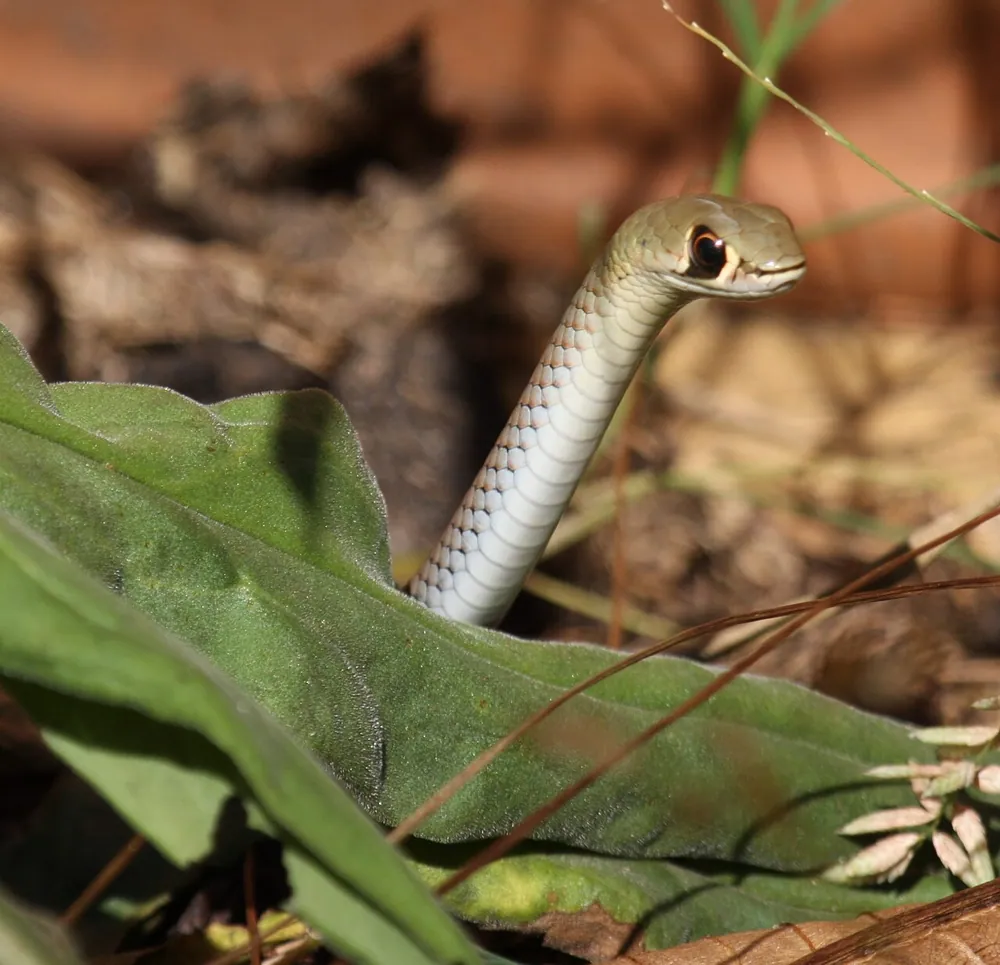
 Hono anndirtee ngal
- Has a narrow, yellowish head with a pale ring around each eye1
- A dark marking curves along the upper lip1
- Colour ranges from olive green to grey and brown, often with a red flush along the upper third of the back1
- Has large, prominent eyes, the largest of any Australian snake1
- Young snakes have a white-edged dark line across the snout1
No jiibondiree e: It is often confused with the eastern brown snake (Pseudonaja textilis) because the two look similar. Identifying it accurately requires a clear view of the head and counting the dorsal scales at mid-body, which number 15 rows.1
Doole tooke ŋatgol
Tooke no yaltira ñiiƴe mum tuma ngal ŋatata.
Ko honɗun tooke mum waɗata (ŋatgol walla jukkugol)?
The venom is toxic and deadly to other reptiles and amphibians, and it slows and eventually kills the prey. The venom is not considered dangerous to humans. Some bites cause systemic symptoms such as paralysis and bleeding, along with localised pain and swelling that can range from moderate to severe.1
Hono musiiba mum heewiri e yimɓe?
Musiiba e yimɓe: MuusɗoNo waawi muusugol sanne, kono ko ɓadii kala tuma ɗum wonataa musiiba mawɗo.The venom is not considered dangerous to humans, but a bite will be painful. Some bites cause systemic symptoms such as paralysis and bleeding, so medical attention is needed.1
Ko honɗun ngal waɗata si ngal hulii?
It is fast-moving and nervous, and it flees quickly when disturbed.1
 Si no ŋata
- Medical treatment should be sought after any snake bite.1
- Haɓɓugol tiiɗngol e dartingol: taar bande elastik tiiɗnde e dow nokku ŋataaɗo on, refti e dow koyngal walla jungo on fow, haɓɓu attelle, haɗu neɗɗo on dillagol fey haa ballal hewta.
- Wota a loot nokku ŋataaɗo on: lopitaan no waawi ƴeewugol tooke heddiiɗo e nguru ngam suɓagol sérum antivenimeux moƴƴo.
Adii fow noddu nimero ballal (112, 000, 911). Ɗum ko anndinal ballal adiingal, wanaa saaraangal doktoro. Ko adii nder ballal adiingal
 Reen hoore maa
- Wota a meem, wota a nanngu, wota a jalnu kullal ladde haa abada, hay si ko tokooso, hay si no yi'ee no ɗaanii walla maayii.
- Accu ngal nokku. Si a fotti e ngal, deeƴu, ruttu ɓaawo seeɗa seeɗa, accu ngal yaha laawol mum.
- Si gooto e majji ŋatii ma: deeƴu, wota a dillu, noddu nimero ballal (112, 000, 911) walla yahu lopitaan law. Jogo e hakkille no ngal nanndi, natal no walla.
Ngal faalaaka gaañugol ma. Ngal no huutora tooke mum ngam nanngugol ñaamdu walla reenugol hoore mum, ngal ɓuri yiɗugol suuɗaade. Ko ɓeydi fii reenugol hoore maa
Hoto nder aduna?
Hono mawniri?
Hono juutiri?
 juuti no ulluuɗi suudu 2, hinere haa lawol
 juuti no banaanaaji 6 jokkondirɗi
 no waawi taccugol meeteruuji 100 nder segonde 55 (neɗɗo ɓurɗo yaawugol sokli 9,6)
Hono Yellow-faced whip snake mawniri, si fooɗondiraama e AN?
Ko limoore tun nder navigateur maa. Alaa ko danndetee walla ko neldetee ka nokku woo.
Hono yaawiri?


Humpito
It has the largest eyes of any Australian snake, which helps it hunt successfully during the day.1
Snakes often gather in communities, and some communal nests contain 500 to 600 eggs.1
Young snakes often constrict their prey, but adults rarely do so and usually use venom instead.1
Although it is mainly active by day, it also forages at night for nocturnal prey such as geckos and frogs.1
In winter it slows down through brumation and moves mainly to find sun and water.1
Bonnoowo fenaandeeji
Fenaande: The yellow-faced whip snake is a dangerous snake to people because it is venomous.
Goonga: Its venom is deadly to lizards, frogs and other reptiles, but it is not considered dangerous to humans. Its bites are still painful and medical care should be sought.1
Ngam ganduɓe tooke
- Innde ganndal
- Demansia psammophis
- Fedde
- Ɓoɗɗi Ostarali
- Ɓesngu
- Elapidae2
- Ordre
- Squamata
- Leyɗe mawɗe
- Ostarali e Oseyani
- Ɓiɓɓe tokosɓe
- It lays eggs in clutches of 5 to 6 or 15 to 20, and some communal nests hold 500 to 600 eggs. Hatchlings measure about 17 cm snout to vent.1
- Hono ngal woniri nder ladde
- Least concern (IUCN Red List); near-threatened in Victoria1
- Musiiba e yimɓe
- 2 / 5: Muusɗo3
Ɗo humpitooji ɗin iwri
- Yellow-faced whipsnake (Wikipedia (CC BY-SA 4.0))
- Demansia psammophis (iNaturalist): inɗe e ŋoordingol (classification).
- Venom Wiki: tolno musiiba, mawnugol aadaajo e miijo yaawugol ko amen. Ndaar no min ƴeewtirta ɗum: Hono min tolnirta musiiba.
Kala humpito nder ngoo hello no jogii limoore hollirnde iwdi mum. Si min juumii, yaafo, min ko yiɗɓe kulle, wanaa jaaynde ganndal. Haalan min e [email protected], min feewnitan.
 Yaare nden no weelaa! Venom Wiki ko golle neɗɗo gooto: ko yoɓetaake, alaa piiblisite, alaa reweteeɓe. Kopporde tokooso no walla heddingol ɗum e enternet.Ñaamnu yaare nden
Ko ɓeydi e fedde wootere: Ɓoɗɗi Ostarali
 Taipan daande geeci
 Death adder heewndi
 Mboddi ooleeri fuunaange
 Taipan wulaa
 Mboddi Tiigar
 Collett's snake
No hoɗi kadi nder: Ostarali e Oseyani
 Araañee funnel-web SidneeTaranteeli e funnel-webWaroowo
 Redback spiderAraañeejiNo sokli doktoro
 Brown tree snakeƁoɗɗi ñiiƴe ɓaawoNo muusi tun
 Hooded pitohuiKulle goɗɗe tookeeje ɓannduNo muusi tunWota a meem
 PlatypusKulle muynooje (mammifères) tookeNo muusi tun
 Northern tree-dwelling funnel-web spiderTaranteeli e funnel-webWaroowo