
 Afirik
 Asiya
Asiya Turai
Turai Amerik Worgo
 Australiya e Oseaniya
 Antarktika
 Baharu Pasifik
 Baharu Atlantik
 Baharu Indiya
 Baharu Arktik
 Baharu Mediterane
 Baharu Boɗeeru
 Baharu Karibiya
 Baharu Koral
 Baharu Ciina Worgo
 Baharu Filipin
 Baharu Andaman
 Baharu Rewo
 Baharu Timor e Arafura
 Baharu Bengal
 Baharu Kaliforniya
Bamboo pit viper
 Ina ŋata
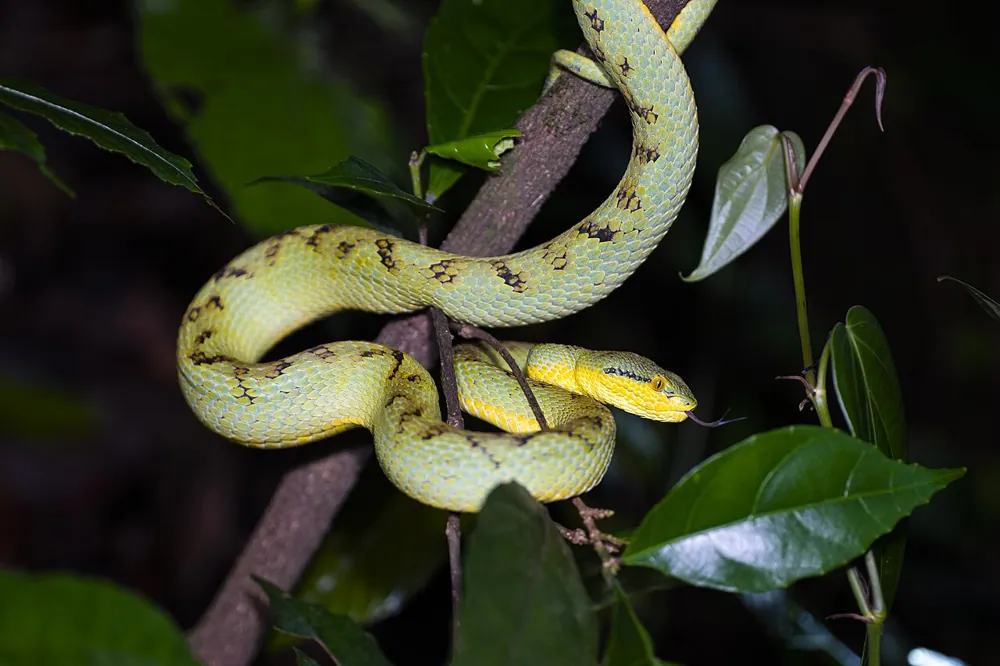
The bamboo pit viper is a green, tree-living snake with a venomous bite. It is found in southern and north-eastern India, mostly in the peninsular region. It sleeps in the day, hunts at night, and can be aggressive when threatened.1



 No anndirto nde
- Upper parts are usually bright green, though sometimes yellowish, greyish or purplish brown.1
- Some individuals have black, brown or reddish spots.1
- A light white, yellow or red streak runs along the outer row of scales.1
- The tail tip is often yellow or red.1
- Lower parts are green, yellow or whitish. It grows to about 99 cm in total length.1
Doole tooke
Tooke ina yalta e ñiiƴe mum si nde ŋatii.
Hol ko tooke mum (ŋatol walla fiɗol) waɗata?
Its venom is hemotoxic, which means it damages blood and tissue, and neurotoxic, which means it attacks the nerves.1
Hol no nde woni bone e yimɓe?
Bone e yimɓe: Bone mawɗoŊatol ina haani doktaa. Maayde ina woodi seeɗa sanne.When threatened, it is aggressive and does not hesitate to bite.1
Hol ko nde waɗata si nde hulii?
When threatened, it is aggressive and does not hesitate to bite.1
 Si nde ŋatii
- Deeƴin neɗɗo oo, taa o dilla, waɗu koyngal walla junngo ŋataangal e toowal ɓernde, ittu zoobe e geɗe ɗigginiiɗe, yahra mo asibiti law.
Sahaa fof, noddu lamba ballal yaawngal (112, 000, 911) ko adii. Ɗum ko ballal arano kuuɓal, wonaa wasiyya doktaa. Aslu ballal arano
 Reen hoore maa
- Taa memu, taa nanngu, taa aaɓnu dabbaare ladde abada, hay pamaro, hay si ina wayi no ɗaanii walla maayii.
- Accu nde nokku. Si a fottii e gooto, deeƴu, ruttu caggal seeɗa seeɗa, accu nde yaha laawol mum.
- Si gooto e majji ŋatii ma: deeƴu, taa dillu, noddu lamba ballal yaawngal (112, 000, 911) walla yah asibiti law. Siftor no nde wayri, foto ina walla.
Nde ɗaɓɓaaki ma. Nde huutora tooke mum ngam nanngude ñaamdu walla reende hoore mum, nde ɓuri yiɗde suuɗaade. Ɓeydu anndude no reentorto
Hol to e aduna?
Hol no nde mawni?
Hol no nde juuti?
 juuti no ullundi galle 2, hinere haa laaci
 juuti no ayaba 6 jokkondiraaɗi
 ina waawi dogde meeter 100 nder sakan 100 (neɗɗo ɓurɗo yaawde ina haani 9,6)
Hol no Bamboo pit viper mawni, fottindaade e AAN?
Hiisa tan nder browser maa. Alaa ko mooftetee walla ko neletee.
Hol no nde yaawi?


Anndal
Feññinoowo goonga
Fenaande: The name 'bamboo pit viper' suggests it lives in bamboo.
Goonga: It is not particularly associated with bamboo thickets. It is a tree and bush snake, often found near streams.1
Ɗo anndal iwi
- Craspedocephalus gramineus (Wikipedia (CC BY-SA 4.0))
- Craspedocephalus gramineus (iNaturalist): inɗe e tolnugol.
- Venom Wiki: darja bone, mawnude woowaaɗo e miijo yaawre ko amen. Ndaar no min hiisirta ɗum: No min betiri bone.
Kala anndal e ngoo hello ina jogii limre hollirnde iwdi mum. Si min juumii, accu min, min yiɗɓe dabbaaji, wonaa jaridaa ganndal. Wiy min e [email protected] min feewnitay.
 Yaare nden ina heege! Venom Wiki ko golle neɗɗo gooto: meere, tawa tallaaji alaa, trackers alaa. Ballal pamarngal ina walla heddinde ɗum e internet.Ñaamnu yaare nden
 Brown spotted pit viper
 Habu
Habu Hump-nosed viper
 Hundred-pace viper
 Malayan pit viper
 Mamushi
 Yaare deathstalker
 Cobra Indiya
 Viper kiifi kaasa Indiya
 King cobra
 Puff adder
 Mboddi Russell