
 Afirik
 Asiya
Asiya Turai
Turai Amerik Worgo
 Australiya e Oseaniya
 Antarktika
 Baharu Pasifik
 Baharu Atlantik
 Baharu Indiya
 Baharu Arktik
 Baharu Mediterane
 Baharu Boɗeeru
 Baharu Karibiya
 Baharu Koral
 Baharu Ciina Worgo
 Baharu Filipin
 Baharu Andaman
 Baharu Rewo
 Baharu Timor e Arafura
 Baharu Bengal
 Baharu Kaliforniya
Bandy-bandy
 Ina ŋata
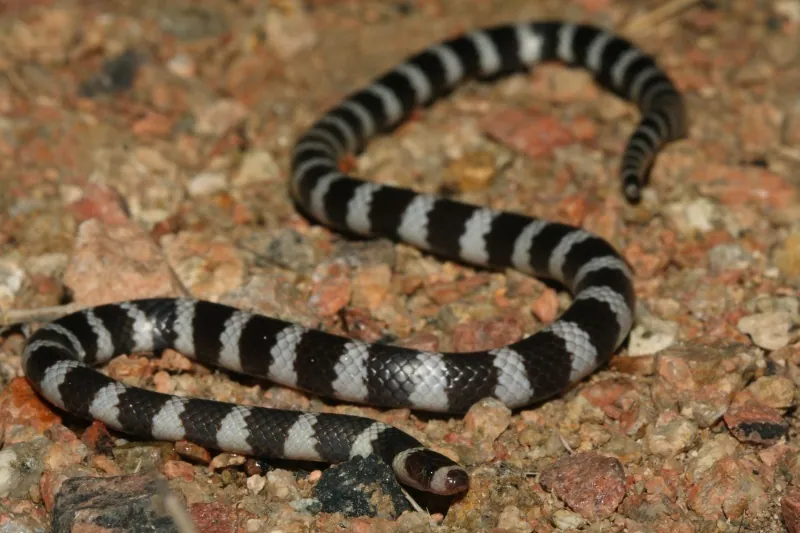
The bandy-bandy is a small, glossy snake with bold black and white rings that go all the way round its body. It lives in Australia, mostly along the east coast. It is venomous, but its venom is weak and it is generally considered harmless to people.1

 No anndirto nde
- Smooth, glossy scales1
- Sharply contrasting black and white rings that continue right around the body1
- A short tail with a blunt tip, unlike other elapid snakes1
- Usually 50 to 60 cm long including the tail1
Ina jiiɓindiree e: Other bandy-bandy species look similar and live in different regions. They are told apart by the presence of a pair of small scales on the head (internasals), the number of black bands on the body and tail, and the number of belly scales.1
Doole tooke
Tooke ina yalta e ñiiƴe mum si nde ŋatii.
Hol ko tooke mum (ŋatol walla fiɗol) waɗata?
Bandy-bandy venom is weak, and its effects are mostly limited to the area around the bite. Its mouth is small and it is not aggressive, so it rarely bites people.1
Hol no nde woni bone e yimɓe?
Bone e yimɓe: Ina muusaIna waawi muusude sanne, kono ɓadii abada wonaa bone mawɗo.The bandy-bandy is generally considered harmless to people because of its small mouth and inoffensive nature.1
 Si nde ŋatii
- Ɗigginde e daranɗinde (pressure immobilisation): haɓɓu bandeeji elastik ɗigginiiɗo dow ŋatol, refti haɓɓu koyngal walla junngo ngal fof haa dow, haɓɓu leggal tiiɗngal (splint) e mum, ngam neɗɗo oo wona ɗoon tawa dillaani fey haa ballal arta.
- Taa lootu ŋatol ngol: asibiti ina waawi ƴeewde tooke heddiiɗo dow nguru ngam suɓaade antivenom (lekki tooke) mo haani.
Sahaa fof, noddu lamba ballal yaawngal (112, 000, 911) ko adii. Ɗum ko ballal arano kuuɓal, wonaa wasiyya doktaa. Aslu ballal arano
 Reen hoore maa
- Taa memu, taa nanngu, taa aaɓnu dabbaare ladde abada, hay pamaro, hay si ina wayi no ɗaanii walla maayii.
- Accu nde nokku. Si a fottii e gooto, deeƴu, ruttu caggal seeɗa seeɗa, accu nde yaha laawol mum.
- Si gooto e majji ŋatii ma: deeƴu, taa dillu, noddu lamba ballal yaawngal (112, 000, 911) walla yah asibiti law. Siftor no nde wayri, foto ina walla.
Nde ɗaɓɓaaki ma. Nde huutora tooke mum ngam nanngude ñaamdu walla reende hoore mum, nde ɓuri yiɗde suuɗaade. Ɓeydu anndude no reentorto
Hol to e aduna?
Hol no nde mawni?
Hol no nde juuti?
 juuti no ayaba 3 jokkondiraaɗi
 ina waawi dogde meeter 100 nder sakan 58 (neɗɗo ɓurɗo yaawde ina haani 9,6)
Hol no Bandy-bandy mawni, fottindaade e AAN?
Hiisa tan nder browser maa. Alaa ko mooftetee walla ko neletee.
Hol no nde yaawi?


Anndal
Blind snakes can be bigger than the bandy-bandy that eats them. Bandy-bandies have been seen with prey sticking out of their mouths while they slowly digest it.1
Bandy-bandies can follow the chemical trail of a blind snake. In one study they followed trails for an average of 0.93 metres, and some followed a full 1.4-metre trail.1
Bandy-bandies are also called hoop snakes because of their striking rings.1
Females are much larger than males. In one study, the mean snout-vent length was 54.4 cm for females and 39.2 cm for males.1
Unlike other elapid snakes, the bandy-bandy has a blunt tail tip.1
Ngam ganduɓe tooke
Ɗo anndal iwi
- Bandy-bandy (Wikipedia (CC BY-SA 4.0))
- Vermicella annulata (iNaturalist): inɗe e tolnugol.
- Venom Wiki: darja bone, mawnude woowaaɗo e miijo yaawre ko amen. Ndaar no min hiisirta ɗum: No min betiri bone.
Kala anndal e ngoo hello ina jogii limre hollirnde iwdi mum. Si min juumii, accu min, min yiɗɓe dabbaaji, wonaa jaridaa ganndal. Wiy min e [email protected] min feewnitay.
 Yaare nden ina heege! Venom Wiki ko golle neɗɗo gooto: meere, tawa tallaaji alaa, trackers alaa. Ballal pamarngal ina walla heddinde ɗum e internet.Ñaamnu yaare nden
Goɗɗi e fedde wootere: Ɓoɗɗi Australiya
 Taipan takko baharu
 Death adder
 Brown snake fuɗnaange
 Taayipan joornde (Inland taipan)
 Mboddi Cewngu
 Collett's snake
Ina wona kadi e: Australiya e Oseaniya
 Gizo-gizo funnel-web SydneyTarantula e funnel-webWarooɗo
 Redback spiderGizo-gizoIna haani doktaa
 Brown tree snakeƁoɗɗi ñiiƴe caggalIna muusa tan
 Hooded pitohuiDabbaaji goɗɗi tooke memde walla ñaamdeIna muusa tanTaa memu
 PlatypusDabbaaji muynooji tookeIna muusa tan
 Northern tree-dwelling funnel-web spiderTarantula e funnel-webWarooɗo