
 Afirik
 Asiya
Asiya Turai
Turai Amerik Worgo
 Australiya e Oseaniya
 Antarktika
 Baharu Pasifik
 Baharu Atlantik
 Baharu Indiya
 Baharu Arktik
 Baharu Mediterane
 Baharu Boɗeeru
 Baharu Karibiya
 Baharu Koral
 Baharu Ciina Worgo
 Baharu Filipin
 Baharu Andaman
 Baharu Rewo
 Baharu Timor e Arafura
 Baharu Bengal
 Baharu Kaliforniya
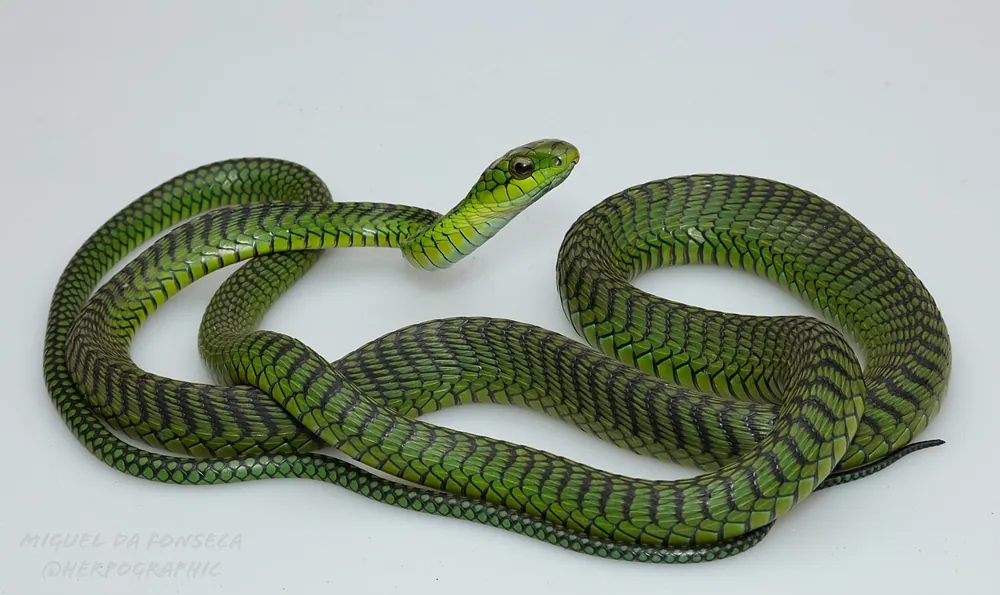
Boomslang
 Ina ŋata
The boomslang is a highly venomous tree snake from Sub-Saharan Africa. It spends most of its time in trees and bushes, though it also hunts and shelters on the ground. Its venom works slowly, so a bite can look harmless at first and still be life-threatening.1



 No anndirto nde
Doole tooke
Tooke ina yalta e ñiiƴe mum si nde ŋatii.
Hol ko tooke mum (ŋatol walla fiɗol) waɗata?
Its venom is mainly a haemotoxin, a type of venom that disrupts blood clotting. Many tiny clots form in the blood, causing bleeding in tissues such as muscle and the brain, while the small blood vessels become clogged. Symptoms include headache, nausea, sleepiness and confusion, and can lead to cardiac arrest and unconsciousness. Because the venom is slow-acting, symptoms may not appear until many hours after a bite.1
Hol no nde woni bone e yimɓe?
Bone e yimɓe: Bone sanneIna waawi warde neɗɗo mo heɓaali safaara.Bites can be fatal. Of eight serious envenomations reported between 1919 and 1962, two were lethal. In 1957, a herpetologist died after being bitten by a juvenile. Hatchlings about 45 cm long are already dangerously venomous. Delayed symptoms can lead victims to wrongly believe a bite was a harmless dry bite.1
 Kabaru moƴƴo: doktaaɓe ina njogii lekki (antivenom) walla safaara ngam ɗum.1
Hol ko nde waɗata si nde hulii?
It is timid and usually bites only when people try to handle, catch, chase or kill it. When cornered, it inflates its neck and takes an S-shaped striking pose.1
 Si nde ŋatii
- Antivenom is available and treatment is needed after a bite. Complete blood transfusions may also be required, especially if more than 24 to 48 hours pass without antivenom. Do not assume a bite is harmless just because no symptoms have appeared.1
- Lootu ŋatol ngol, deeƴin neɗɗo oo, heɓu ballal doktaa. Ɓoɗɗi goɗɗi (ko wayi no boomslang) ina mbaawi warde caggal awaaji.
Sahaa fof, noddu lamba ballal yaawngal (112, 000, 911) ko adii. Ɗum ko ballal arano kuuɓal, wonaa wasiyya doktaa. Aslu ballal arano
 Reen hoore maa
- Taa memu, taa nanngu, taa aaɓnu dabbaare ladde abada, hay pamaro, hay si ina wayi no ɗaanii walla maayii.
- Accu nde nokku. Si a fottii e gooto, deeƴu, ruttu caggal seeɗa seeɗa, accu nde yaha laawol mum.
- Si gooto e majji ŋatii ma: deeƴu, taa dillu, noddu lamba ballal yaawngal (112, 000, 911) walla yah asibiti law. Siftor no nde wayri, foto ina walla.
Nde ɗaɓɓaaki ma. Nde huutora tooke mum ngam nanngude ñaamdu walla reende hoore mum, nde ɓuri yiɗde suuɗaade. Ɓeydu anndude no reentorto
Hol to e aduna?
Hol no nde mawni?
Hol no nde juuti?
Hol no nde teddi?
 juuti no ullundi galle 4, hinere haa laaci
 juuti no ayaba 10 jokkondiraaɗi
 ina waawi dogde meeter 100 nder sakan 60 (neɗɗo ɓurɗo yaawde ina haani 9,6)
Hol no Boomslang mawni, fottindaade e AAN?
Hiisa tan nder browser maa. Alaa ko mooftetee walla ko neletee.
Hol no nde yaawi?


Anndal
An adult has only 1.6 to 8 mg of venom, but it is thought that 2 to 3 mg could be enough to kill a healthy adult human.1
It can open its jaws up to 170 degrees when biting.1
Its head is distinctly egg-shaped, and its eyes are exceptionally large.1
It often moves its head from side to side to get a better view of objects directly in front of it.1
When it is pursued by something too large to eat, it escapes by moving from branch to branch.1
Feññinoowo goonga
Fenaande: Rear-fanged snakes cannot produce a lethal bite.
Goonga: For a long time many herpetologists believed this, but boomslang bites have caused deaths.1
Ɗo anndal iwi
- Boomslang (Wikipedia (CC BY-SA 4.0))
- Dispholidus typus (iNaturalist): inɗe e tolnugol.
- Venom Wiki: darja bone, mawnude woowaaɗo e miijo yaawre ko amen. Ndaar no min hiisirta ɗum: No min betiri bone.
Kala anndal e ngoo hello ina jogii limre hollirnde iwdi mum. Si min juumii, accu min, min yiɗɓe dabbaaji, wonaa jaridaa ganndal. Wiy min e [email protected] min feewnitay.
 Yaare nden ina heege! Venom Wiki ko golle neɗɗo gooto: meere, tawa tallaaji alaa, trackers alaa. Ballal pamarngal ina walla heddinde ɗum e internet.Ñaamnu yaare nden
Goɗɗi e fedde wootere: Ɓoɗɗi ñiiƴe caggal
 Cape twig snakeƁoɗɗi ñiiƴe caggalIna waawi warde
 Forest twig snakeƁoɗɗi ñiiƴe caggalIna waawi warde
 Bibron's stiletto snakeƁoɗɗi ñiiƴe caggalIna haani doktaa
 Madagascar leaf-nosed snakeƁoɗɗi ñiiƴe caggalIna muusa tan
 Montpellier snakeƁoɗɗi ñiiƴe caggalIna muusa tan
 Eastern twig snakeƁoɗɗi ñiiƴe caggalIna waawi warde
 Black mamba
 Deathstalker
 Egyptian cobra
 Puff adder
 Fat-tailed scorpion
 Gaboon viper