
 Afirik
 Asiya
Asiya Turai
Turai Amerik Worgo
 Australiya e Oseaniya
 Antarktika
 Baharu Pasifik
 Baharu Atlantik
 Baharu Indiya
 Baharu Arktik
 Baharu Mediterane
 Baharu Boɗeeru
 Baharu Karibiya
 Baharu Koral
 Baharu Ciina Worgo
 Baharu Filipin
 Baharu Andaman
 Baharu Rewo
 Baharu Timor e Arafura
 Baharu Bengal
 Baharu Kaliforniya
Boxer crab anemone
 Tentacle fiɗooji
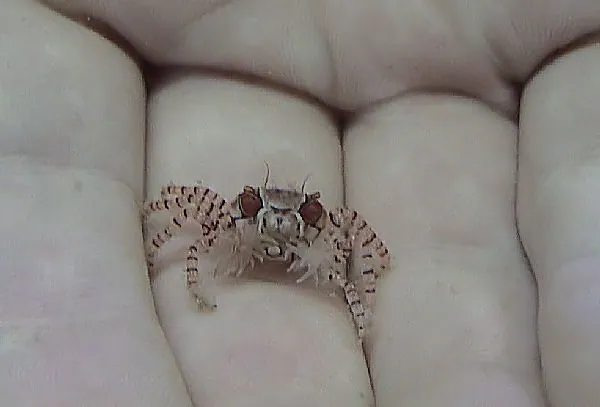
The boxer crab anemone is a small sea anemone, only about 1.5 cm tall, that lives on reefs in the warm Indo-Pacific. It is the only species in its genus, and it is special because it teams up with small boxer crabs, which carry it in their claws.1

 No anndirto nde
- Small and pale brown, with a base about 1 cm across1
- A crown of about 50 relatively long tentacles on top1
- A ring of branching, pale brown pseudo-tentacles halfway up the body1
- Grey, pink or green bulges called vesicles on the pseudo-tentacles1
- In daylight its pseudo-tentacles look dark brown, because of the algae they contain1
Doole tooke
Ujunaaje selluuji pamari fiɗooji ina fiɗa si huunde memii ɗi.
Hol ko tooke mum (ŋatol walla fiɗol) waɗata?
Its stinging cells, called cnidocytes, are packed into the vesicles and tentacles. The venom is strong enough to stun small prey. In the Red Sea it is reported to be one of the most venomous sea anemones, and the toxic agent is very stable, resisting chemicals and heat.1
Hol no nde woni bone e yimɓe?
Bone e yimɓe: Ina muusaIna waawi muusude sanne, kono ɓadii abada wonaa bone mawɗo.In the Red Sea it is reported to be one of the most venomous sea anemones. Stings to bare skin cause pain and swelling.1
Hol ko nde waɗata si nde hulii?
Its vesicles, which are well armed with stinging cells, protect the pseudo-tentacles, which might otherwise look like food to a predator.1
 Si nde fiɗii
- Yaltu e ndiyam, ittu kala tentacle (e kaddule juuɗe walla wudere).
- Ngam box jellyfish leyɗe tulɓe: loow vinegar dow fiɗe ɗe, ko famɗi fof sakan 30, noddu ballal, wonu hebbinaaɗo waɗde CPR. Ngam bluebottle e ɓurɗi ɗuuɗde: lootu e ndiyam baharu, refti ndiyam wulɗam ngam muusu.
Sahaa fof, noddu lamba ballal yaawngal (112, 000, 911) ko adii. Ɗum ko ballal arano kuuɓal, wonaa wasiyya doktaa. Aslu ballal arano
 Reen hoore maa
- Taa memu, taa nanngu, taa aaɓnu dabbaare ladde abada, hay pamaro, hay si ina wayi no ɗaanii walla maayii.
- Accu nde nokku. Si a fottii e gooto, deeƴu, ruttu caggal seeɗa seeɗa, accu nde yaha laawol mum.
- Si gooto e majji fiɗii ma: deeƴu, taa dillu, noddu lamba ballal yaawngal (112, 000, 911) walla yah asibiti law. Siftor no nde wayri, foto ina walla.
Nde ɗaɓɓaaki ma. Nde huutora tooke mum ngam nanngude ñaamdu walla reende hoore mum, nde ɓuri yiɗde suuɗaade. Ɓeydu anndude no reentorto
Hol to e aduna?
Hol no nde mawni?
Hol no nde juuti?
 ɓuri famɗude njuuteendi feɗeendu maa pamaru
 ɓuri leeltude katantanwa ngesa
Hol no Boxer crab anemone mawni, fottindaade e AAN?
Hiisa tan nder browser maa. Alaa ko mooftetee walla ko neletee.
Hol no nde yaawi?


Anndal
Boxer crabs of the genus Lybia hold one of these anemones in each claw and wave it like a weapon to keep predators away.1
If a crab loses one anemone, it can tear the other in half, and each half grows into a new individual.1
The crab uses its anemones to stun and catch prey for itself.1
In one reported case, a sting left skin pain and swelling for several weeks, with a dark, blistered mark and long-lasting sensitivity.1
The anemones seem unharmed by being carried and used in this way.1
Ɗo anndal iwi
- Triactis (Wikipedia (CC BY-SA 4.0))
- Triactis producta (iNaturalist): inɗe e tolnugol.
- Venom Wiki: darja bone, mawnude woowaaɗo e miijo yaawre ko amen. Ndaar no min hiisirta ɗum: No min betiri bone.
Kala anndal e ngoo hello ina jogii limre hollirnde iwdi mum. Si min juumii, accu min, min yiɗɓe dabbaaji, wonaa jaridaa ganndal. Wiy min e [email protected] min feewnitay.
 Yaare nden ina heege! Venom Wiki ko golle neɗɗo gooto: meere, tawa tallaaji alaa, trackers alaa. Ballal pamarngal ina walla heddinde ɗum e internet.Ñaamnu yaare nden
Goɗɗi e fedde wootere: Jellyfish e fiɗooji baharu
 Box jellyfish OstireliyaJellyfish e fiɗooji baharuWarooɗoTaa memu
 Irukandji jellyfishJellyfish e fiɗooji baharuIna waawi wardeTaa memu
 Portuguese man o' warJellyfish e fiɗooji baharuIna haani doktaaTaa memu
 Lion's mane jellyfishJellyfish e fiɗooji baharuIna muusa tanTaa memu
 Moon jellyfishJellyfish e fiɗooji baharuAlaa bone
 Common kingslayerJellyfish e fiɗooji baharuIna waawi wardeTaa memu
Ina wona kadi e: Baharu Pasifik
 Wiinde cone geographyCone snail e octopusWarooɗo
 Ɗirkuure taakeeje bulaaje mawndeCone snail e octopusWarooɗo
 Liingu ufotoongu JafanDabbaaji goɗɗi tooke memde walla ñaamdeWarooɗo
 Ɗirkuure taakeeje bulaaje worgoCone snail e octopusWarooɗo
 Hawksbill sea turtleDabbaaji goɗɗi tooke memde walla ñaamdeIna waawi warde
 Reef stonefishLiddi tookeIna waawi wardeTaa memu