
 Afirik
 Asiya
Asiya Turai
Turai Amerik Worgo
 Australiya e Oseaniya
 Antarktika
 Baharu Pasifik
 Baharu Atlantik
 Baharu Indiya
 Baharu Arktik
 Baharu Mediterane
 Baharu Boɗeeru
 Baharu Karibiya
 Baharu Koral
 Baharu Ciina Worgo
 Baharu Filipin
 Baharu Andaman
 Baharu Rewo
 Baharu Timor e Arafura
 Baharu Bengal
 Baharu Kaliforniya
Cowtail stingray
 Ina fiɗa
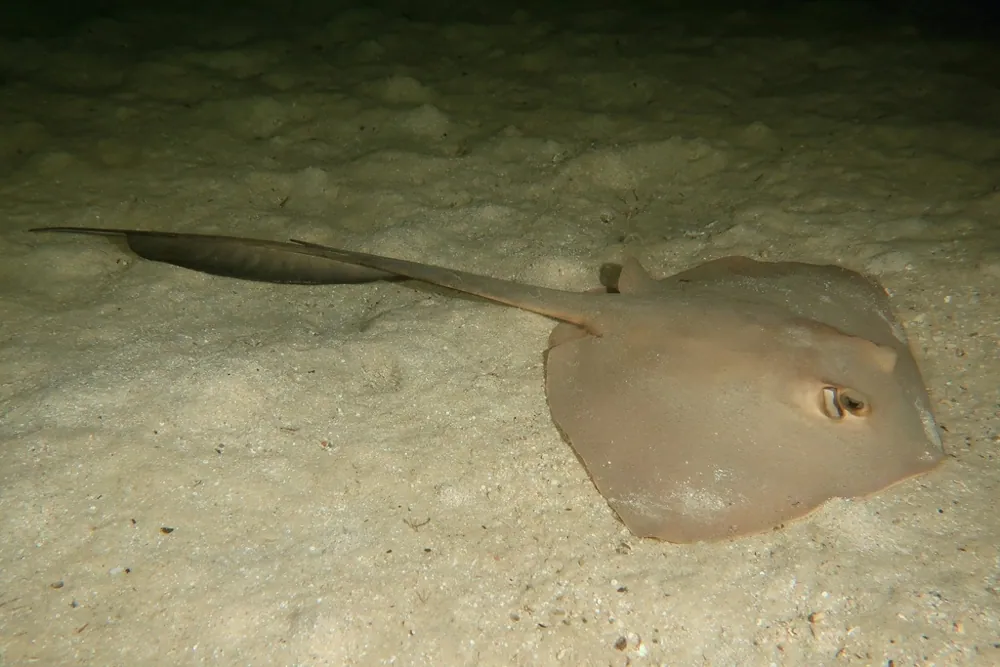
The cowtail stingray is a large ray that lives in warm coastal seas and sometimes swims up rivers. Its most noticeable feature is a wide, flag-like fold of skin on its tail. It has a venomous spine on its tail, so it should be left alone.1



 No anndirto nde
- A large, flag-like fold of skin on the underside of the tail, which is especially prominent when the ray swims1
- Grey-brown to black on top and mostly white below1
- Black tail fold and tail tip1
- A thick, rounded pectoral disc with a blunt snout and very small, widely spaced eyes1
- A single venomous spine set well back on the tail1
Doole tooke
Tooke ina yalta e fiɗirgal.
Hol no nde woni bone e yimɓe?
Bone e yimɓe: Bone mawɗoFiɗol ina haani doktaa. Maayde ina woodi seeɗa sanne.The serrated spine is potentially dangerous, and the cowtail stingray is regarded as particularly dangerous to handle.1
Hol ko nde waɗata si nde hulii?
When threatened, it flees at a 45° angle away from the predator, keeping the predator in view while covering distance.1
 Si nde fiɗii
- Naatnu barme e ndiyam wulɗam, wulɗam no neɗɗo oo waawi muñde tawa sumataa (ƴeewu ɗam e junngo maa), hakkunde minti 30 e minti 90. Heɓu ballal doktaa, haa teeŋti e stonefish e stingray.
Sahaa fof, noddu lamba ballal yaawngal (112, 000, 911) ko adii. Ɗum ko ballal arano kuuɓal, wonaa wasiyya doktaa. Aslu ballal arano
 Reen hoore maa
- Taa memu, taa nanngu, taa aaɓnu dabbaare ladde abada, hay pamaro, hay si ina wayi no ɗaanii walla maayii.
- Accu nde nokku. Si a fottii e gooto, deeƴu, ruttu caggal seeɗa seeɗa, accu nde yaha laawol mum.
- Si gooto e majji fiɗii ma: deeƴu, taa dillu, noddu lamba ballal yaawngal (112, 000, 911) walla yah asibiti law. Siftor no nde wayri, foto ina walla.
Nde ɗaɓɓaaki ma. Nde huutora tooke mum ngam nanngude ñaamdu walla reende hoore mum, nde ɓuri yiɗde suuɗaade. Ɓeydu anndude no reentorto
Hol to e aduna?
Hol no nde mawni?
Hol no nde juuti?
Hol no nde teddi?
 juuti no dawaaɗi 3, hinere haa laaci
 juuti no ayaba 17 jokkondiraaɗi
 ina waawi lumbaade njuuteendi pisin mawɗo (50 m) nder sakan 6
Hol no Cowtail stingray mawni, fottindaade e AAN?
Hiisa tan nder browser maa. Alaa ko mooftetee walla ko neletee.
Hol no nde yaawi?

Anndal
A cowtail stingray was recorded in the Ganges River about 2,200 km (1,400 mi) from the sea.1
Resting groups of cowtail stingrays often form a rosette, with their tails pointing outward so they can see threats from every direction.1
Its large, regularly arranged skin bumps have made it a source of shagreen leather since ancient times.1
The cowtail stingray and reticulate whiprays often form mixed-species groups, probably because the whiprays detect predators well thanks to their long tails.1
Its tail fold and tail tip are black, and the tail carries sensors that act as a secondary warning system.1
Newborn cowtail stingrays have completely smooth skin, and their denticles develop quickly after birth.1
Ngam ganduɓe tooke
- Innde ganndal
- Pastinachus sephen
- Fedde
- Liddi tooke
- Besngu
- Dasyatidae2
- Tolno
- Myliobatiformes
- Nahiyaaji
- Baharu Indiya, Baharu Pasifik, Baharu Boɗeeru, Baharu Andaman, Baharu Koral, Baharu Ciina Worgo, Baharu Arab e Gulf Persiya, Baharu Timor e Arafura, Baharu Bengal, Baharuuji mawɗi
- Ɓikkoy
- It gives birth to live young. Females giving birth produce young measuring 18 cm across or more.1
- Bone e yimɓe
- 3 / 5: Bone mawɗo3
Ɗo anndal iwi
- Cowtail stingray (Wikipedia (CC BY-SA 4.0))
- Pastinachus sephen (iNaturalist): inɗe e tolnugol.
- Venom Wiki: darja bone, mawnude woowaaɗo e miijo yaawre ko amen. Ndaar no min hiisirta ɗum: No min betiri bone.
Kala anndal e ngoo hello ina jogii limre hollirnde iwdi mum. Si min juumii, accu min, min yiɗɓe dabbaaji, wonaa jaridaa ganndal. Wiy min e [email protected] min feewnitay.
 Yaare nden ina heege! Venom Wiki ko golle neɗɗo gooto: meere, tawa tallaaji alaa, trackers alaa. Ballal pamarngal ina walla heddinde ɗum e internet.Ñaamnu yaare nden
Goɗɗi e fedde wootere: Liddi tooke
 Reef stonefish
 Red lionfish
 Estuarine stonefish
 Short-tail stingray
 Striped eel catfish
 Bluespotted ribbontail ray
Ina wona kadi e: Baharu Indiya
 Box jellyfish OstireliyaJellyfish e fiɗooji baharuWarooɗoTaa memu
 Wiinde cone geographyCone snail e octopusWarooɗo
 Ɗirkuure taakeeje bulaaje mawndeCone snail e octopusWarooɗo
 Ɗirkuure taakeeje bulaaje worgoCone snail e octopusWarooɗo
 Hawksbill sea turtleDabbaaji goɗɗi tooke memde walla ñaamdeIna waawi warde
 Irukandji jellyfishJellyfish e fiɗooji baharuIna waawi wardeTaa memu