
 Afirik
 Asiya
Asiya Turai
Turai Amerik Worgo
 Australiya e Oseaniya
 Antarktika
 Baharu Pasifik
 Baharu Atlantik
 Baharu Indiya
 Baharu Arktik
 Baharu Mediterane
 Baharu Boɗeeru
 Baharu Karibiya
 Baharu Koral
 Baharu Ciina Worgo
 Baharu Filipin
 Baharu Andaman
 Baharu Rewo
 Baharu Timor e Arafura
 Baharu Bengal
 Baharu Kaliforniya
Dugite
 Ina ŋata
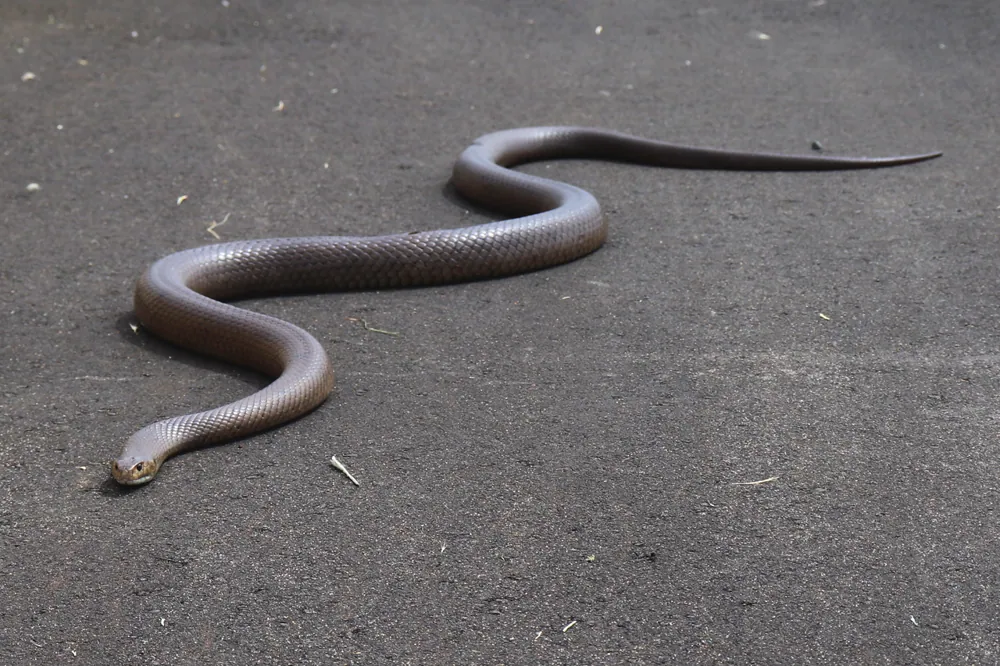
The dugite is a highly venomous snake found in southern Western Australia and in remote coastal parts of western South Australia. Its venom is potentially one of the most lethal in the world, so it is a snake to treat with great respect. It is common in and around Perth, where it often shelters near buildings.1



 No anndirto nde
- Coloured grey, green or brown, but the colours vary widely between individuals, so colour alone is not a reliable guide.1
- Black scales may be scattered over the body.1
- Relatively large scales with a semi-glossy look.1
- The head is rather small and not clearly separate from the neck.1
- Long and slender body, typically about 1.5 metres in total length.1
Doole tooke
Tooke ina yalta e ñiiƴe mum si nde ŋatii.
Hol ko tooke mum (ŋatol walla fiɗol) waɗata?
The venom has coagulopathic and procoagulant effects, meaning it disturbs the way blood clots. It is potentially one of the most lethal venoms in the world. In a 2011 case, a boy bitten by a dugite was temporarily paralysed, showing that the venom can affect the nerves and muscles as well as the blood.1
Hol no nde woni bone e yimɓe?
Bone e yimɓe: Bone sanneIna waawi warde neɗɗo mo heɓaali safaara.Dugites are potentially lethal. They generally avoid biting people, but the risk of encounters rises during the mating season in October and November. The last recorded human death attributed to a dugite was in August 2015 in South Fremantle. In 2011 a seven-year-old boy was bitten and temporarily paralysed, and he made a full recovery.1
 Kabaru moƴƴo: doktaaɓe ina njogii lekki (antivenom) walla safaara ngam ɗum.1
Hol ko nde waɗata si nde hulii?
When disturbed they are very shy and often slither away, but they will defend themselves if cornered.1
 Si nde ŋatii
- Prompt medical attention is essential after a bite. In a December 2020 case, a three-year-old girl bitten by a snake believed to be a dugite was quickly immobilised by her grandmother, who wrapped her legs in pressure bandages. She was treated with antivenom in hospital and made a full recovery.1
- Ɗigginde e daranɗinde (pressure immobilisation): haɓɓu bandeeji elastik ɗigginiiɗo dow ŋatol, refti haɓɓu koyngal walla junngo ngal fof haa dow, haɓɓu leggal tiiɗngal (splint) e mum, ngam neɗɗo oo wona ɗoon tawa dillaani fey haa ballal arta.
- Taa lootu ŋatol ngol: asibiti ina waawi ƴeewde tooke heddiiɗo dow nguru ngam suɓaade antivenom (lekki tooke) mo haani.
Sahaa fof, noddu lamba ballal yaawngal (112, 000, 911) ko adii. Ɗum ko ballal arano kuuɓal, wonaa wasiyya doktaa. Aslu ballal arano
 Reen hoore maa
- Taa memu, taa nanngu, taa aaɓnu dabbaare ladde abada, hay pamaro, hay si ina wayi no ɗaanii walla maayii.
- Accu nde nokku. Si a fottii e gooto, deeƴu, ruttu caggal seeɗa seeɗa, accu nde yaha laawol mum.
- Si gooto e majji ŋatii ma: deeƴu, taa dillu, noddu lamba ballal yaawngal (112, 000, 911) walla yah asibiti law. Siftor no nde wayri, foto ina walla.
Nde ɗaɓɓaaki ma. Nde huutora tooke mum ngam nanngude ñaamdu walla reende hoore mum, nde ɓuri yiɗde suuɗaade. Ɓeydu anndude no reentorto
Hol to e aduna?
Hol no nde mawni?
Hol no nde juuti?
 juuti no ullundi galle 4, hinere haa laaci
 juuti no ayaba 11 jokkondiraaɗi
 ina waawi dogde meeter 100 nder sakan 46 (neɗɗo ɓurɗo yaawde ina haani 9,6)
Hol no Dugite mawni, fottindaade e AAN?
Hiisa tan nder browser maa. Alaa ko mooftetee walla ko neletee.
Hol no nde yaawi?


Anndal
Its venom is potentially one of the most lethal in the world.1
Dugites have become more common because of the house mouse, which is one of their main foods.1
Dugites can lay two clutches of eggs in the same season when conditions are good.1
The Irish activist John Boyle O'Reilly wrote a poem called The Dukite Snake, published in his 1878 collection Songs, Legends and Ballads, based on a bushman's myth.1
In winter, dugites burrow.1
Feññinoowo goonga
Fenaande: Dugites are aggressive and will chase people.
Goonga: Dugites are very shy and usually slither away when disturbed. They generally avoid biting people, but they will defend themselves if cornered.1
Ngam ganduɓe tooke
- Innde ganndal
- Pseudonaja affinis
- Fedde
- Ɓoɗɗi Australiya
- Besngu
- Elapidae2
- Tolno
- Squamata
- Nahiyaaji
- Australiya e Oseaniya
- Ɓikkoy
- Dugites lay eggs, typically around 30 at a time, and leave them to hatch on their own after about 65 days. Under good conditions, they can lay two clutches in one season.1
- Bone e yimɓe
- 4 / 5: Bone sanne3
Ɗo anndal iwi
- Dugite (Wikipedia (CC BY-SA 4.0))
- Pseudonaja affinis (iNaturalist): inɗe e tolnugol.
- Venom Wiki: darja bone, mawnude woowaaɗo e miijo yaawre ko amen. Ndaar no min hiisirta ɗum: No min betiri bone.
Kala anndal e ngoo hello ina jogii limre hollirnde iwdi mum. Si min juumii, accu min, min yiɗɓe dabbaaji, wonaa jaridaa ganndal. Wiy min e [email protected] min feewnitay.
 Yaare nden ina heege! Venom Wiki ko golle neɗɗo gooto: meere, tawa tallaaji alaa, trackers alaa. Ballal pamarngal ina walla heddinde ɗum e internet.Ñaamnu yaare nden
Goɗɗi e fedde wootere: Ɓoɗɗi Australiya
 Coastal taipan
 Common death adder
 Eastern brown snake
 Taayipan joornde (Inland taipan)
 Mboddi Cewngu
 Collett's snake
.png)
Ina wona kadi e: Australiya e Oseaniya
 Sydney funnel-web spiderTarantula e funnel-webWarooɗo
 Redback spiderGizo-gizoIna haani doktaa
 Brown tree snakeƁoɗɗi ñiiƴe caggalIna muusa tan
 Hooded pitohuiDabbaaji goɗɗi tooke memde walla ñaamdeIna muusa tanTaa memu
 PlatypusDabbaaji muynooji tookeIna muusa tan
 Northern tree-dwelling funnel-web spiderTarantula e funnel-webWarooɗo