
 Afirik
 Asiya
Asiya Turai
Turai Amerik Worgo
 Australiya e Oseaniya
 Antarktika
 Baharu Pasifik
 Baharu Atlantik
 Baharu Indiya
 Baharu Arktik
 Baharu Mediterane
 Baharu Boɗeeru
 Baharu Karibiya
 Baharu Koral
 Baharu Ciina Worgo
 Baharu Filipin
 Baharu Andaman
 Baharu Rewo
 Baharu Timor e Arafura
 Baharu Bengal
 Baharu Kaliforniya
Equatorial spitting cobra
 Ina fuufa walla ina tuuyta
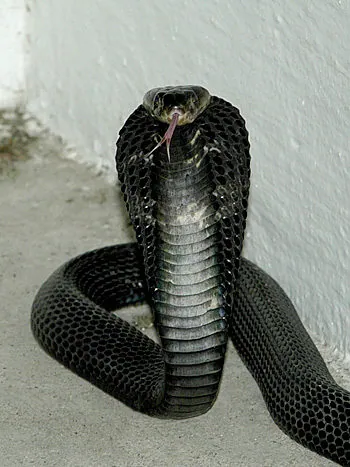
The equatorial spitting cobra is a medium-sized cobra found in Southeast Asia. It can spray venom from a distance, which is what makes it special. It lives mainly in forests and sometimes in gardens and towns.1



 No anndirto nde
- Medium-sized, usually 0.9 to 1.2 metres long, and can grow up to 1.5 metres1
- Has no hood marks1
- Comes in two colour forms: yellow (common in Thailand and northern Peninsular Malaysia) and black (found in Peninsular Malaysia, Singapore and the islands of Indonesia and the Philippines)1
- Juveniles and adults often have different colours1
- Has smooth scales and a short, rounded snout1
Doole tooke
Nde ina fuufa walla ina tuuyta ndiyam fiɗooɗam e haɓooɓe nde.
Hol ko tooke mum (ŋatol walla fiɗol) waɗata?
Its venom is postsynaptic neurotoxic, meaning it attacks the nerves. It also contains cardiotoxins, which damage the heart, and cytotoxins, which damage cells. The venom is strong enough that a bite can be serious.1
Hol no nde woni bone e yimɓe?
Bone e yimɓe: Bone sanneIna waawi warde neɗɗo mo heɓaali safaara.It will spit venom readily when cornered or threatened, and it can spit from up in trees. It will also strike and bite. The yellow form from Thailand is described as highly aggressive and more prone to spitting large amounts.1
Hol ko nde waɗata si nde hulii?
When cornered or threatened, it spits venom and will also strike and bite.1
 Si nde ŋatii walla nde tuuytii
- Deeƴin neɗɗo oo, taa o dilla, ittu zoobe e geɗe ɗigginiiɗe, yahra mo asibiti law: antivenom ko safaara.
- Si tooke tuuytaama nder gite, lootu ɗe e ndiyam laaɓɗam ɗuuɗɗam ɗoo ɗoon.
Sahaa fof, noddu lamba ballal yaawngal (112, 000, 911) ko adii. Ɗum ko ballal arano kuuɓal, wonaa wasiyya doktaa. Aslu ballal arano
 Reen hoore maa
- Taa memu, taa nanngu, taa aaɓnu dabbaare ladde abada, hay pamaro, hay si ina wayi no ɗaanii walla maayii.
- Accu nde nokku. Si a fottii e gooto, deeƴu, ruttu caggal seeɗa seeɗa, accu nde yaha laawol mum.
- Si gooto e majji ŋatii ma walla tuuytii tooke nder gite maa: deeƴu, taa dillu, noddu lamba ballal yaawngal (112, 000, 911) walla yah asibiti law. Siftor no nde wayri, foto ina walla.
Nde ɗaɓɓaaki ma. Nde huutora tooke mum ngam nanngude ñaamdu walla reende hoore mum, nde ɓuri yiɗde suuɗaade. Ɓeydu anndude no reentorto
Hol to e aduna?
Hol no nde mawni?
Hol no nde juuti?
 juuti no ullundi galle 3, hinere haa laaci
 juuti no ayaba 8 jokkondiraaɗi
 ina waawi dogde meeter 100 nder sakan 51 (neɗɗo ɓurɗo yaawde ina haani 9,6)
Hol no Equatorial spitting cobra mawni, fottindaade e AAN?
Hiisa tan nder browser maa. Alaa ko mooftetee walla ko neletee.
Hol no nde yaawi?


Anndal
It can spit venom even when it is up in the trees.1
Cardiotoxins make up about 40% of its venom protein, a higher share than in some related spitting cobras.1
The yellow colour form from Thailand is described as more aggressive than the black form.1
It is mainly active during the day and lives on the ground.1
Feññinoowo goonga
Fenaande: It is just a subspecies of the Indian cobra.
Goonga: It was first defined as its own species in 1989. Earlier, its populations had been grouped under several subspecies of the Indian cobra.1
Ɗo anndal iwi
- Equatorial spitting cobra (Wikipedia (CC BY-SA 4.0))
- Naja sumatrana (iNaturalist): inɗe e tolnugol.
- Venom Wiki: darja bone, mawnude woowaaɗo e miijo yaawre ko amen. Ndaar no min hiisirta ɗum: No min betiri bone.
Kala anndal e ngoo hello ina jogii limre hollirnde iwdi mum. Si min juumii, accu min, min yiɗɓe dabbaaji, wonaa jaridaa ganndal. Wiy min e [email protected] min feewnitay.
 Yaare nden ina heege! Venom Wiki ko golle neɗɗo gooto: meere, tawa tallaaji alaa, trackers alaa. Ballal pamarngal ina walla heddinde ɗum e internet.Ñaamnu yaare nden
 Cobra Indiya
 King cobra
 Caspian cobra
 Common krait
 Malayan krait
 Many-banded krait
 Yaare deathstalker
 Viper kiifi kaasa Indiya
 Puff adder
 Mboddi Russell
 Asian giant hornet
 Komodo dragon