
 Afirik
 Asiya
Asiya Turai
Turai Amerik Worgo
 Australiya e Oseaniya
 Antarktika
 Baharu Pasifik
 Baharu Atlantik
 Baharu Indiya
 Baharu Arktik
 Baharu Mediterane
 Baharu Boɗeeru
 Baharu Karibiya
 Baharu Koral
 Baharu Ciina Worgo
 Baharu Filipin
 Baharu Andaman
 Baharu Rewo
 Baharu Timor e Arafura
 Baharu Bengal
 Baharu Kaliforniya
Golden lancehead
 Ina ŋata
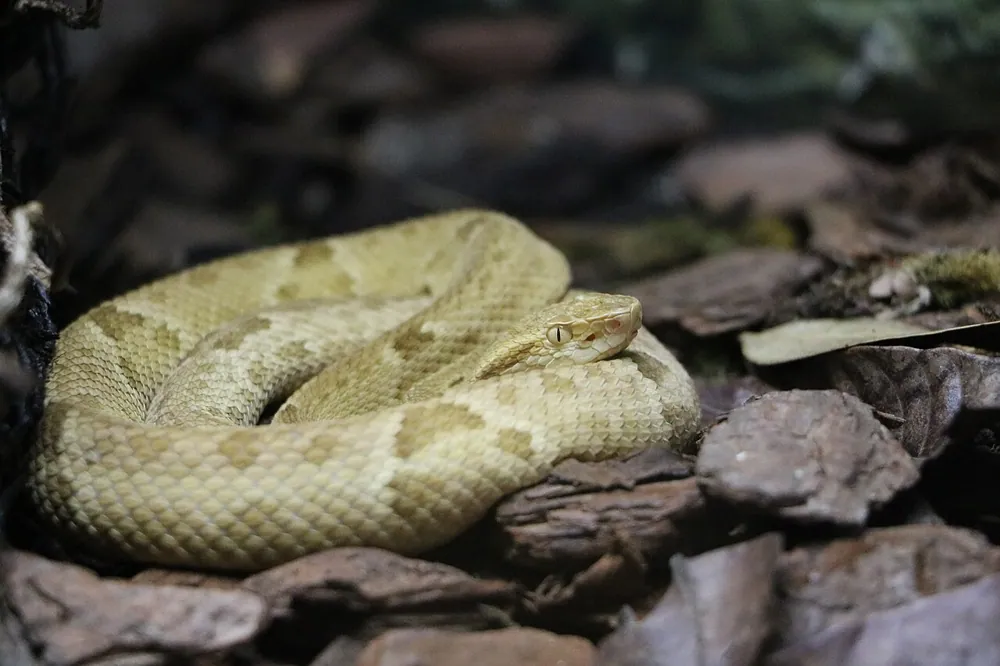
The golden lancehead is an extremely venomous pit viper that lives only on one small Brazilian island, Ilha da Queimada Grande. It is one of the most venomous snakes in Latin America. Because the island is uninhabited and closed to visitors, it is very unlikely that people will ever meet one.1


 No anndirto nde
- Pale yellowish-brown body with a series of dorsal blotches that may be triangular or square.1
- Belly is a uniform pale yellow or cream.1
- Lance-shaped head that comes to a point at the nose.1
- No well-defined stripe running behind the eye.1
- Has a longer tail than its closest relative, B. jararaca.1
Ina jiiɓindiree e: Its closest relative is B. jararaca, which lives in southern Brazil, Paraguay and northern Argentina. The golden lancehead can be told apart from it mainly by its longer tail.1
Doole tooke
Tooke ina yalta e ñiiƴe mum si nde ŋatii.
Hol ko tooke mum (ŋatol walla fiɗol) waɗata?
Its venom is adapted to the animals of the island, mainly reptiles, arthropods and migrating birds, so it works better on these than on mammals. Chemical analysis suggests it is five times as potent as the venom of B. jararaca and is the fastest-acting venom in the genus Bothrops. Its venom becomes more potent as the snake matures. Effects reported in envenomations include swelling, pain, nausea, vomiting, blood blisters, bruising, bleeding into the gut and brain, kidney failure and severe muscle damage.1
Hol no nde woni bone e yimɓe?
Bone e yimɓe: Bone sanneIna waawi warde neɗɗo mo heɓaali safaara.No official report of a human bite from this species has been made, because the island is uninhabited. Other lanceheads cause more human deaths than any other group of snakes in North or South America. One researcher reports four human envenomations by this species, three of which were fatal. For lanceheads in general, the mortality rate is 0.5 to 3.0% with treatment and 7.0% without it.1
 Si nde ŋatii
- Deeƴin neɗɗo oo, taa o dilla, waɗu koyngal walla junngo ŋataangal e toowal ɓernde, ittu zoobe e geɗe ɗigginiiɗe, yahra mo asibiti law.
Sahaa fof, noddu lamba ballal yaawngal (112, 000, 911) ko adii. Ɗum ko ballal arano kuuɓal, wonaa wasiyya doktaa. Aslu ballal arano
 Reen hoore maa
- Taa memu, taa nanngu, taa aaɓnu dabbaare ladde abada, hay pamaro, hay si ina wayi no ɗaanii walla maayii.
- Accu nde nokku. Si a fottii e gooto, deeƴu, ruttu caggal seeɗa seeɗa, accu nde yaha laawol mum.
- Si gooto e majji ŋatii ma: deeƴu, taa dillu, noddu lamba ballal yaawngal (112, 000, 911) walla yah asibiti law. Siftor no nde wayri, foto ina walla.
Nde ɗaɓɓaaki ma. Nde huutora tooke mum ngam nanngude ñaamdu walla reende hoore mum, nde ɓuri yiɗde suuɗaade. Ɓeydu anndude no reentorto
Hol to e aduna?
Hol no nde mawni?
Hol no nde juuti?
 juuti no ullundi galle 2,5, hinere haa laaci
 juuti no ayaba 7 jokkondiraaɗi
 ina waawi dogde meeter 100 nder sakan 100 (neɗɗo ɓurɗo yaawde ina haani 9,6)
Hol no Golden lancehead mawni, fottindaade e AAN?
Hiisa tan nder browser maa. Alaa ko mooftetee walla ko neletee.
Hol no nde yaawi?


Anndal
Its venom is thought to be five times as potent as that of its closest relative, B. jararaca.1
Its venom has evolved to suit the animals of its island, which has no native mammals.1
Its tail is longer than that of its closest relative, which may help it climb through trees and catch larger birds from a younger age.1
The island's population was estimated at between 2,414 and 2,899 snakes in 2021.1
Travel to the island is strictly prohibited by the Brazilian government.1
It is found only on Ilha da Queimada Grande, an island of about 43 hectares, and nowhere else in the wild.1
Ngam ganduɓe tooke
Ɗo anndal iwi
- Golden lancehead (Wikipedia (CC BY-SA 4.0))
- Bothrops insularis (iNaturalist): inɗe e tolnugol.
- Venom Wiki: darja bone, mawnude woowaaɗo e miijo yaawre ko amen. Ndaar no min hiisirta ɗum: No min betiri bone.
Kala anndal e ngoo hello ina jogii limre hollirnde iwdi mum. Si min juumii, accu min, min yiɗɓe dabbaaji, wonaa jaridaa ganndal. Wiy min e [email protected] min feewnitay.
 Yaare nden ina heege! Venom Wiki ko golle neɗɗo gooto: meere, tawa tallaaji alaa, trackers alaa. Ballal pamarngal ina walla heddinde ɗum e internet.Ñaamnu yaare nden
Goɗɗi e fedde wootere: Pit viper
 Terciopelo
 Eyelash viper
 South American bushmaster
 Common lancehead
 Jararaca
 Jararacussu
Ina wona kadi e: Amerik Worgo
 Paaɓi tooke kaŋŋeKwaɗoji tooke, kwaɗoji mawɗi e newtWarooɗoTaa memu
 Brazilian wandering spiderGizo-gizoIna waawi warde
 Cane toadKwaɗoji tooke, kwaɗoji mawɗi e newtIna haani doktaaTaa memu
 Peruvian giant centipedeShanshaniIna haani doktaa
 Bullet antTururuwaIna muusa tan
 Common vampire batDabbaaji muynooji tookeIna muusa tan