
 Afirik
 Asiya
Asiya Turai
Turai Amerik Worgo
 Australiya e Oseaniya
 Antarktika
 Baharu Pasifik
 Baharu Atlantik
 Baharu Indiya
 Baharu Arktik
 Baharu Mediterane
 Baharu Boɗeeru
 Baharu Karibiya
 Baharu Koral
 Baharu Ciina Worgo
 Baharu Filipin
 Baharu Andaman
 Baharu Rewo
 Baharu Timor e Arafura
 Baharu Bengal
 Baharu Kaliforniya
Florida bark scorpion
 Ina fiɗa
The Florida bark scorpion is a small scorpion with a sting that can cause serious harm. It is not really from Florida: it is native to northern Middle America and has spread to other places, including Florida. It hides under rocks, bark and rubbish, and sometimes lives inside houses.1


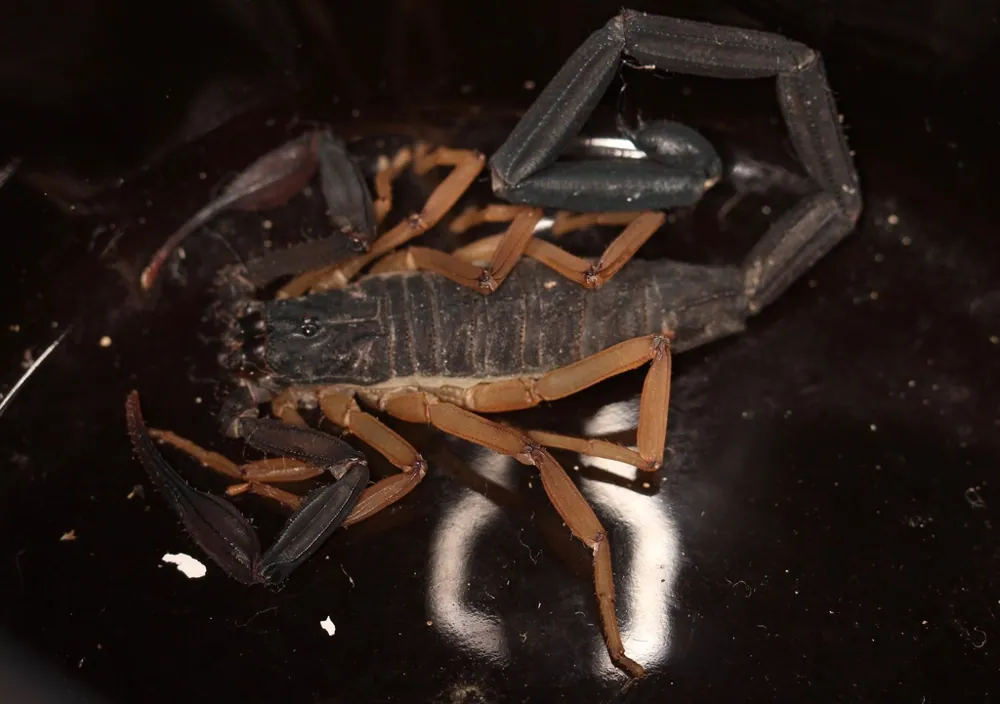
 No anndirto nde
- Its colour varies. It may be reddish, black with reddish pincers, or dark brown with yellowish legs and red pincers.1
- Some individuals are dark brown with reddish and black tail sections.1
- Females reach up to 10 cm long. Males can grow over 15 cm long.1
Ina jiiɓindiree e: In Florida it lives alongside two native scorpions, the Hentz striped scorpion and the Guiana striped scorpion.1
Doole tooke
Tooke ina yalta e fiɗirgal.
Hol ko tooke mum (ŋatol walla fiɗol) waɗata?
This scorpion is venomous, but much less toxic than others in its genus. Its venom is neurotoxic (it attacks the nerves) and cardiotoxic (it affects the heart), and it causes the release of catecholamines, hormones that speed up the body. Local effects include pain, redness, itching and swelling. Possible symptoms include irregular or fast heartbeat, fluid in the lungs, nausea, vomiting, sweating, diarrhoea, shock, convulsions and coma.1
Hol no nde woni bone e yimɓe?
Bone e yimɓe: Ina muusaIna waawi muusude sanne, kono ɓadii abada wonaa bone mawɗo.It is much less toxic than other scorpions in its genus. Serious symptoms can still occur, and death is possible.1
 Si nde fiɗii
- Ɓuuɓnu fiɗol ngol e kankara, deeƴin neɗɗo oo taa o dilla. Heɓu ballal doktaa law, haa teeŋti e sukaaɓe: yaaje goɗɗe ina mbaroo sukaaɓe.
Sahaa fof, noddu lamba ballal yaawngal (112, 000, 911) ko adii. Ɗum ko ballal arano kuuɓal, wonaa wasiyya doktaa. Aslu ballal arano
 Reen hoore maa
- Taa memu, taa nanngu, taa aaɓnu dabbaare ladde abada, hay pamaro, hay si ina wayi no ɗaanii walla maayii.
- Accu nde nokku. Si a fottii e gooto, deeƴu, ruttu caggal seeɗa seeɗa, accu nde yaha laawol mum.
- Si gooto e majji fiɗii ma: deeƴu, taa dillu, noddu lamba ballal yaawngal (112, 000, 911) walla yah asibiti law. Siftor no nde wayri, foto ina walla.
Nde ɗaɓɓaaki ma. Nde huutora tooke mum ngam nanngude ñaamdu walla reende hoore mum, nde ɓuri yiɗde suuɗaade. Ɓeydu anndude no reentorto
Hol to e aduna?
Hol no nde mawni?
Hol no nde juuti?
 juuti no bulok fijo 5 jokkondiraaɗi
 ina waawi dogde meeter 100 nder sakan 180 (neɗɗo ɓurɗo yaawde ina haani 9,6)
Hol no Florida bark scorpion mawni, fottindaade e AAN?
Hiisa tan nder browser maa. Alaa ko mooftetee walla ko neletee.
Hol no nde yaawi?


Anndal
Females can reproduce without a male, through a process called parthenogenesis.1
Newborn young ride on their mother's back.1
Tarantulas such as Tliltocatl vagans prey on it, and a tarantula may kill it even if the scorpion strikes first.1
In a laboratory study, males lived about 33 months on average and females about 38 months.1
Despite its name, it is native to northern Middle America, not Florida.1
Feññinoowo goonga
Fenaande: It is a Florida native scorpion, as its name suggests.
Goonga: It is not native to Florida. It comes from northern Middle America and was introduced to Florida and other places.1
Ɗo anndal iwi
- Centruroides gracilis (Wikipedia (CC BY-SA 4.0))
- Centruroides gracilis (iNaturalist): inɗe e tolnugol.
- Venom Wiki: darja bone, mawnude woowaaɗo e miijo yaawre ko amen. Ndaar no min hiisirta ɗum: No min betiri bone.
Kala anndal e ngoo hello ina jogii limre hollirnde iwdi mum. Si min juumii, accu min, min yiɗɓe dabbaaji, wonaa jaridaa ganndal. Wiy min e [email protected] min feewnitay.
 Yaare nden ina heege! Venom Wiki ko golle neɗɗo gooto: meere, tawa tallaaji alaa, trackers alaa. Ballal pamarngal ina walla heddinde ɗum e internet.Ñaamnu yaare nden
 Arizona bark scorpion
 Brazilian yellow scorpion
 Cuban blue scorpion
 Striped bark scorpion
 Giant desert hairy scorpion
 Amazonian black scorpion
 Terciopelo
 Eastern coral snake
 Eastern diamondback rattlesnake
 Eyelash viper
 Timber rattlesnake
 Western diamondback rattlesnake