
 Afirik
 Asiya
Asiya Turai
Turai Amerik Worgo
 Australiya e Oseaniya
 Antarktika
 Baharu Pasifik
 Baharu Atlantik
 Baharu Indiya
 Baharu Arktik
 Baharu Mediterane
 Baharu Boɗeeru
 Baharu Karibiya
 Baharu Koral
 Baharu Ciina Worgo
 Baharu Filipin
 Baharu Andaman
 Baharu Rewo
 Baharu Timor e Arafura
 Baharu Bengal
 Baharu Kaliforniya
Javan spitting cobra
 Ina fuufa walla ina tuuyta
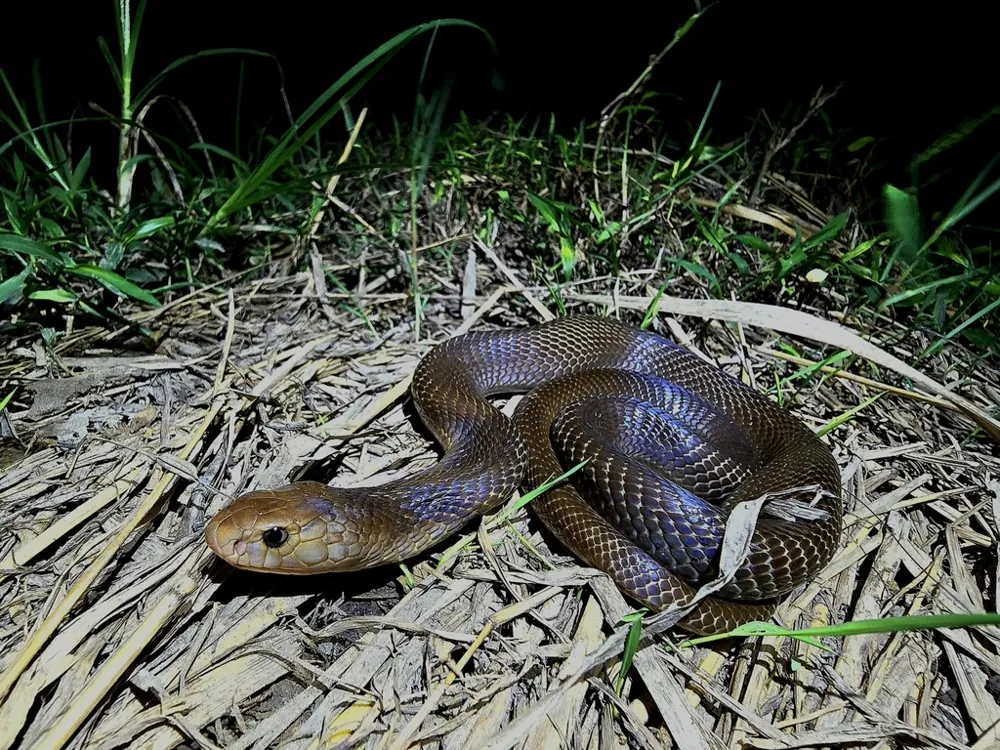
The Javan spitting cobra is a venomous snake that lives on the islands of Java, Bali and other Lesser Sunda Islands in Indonesia. It is named for its habit of spraying venom at a threat instead of only biting. It is a medium to large snake, and adults can grow to nearly 2 metres long.1



 No anndirto nde
- Adults are usually a uniform yellowish, brown or blackish colour.1
- Juveniles often have throat bands and lateral throat spots.1
- When a hood mark is present, it is most often chevron-shaped (V-shaped).1
- It has smooth, very oblique dorsal scales and expands a hood when threatened.1
- The average adult length is 1.3 metres, with a maximum of around 1.85 metres.1
Doole tooke
Nde ina fuufa walla ina tuuyta ndiyam fiɗooɗam e haɓooɓe nde.
Hol ko tooke mum (ŋatol walla fiɗol) waɗata?
Its venom contains mainly cardiotoxins, which act on the heart, and smaller amounts of neurotoxins, which act on the nerves. Its venom has a strong anticoagulant effect, meaning it weakens the blood's ability to clot. The venom may be potent but may not be particularly rapid-acting.1
Hol no nde woni bone e yimɓe?
Bone e yimɓe: Bone sanneIna waawi warde neɗɗo mo heɓaali safaara.Very few human deaths are attributed to this species.1
Hol ko nde waɗata si nde hulii?
It is very defensive and readily spits venom when it feels threatened, and its hood expands as a warning.1
 Si nde ŋatii walla nde tuuytii
- Deeƴin neɗɗo oo, taa o dilla, ittu zoobe e geɗe ɗigginiiɗe, yahra mo asibiti law: antivenom ko safaara.
- Si tooke tuuytaama nder gite, lootu ɗe e ndiyam laaɓɗam ɗuuɗɗam ɗoo ɗoon.
Sahaa fof, noddu lamba ballal yaawngal (112, 000, 911) ko adii. Ɗum ko ballal arano kuuɓal, wonaa wasiyya doktaa. Aslu ballal arano
 Reen hoore maa
- Taa memu, taa nanngu, taa aaɓnu dabbaare ladde abada, hay pamaro, hay si ina wayi no ɗaanii walla maayii.
- Accu nde nokku. Si a fottii e gooto, deeƴu, ruttu caggal seeɗa seeɗa, accu nde yaha laawol mum.
- Si gooto e majji ŋatii ma walla tuuytii tooke nder gite maa: deeƴu, taa dillu, noddu lamba ballal yaawngal (112, 000, 911) walla yah asibiti law. Siftor no nde wayri, foto ina walla.
Nde ɗaɓɓaaki ma. Nde huutora tooke mum ngam nanngude ñaamdu walla reende hoore mum, nde ɓuri yiɗde suuɗaade. Ɓeydu anndude no reentorto
Hol to e aduna?
Hol no nde mawni?
Hol no nde juuti?
 juuti no ullundi galle 4, hinere haa laaci
 juuti no ayaba 10 jokkondiraaɗi
 ina waawi dogde meeter 100 nder sakan 48 (neɗɗo ɓurɗo yaawde ina haani 9,6)
Hol no Javan spitting cobra mawni, fottindaade e AAN?
Hiisa tan nder browser maa. Alaa ko mooftetee walla ko neletee.
Hol no nde yaawi?


Anndal
It is one of the few cobras that can spit venom at a threat, and it does so readily.1
Cardiotoxins make up about 60% of its venom by dry weight, while neurotoxins make up only about 4.5%.1
The Komodo dragon preys on this cobra, which makes it easy prey for that lizard.1
Hatchlings are completely independent from birth, so no parent cares for them.1
Feññinoowo goonga
Fenaande: Komodo specimens are reluctant to spit.
Goonga: Field observations suggest the opposite: they do spit.1
Ngam ganduɓe tooke
- Innde ganndal
- Naja sputatrix
- Fedde
- Cobra, mamba e krait
- Besngu
- Elapidae2
- Tolno
- Squamata
- Nahiyaaji
- Asiya
- Ɓikkoy
- Females lay about 16 eggs on average, with clutches of 13 to 19 eggs, and the incubation period is about 88 days. Hatchlings are completely independent from birth.1
- Hol no nde wonata e ladde
- CITES Appendix II (not threatened with extinction now, but may become so unless trade is strictly regulated; commonly harvested for skins and occasionally found in the pet trade)1
- Bone e yimɓe
- 4 / 5: Bone sanne3
Ɗo anndal iwi
- Javan spitting cobra (Wikipedia (CC BY-SA 4.0))
- Naja sputatrix (iNaturalist): inɗe e tolnugol.
- Venom Wiki: darja bone, mawnude woowaaɗo e miijo yaawre ko amen. Ndaar no min hiisirta ɗum: No min betiri bone.
Kala anndal e ngoo hello ina jogii limre hollirnde iwdi mum. Si min juumii, accu min, min yiɗɓe dabbaaji, wonaa jaridaa ganndal. Wiy min e [email protected] min feewnitay.
 Yaare nden ina heege! Venom Wiki ko golle neɗɗo gooto: meere, tawa tallaaji alaa, trackers alaa. Ballal pamarngal ina walla heddinde ɗum e internet.Ñaamnu yaare nden
 Cobra Indiya
 King cobra
 Caspian cobra
 Common krait
 Malayan krait
 Many-banded krait
 Yaare deathstalker
 Viper kiifi kaasa Indiya
 Puff adder
 Mboddi Russell
 Asian giant hornet
 Komodo dragon