
 Afirik
 Asiya
Asiya Turai
Turai Amerik Worgo
 Australiya e Oseaniya
 Antarktika
 Baharu Pasifik
 Baharu Atlantik
 Baharu Indiya
 Baharu Arktik
 Baharu Mediterane
 Baharu Boɗeeru
 Baharu Karibiya
 Baharu Koral
 Baharu Ciina Worgo
 Baharu Filipin
 Baharu Andaman
 Baharu Rewo
 Baharu Timor e Arafura
 Baharu Bengal
 Baharu Kaliforniya
Pinktoe tarantula
 Ina ŋata
The pinktoe tarantula is a large spider that lives in the rainforests of northern South America. It spends much of its life high in trees, where it hunts insects and small tree frogs. It is often seen as one of the gentlest tarantulas, and it is a popular pet for beginners.1



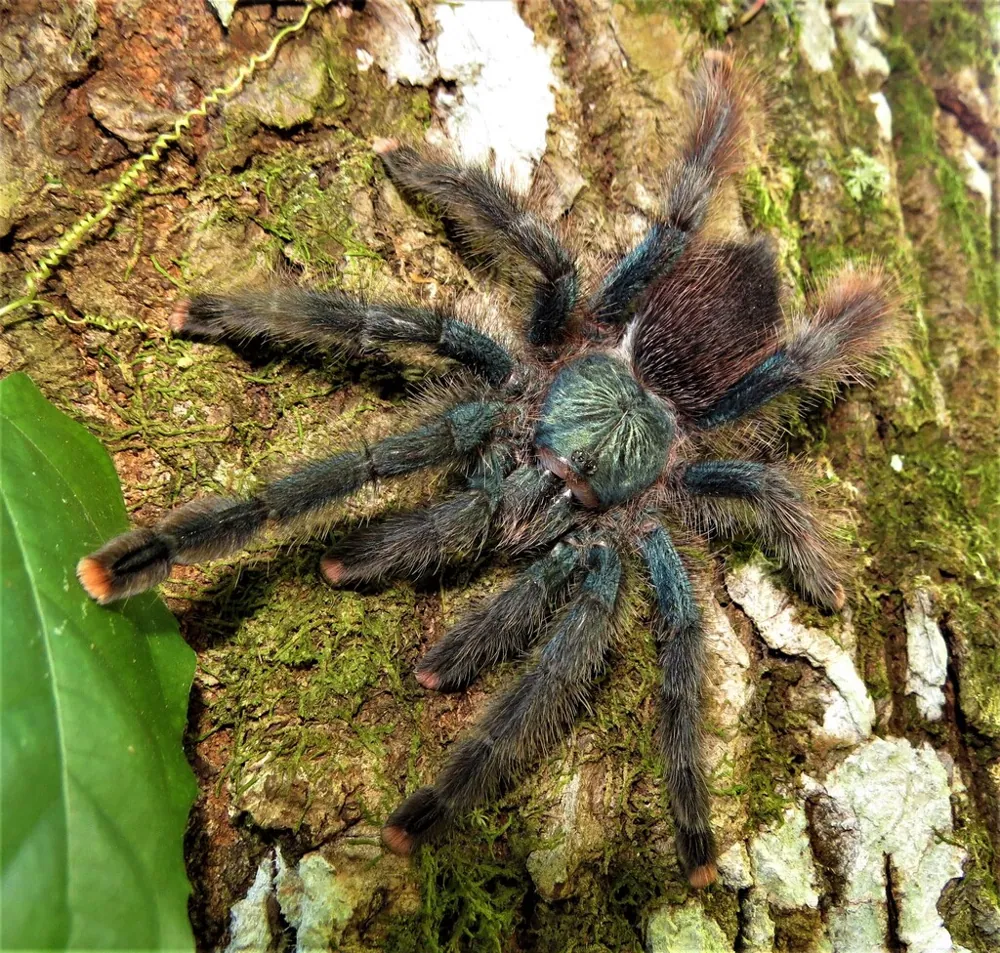
 No anndirto nde
Doole tooke
Tooke ina yalta e ñiiƴe mum si nde ŋatii.
Hol ko tooke mum (ŋatol walla fiɗol) waɗata?
The spider has a bite that injects venom. Its venom is considered mild, even compared with other New World tarantulas.1
Hol no nde woni bone e yimɓe?
Bone e yimɓe: HoyɗoNo fiɗol nyaaku walla ɓuri famɗude. Ɓadii alaa bone e yimɓe.It is not very defensive, and it is considered one of the safest tarantulas to handle, although handling is still not recommended. Its venom is mild, so it is a much lower risk than more toxic tarantulas such as those in the genera Psalmopoeus and Poecilotheria.1
Hol ko nde waɗata si nde hulii?
When threatened it usually runs or leaps away, but it may adopt a threat posture, flick its faeces at the threat, or bite if provoked.1
 Si nde ŋatii
- Lootu ŋatol ngol, ɓuuɓnu ngol. Heɓu ballal doktaa si muusu ina tiiɗi walla neɗɗo oo ɓanndu mum welaani.
Sahaa fof, noddu lamba ballal yaawngal (112, 000, 911) ko adii. Ɗum ko ballal arano kuuɓal, wonaa wasiyya doktaa. Aslu ballal arano
 Reen hoore maa
- Taa memu, taa nanngu, taa aaɓnu dabbaare ladde abada, hay pamaro, hay si ina wayi no ɗaanii walla maayii.
- Accu nde nokku. Si a fottii e gooto, deeƴu, ruttu caggal seeɗa seeɗa, accu nde yaha laawol mum.
- Si gooto e majji ŋatii ma: deeƴu, taa dillu, noddu lamba ballal yaawngal (112, 000, 911) walla yah asibiti law. Siftor no nde wayri, foto ina walla.
Nde ɗaɓɓaaki ma. Nde huutora tooke mum ngam nanngude ñaamdu walla reende hoore mum, nde ɓuri yiɗde suuɗaade. Ɓeydu anndude no reentorto
Hol to e aduna?
Hol no nde mawni?
Hol no nde juuti?
 juuti no bulok fijo 5 jokkondiraaɗi
 ina waawi dogde meeter 100 nder sakan 220 (neɗɗo ɓurɗo yaawde ina haani 9,6)
Hol no Pinktoe tarantula mawni, fottindaade e AAN?
Hiisa tan nder browser maa. Alaa ko mooftetee walla ko neletee.
Hol no nde yaawi?


Anndal
Females of this species may eat males after mating, a behaviour called sexual cannibalism.1
Its urticating hairs, which can irritate skin, are released by direct contact rather than being kicked into the air.1
Adult males live about 2 to 3 years, while females live about 6 to 9 years.1
In captivity, the spider can build nests and tunnels using nearby debris when its enclosure is enriched.1
Mature males have a pair of hooks on the last segment of their pedipalps, which they use to build sperm webs and during courtship.1
Feññinoowo goonga
Fenaande: Pinktoe tarantulas need high humidity to survive.
Goonga: Outdated advice says they need high humidity, but in captivity they should be kept on dry substrate with a water dish. Too much moisture and stagnant air can be fatal to them.1
Ɗo anndal iwi
- Avicularia avicularia (Wikipedia (CC BY-SA 4.0))
- Avicularia avicularia (iNaturalist): inɗe e tolnugol.
- Venom Wiki: darja bone, mawnude woowaaɗo e miijo yaawre ko amen. Ndaar no min hiisirta ɗum: No min betiri bone.
Kala anndal e ngoo hello ina jogii limre hollirnde iwdi mum. Si min juumii, accu min, min yiɗɓe dabbaaji, wonaa jaridaa ganndal. Wiy min e [email protected] min feewnitay.
 Yaare nden ina heege! Venom Wiki ko golle neɗɗo gooto: meere, tawa tallaaji alaa, trackers alaa. Ballal pamarngal ina walla heddinde ɗum e internet.Ñaamnu yaare nden
Goɗɗi e fedde wootere: Tarantula e funnel-web
 Goliath birdeaterTarantula e funnel-webIna muusa tan
 Brazilian salmon pink birdeaterTarantula e funnel-webAlaa bone
 Chilean rose tarantulaTarantula e funnel-webAlaa bone
 Greenbottle blue tarantulaTarantula e funnel-webAlaa bone
 Brazilian funnel-web spiderTarantula e funnel-webIna haani doktaa
 Burgundy goliath birdeaterTarantula e funnel-webIna muusa tan
 Golden poison frog
 Terciopelo
 Brazilian wandering spider
 Eyelash viper
 Golden lancehead
 South American bushmaster