
 Afirik
 Asiya
Asiya Turai
Turai Amerik Worgo
 Australiya e Oseaniya
 Antarktika
 Baharu Pasifik
 Baharu Atlantik
 Baharu Indiya
 Baharu Arktik
 Baharu Mediterane
 Baharu Boɗeeru
 Baharu Karibiya
 Baharu Koral
 Baharu Ciina Worgo
 Baharu Filipin
 Baharu Andaman
 Baharu Rewo
 Baharu Timor e Arafura
 Baharu Bengal
 Baharu Kaliforniya
Prairie rattlesnake
 Ina ŋata
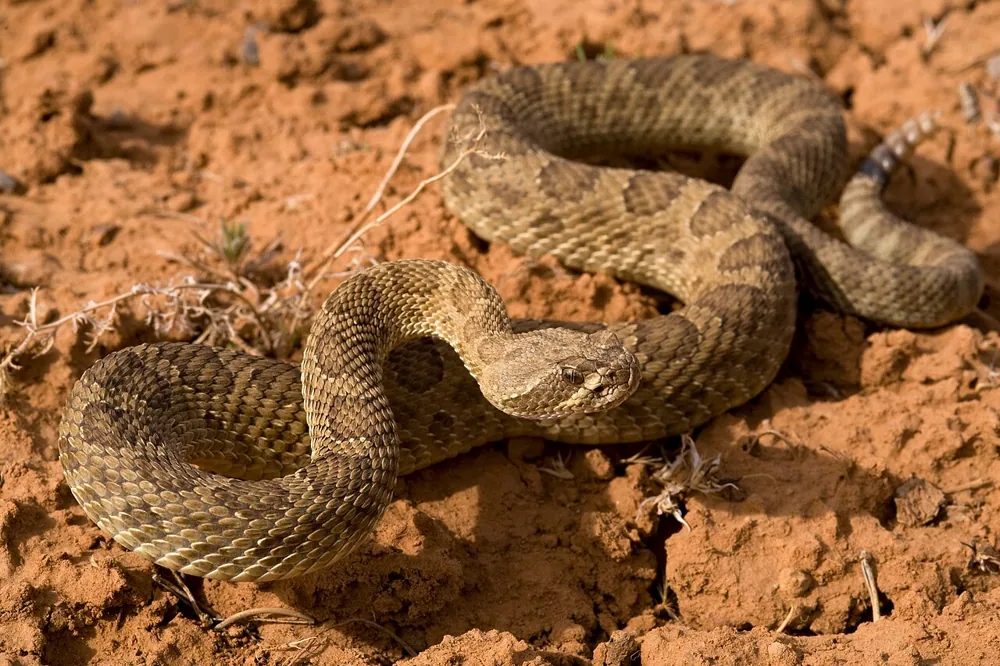
The prairie rattlesnake is a venomous pit viper that lives across the Great Plains and the foothills of the Rocky Mountains. It is found in the western United States, southwestern Canada and northern Mexico. It shakes its tail to give a rattling warning when it feels threatened.1



 No anndirto nde
- Usually lightly coloured in shades of brown, with patches of dark brown along the back1
- A colour band may be seen at the back of the eye1
- A triangle-shaped head with pit sensory organs on either side1
- Usually four internasal scales on the snout, with three or more in total1
- Commonly grows to more than 100 cm long1
Ina jiiɓindiree e: Other rattlesnakes can look similar. A key difference is that two internasal scales touch the rostral scale, at the tip of the snout, in the prairie rattlesnake.1
Doole tooke
Tooke ina yalta e ñiiƴe mum si nde ŋatii.
Hol ko tooke mum (ŋatol walla fiɗol) waɗata?
The venom is a complex mixture of proteins, including enzymes such as proteases and peptidases. It is hemotoxic, meaning it damages blood and destroys tissue. It also has neurotoxic properties, meaning it attacks the nerves.1
Hol no nde woni bone e yimɓe?
Bone e yimɓe: Bone mawɗoŊatol ina haani doktaa. Maayde ina woodi seeɗa sanne.The species has powerful venom and uses about 20 to 55% of its venom in one bite. It will defend itself if it is threatened or injured.1
Hol ko nde waɗata si nde hulii?
It rapidly vibrates its tail to make a rasping rattle that warns intruders, and it will defend itself if threatened or injured.1
 Si nde ŋatii
- Deeƴin neɗɗo oo, taa o dilla, waɗu koyngal walla junngo ŋataangal e toowal ɓernde, ittu zoobe e geɗe ɗigginiiɗe, yahra mo asibiti law.
Sahaa fof, noddu lamba ballal yaawngal (112, 000, 911) ko adii. Ɗum ko ballal arano kuuɓal, wonaa wasiyya doktaa. Aslu ballal arano
 Reen hoore maa
- Taa memu, taa nanngu, taa aaɓnu dabbaare ladde abada, hay pamaro, hay si ina wayi no ɗaanii walla maayii.
- Accu nde nokku. Si a fottii e gooto, deeƴu, ruttu caggal seeɗa seeɗa, accu nde yaha laawol mum.
- Si gooto e majji ŋatii ma: deeƴu, taa dillu, noddu lamba ballal yaawngal (112, 000, 911) walla yah asibiti law. Siftor no nde wayri, foto ina walla.
Nde ɗaɓɓaaki ma. Nde huutora tooke mum ngam nanngude ñaamdu walla reende hoore mum, nde ɓuri yiɗde suuɗaade. Ɓeydu anndude no reentorto
Hol to e aduna?
Hol no nde mawni?
Hol no nde juuti?
 juuti no ullundi galle 3, hinere haa laaci
 juuti no ayaba 8 jokkondiraaɗi
 ina waawi dogde meeter 100 nder sakan 97 (neɗɗo ɓurɗo yaawde ina haani 9,6)
Hol no Prairie rattlesnake mawni, fottindaade e AAN?
Hiisa tan nder browser maa. Alaa ko mooftetee walla ko neletee.
Hol no nde yaawi?


Anndal
Females often gather in communal dens to give birth and care for their young. Some females even look after unrelated young while the mothers take a break.1
Newborn snakelets measure 22 to 28 cm and are venomous from the moment they are born.1
Prairie rattlesnakes prefer a straight migration path, even in areas dominated by humans, because it gives them a better chance of survival.1
In Montana, the species reaches its largest size, with specimens sometimes exceeding 120 cm.1
In Canada, the species is listed as a species of special concern because its numbers have steadily declined since the 1930s.1
Ngam ganduɓe tooke
- Innde ganndal
- Crotalus viridis
- Fedde
- Rattlesnake
- Besngu
- Viperidae2
- Tolno
- Squamata
- Nahiyaaji
- Amerik Rewo
- Ɓikkoy
- It gives birth to one to 25 live young per litter, typically four to 12, in late summer or early fall.1
- Hol no nde wonata e ladde
- Least concern on the IUCN Red List. It is listed as endangered in Iowa and as a species of special concern in Canada.1
- Bone e yimɓe
- 3 / 5: Bone mawɗo3
Ɗo anndal iwi
- Crotalus viridis (Wikipedia (CC BY-SA 4.0))
- Crotalus viridis (iNaturalist): inɗe e tolnugol.
- Venom Wiki: darja bone, mawnude woowaaɗo e miijo yaawre ko amen. Ndaar no min hiisirta ɗum: No min betiri bone.
Kala anndal e ngoo hello ina jogii limre hollirnde iwdi mum. Si min juumii, accu min, min yiɗɓe dabbaaji, wonaa jaridaa ganndal. Wiy min e [email protected] min feewnitay.
 Yaare nden ina heege! Venom Wiki ko golle neɗɗo gooto: meere, tawa tallaaji alaa, trackers alaa. Ballal pamarngal ina walla heddinde ɗum e internet.Ñaamnu yaare nden
 Eastern diamondback rattlesnake
 Timber rattlesnake
 Western diamondback rattlesnake
 Sidewinder
 Mojave rattlesnake
 Aruba rattlesnake
 Terciopelo
 Eastern coral snake
 Eyelash viper
 Arizona bark scorpion
 Brown recluse
 Cane toad
.jpg)