
 Afirik
 Asiya
Asiya Turai
Turai Amerik Worgo
 Australiya e Oseaniya
 Antarktika
 Baharu Pasifik
 Baharu Atlantik
 Baharu Indiya
 Baharu Arktik
 Baharu Mediterane
 Baharu Boɗeeru
 Baharu Karibiya
 Baharu Koral
 Baharu Ciina Worgo
 Baharu Filipin
 Baharu Andaman
 Baharu Rewo
 Baharu Timor e Arafura
 Baharu Bengal
 Baharu Kaliforniya
Pygmy rattlesnake
 Ina ŋata
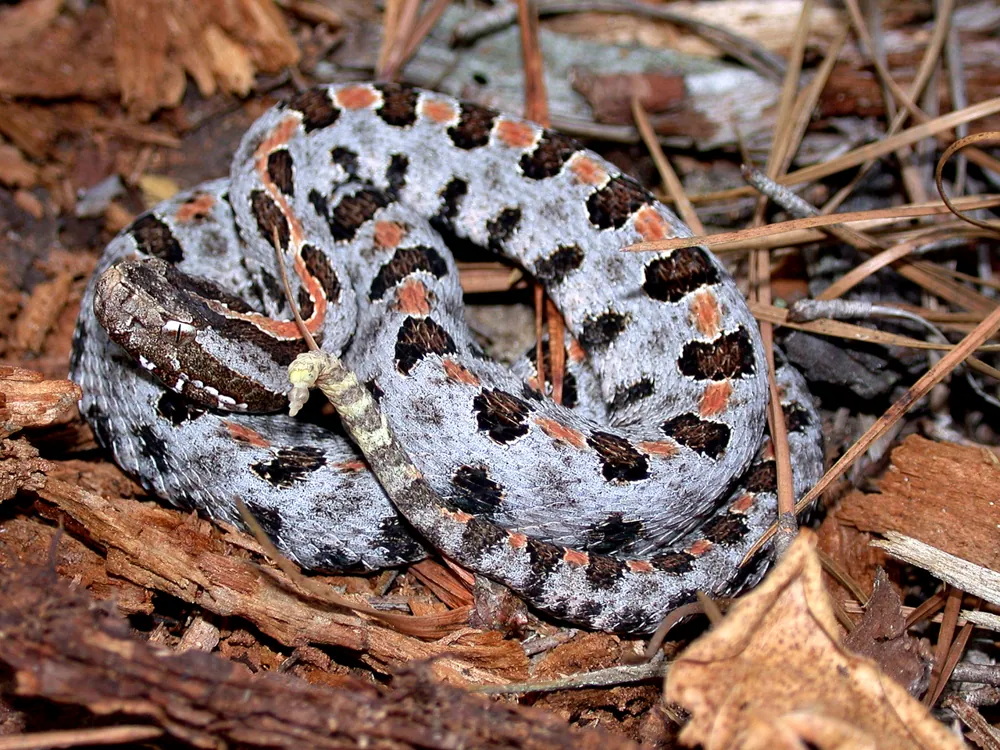
The pygmy rattlesnake is a small, venomous snake that lives in the southeastern United States. It is the smallest rattlesnake found on the North American continent. Its venom is strongly tissue-damaging, but the snake makes so little that a bite is unlikely to be fatal to an adult.1



 No anndirto nde
- Small but bulky in width, usually 40 to 60 cm long including the tail1
- Dorsal pattern of oval or roughly circular spots with somewhat regular edges1
- Flank spots are mostly round and not much taller than they are wide1
- Usually 23 rows of dorsal scales at midbody1
- Young snakes may be paler or more vividly marked, and have a yellow tail tip. The rattle is tiny and gives only a faint buzz that is heard from a few feet away1
Doole tooke
Tooke ina yalta e ñiiƴe mum si nde ŋatii.
Hol ko tooke mum (ŋatol walla fiɗol) waɗata?
Its venom is cytotoxic, which means it damages cells, and it is strongly haemorrhagic, which means it causes bleeding. The venom is tissue-toxic but contains no neurotoxins, which attack the nerves. The snake produces only a small amount of venom and contains substantial amounts of serotonin and related compounds.1
Hol no nde woni bone e yimɓe?
Bone e yimɓe: Ina muusaIna waawi muusude sanne, kono ɓadii abada wonaa bone mawɗo.The snake produces too little venom to be likely to deliver a fatal bite to a human adult.1
Hol ko nde waɗata si nde hulii?
Some individuals are very aggressive and strike furiously, while others are lethargic and do not rattle at all, and many are reluctant to bite.1
 Si nde ŋatii
- Deeƴin neɗɗo oo, taa o dilla, waɗu koyngal walla junngo ŋataangal e toowal ɓernde, ittu zoobe e geɗe ɗigginiiɗe, yahra mo asibiti law.
Sahaa fof, noddu lamba ballal yaawngal (112, 000, 911) ko adii. Ɗum ko ballal arano kuuɓal, wonaa wasiyya doktaa. Aslu ballal arano
 Reen hoore maa
- Taa memu, taa nanngu, taa aaɓnu dabbaare ladde abada, hay pamaro, hay si ina wayi no ɗaanii walla maayii.
- Accu nde nokku. Si a fottii e gooto, deeƴu, ruttu caggal seeɗa seeɗa, accu nde yaha laawol mum.
- Si gooto e majji ŋatii ma: deeƴu, taa dillu, noddu lamba ballal yaawngal (112, 000, 911) walla yah asibiti law. Siftor no nde wayri, foto ina walla.
Nde ɗaɓɓaaki ma. Nde huutora tooke mum ngam nanngude ñaamdu walla reende hoore mum, nde ɓuri yiɗde suuɗaade. Ɓeydu anndude no reentorto
Hol to e aduna?
Hol no nde mawni?
Hol no nde juuti?
 juuti no ayaba 4 jokkondiraaɗi
 ina waawi dogde meeter 100 nder sakan 110 (neɗɗo ɓurɗo yaawde ina haani 9,6)
Hol no Pygmy rattlesnake mawni, fottindaade e AAN?
Hiisa tan nder browser maa. Alaa ko mooftetee walla ko neletee.
Hol no nde yaawi?


Anndal
Its venom was the basis for the drug eptifibatide, which is used to prevent clotting during a heart attack.1
It is the smallest rattlesnake found on the North American continent.1
Its rattle is unusually small, which may show the early stages of how rattles evolved.1
Snake fungal disease has risen sharply in pygmy rattlesnakes over the past decade and is a major cause of death, though some snakes have recovered in the field.1
Females may give birth to live young even while infected with snake fungal disease.1
Feññinoowo goonga
Fenaande: Its bite is deadly to people.
Goonga: The snake makes so little venom that a bite is unlikely to be fatal to an adult human.1
Ɗo anndal iwi
- Sistrurus miliarius (Wikipedia (CC BY-SA 4.0))
- Sistrurus miliarius (iNaturalist): inɗe e tolnugol.
- Venom Wiki: darja bone, mawnude woowaaɗo e miijo yaawre ko amen. Ndaar no min hiisirta ɗum: No min betiri bone.
Kala anndal e ngoo hello ina jogii limre hollirnde iwdi mum. Si min juumii, accu min, min yiɗɓe dabbaaji, wonaa jaridaa ganndal. Wiy min e [email protected] min feewnitay.
 Yaare nden ina heege! Venom Wiki ko golle neɗɗo gooto: meere, tawa tallaaji alaa, trackers alaa. Ballal pamarngal ina walla heddinde ɗum e internet.Ñaamnu yaare nden
 Eastern diamondback rattlesnake
 Timber rattlesnake
 Western diamondback rattlesnake
 Sidewinder
 Mojave rattlesnake
 Aruba rattlesnake
 Terciopelo
 Eastern coral snake
 Eyelash viper
 Arizona bark scorpion
 Brown recluse
 Cane toad