
 Afirik
 Asiya
Asiya Turai
Turai Amerik Worgo
 Australiya e Oseaniya
 Antarktika
 Baharu Pasifik
 Baharu Atlantik
 Baharu Indiya
 Baharu Arktik
 Baharu Mediterane
 Baharu Boɗeeru
 Baharu Karibiya
 Baharu Koral
 Baharu Ciina Worgo
 Baharu Filipin
 Baharu Andaman
 Baharu Rewo
 Baharu Timor e Arafura
 Baharu Bengal
 Baharu Kaliforniya
Sri Lankan green vine snake
 Ina ŋata
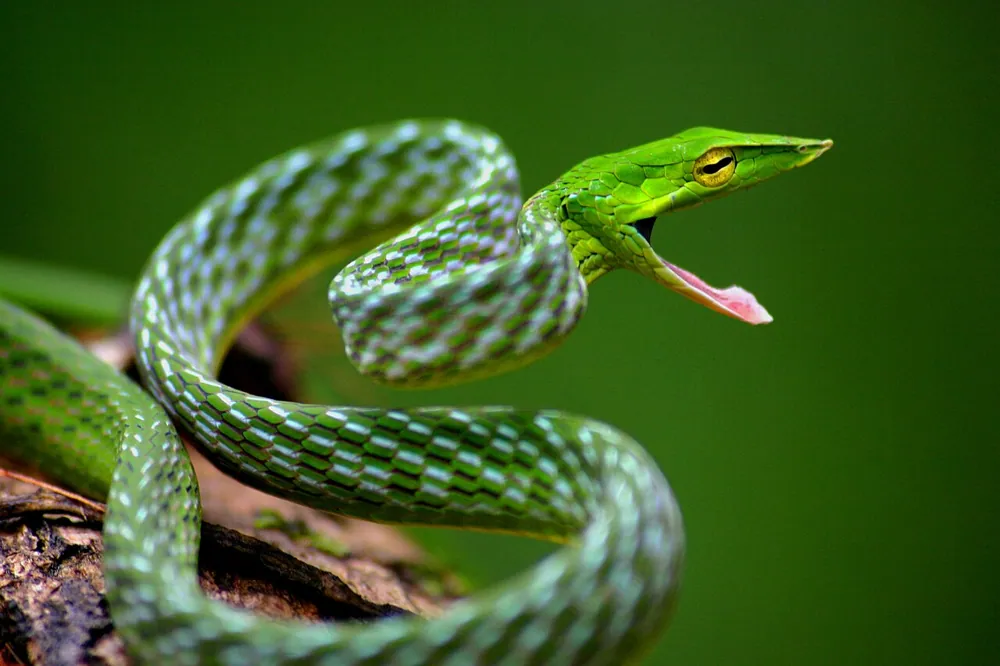
The Sri Lankan green vine snake is a slim, bright green tree snake. It lives only in Sri Lanka, mostly in forests and bush near streams and villages. It is mildly venomous, and its unusual horizontal pupils make it easy to recognise.1



 No anndirto nde
- Long, slender body with a very pointed snout1
- Bright green to pale brownish colour1
- A yellow line runs along each side of the lower body1
- Black-and-white patterned skin shows between the scales1
- Horizontal pupils, unlike the vertical slit pupils of many vipers1
Ina jiiɓindiree e: It was once grouped with several other green vine snakes across India and Southeast Asia. Recent studies have split these into separate species, and the Sri Lankan form is now restricted to Sri Lanka.1
Doole tooke
Tooke ina yalta e ñiiƴe mum si nde ŋatii.
Hol ko tooke mum (ŋatol walla fiɗol) waɗata?
The snake is mildly venomous. Its bite causes a moderate reaction, with localised pain, swelling, bruising and numbness. These symptoms usually fade within three days.1
Hol no nde woni bone e yimɓe?
Bone e yimɓe: HoyɗoNo fiɗol nyaaku walla ɓuri famɗude. Ɓadii alaa bone e yimɓe.Bites usually do not need medical attention. Some bites near vital organs could be more severe.1
Hol ko nde waɗata si nde hulii?
When disturbed, it expands its body to show a black-and-white scale marking and opens its mouth in a threat display.1
 Si nde ŋatii
- Bites typically do not require medical attention, but bites near vital organs could be more severe.1
- Lootu ŋatol ngol, deeƴin neɗɗo oo, heɓu ballal doktaa. Ɓoɗɗi goɗɗi (ko wayi no boomslang) ina mbaawi warde caggal awaaji.
Sahaa fof, noddu lamba ballal yaawngal (112, 000, 911) ko adii. Ɗum ko ballal arano kuuɓal, wonaa wasiyya doktaa. Aslu ballal arano
 Reen hoore maa
- Taa memu, taa nanngu, taa aaɓnu dabbaare ladde abada, hay pamaro, hay si ina wayi no ɗaanii walla maayii.
- Accu nde nokku. Si a fottii e gooto, deeƴu, ruttu caggal seeɗa seeɗa, accu nde yaha laawol mum.
- Si gooto e majji ŋatii ma: deeƴu, taa dillu, noddu lamba ballal yaawngal (112, 000, 911) walla yah asibiti law. Siftor no nde wayri, foto ina walla.
Nde ɗaɓɓaaki ma. Nde huutora tooke mum ngam nanngude ñaamdu walla reende hoore mum, nde ɓuri yiɗde suuɗaade. Ɓeydu anndude no reentorto
Hol to e aduna?
Hol no nde mawni?
Hol no nde juuti?
 juuti no ullundi galle 4, hinere haa laaci
 juuti no ayaba 11 jokkondiraaɗi
 ina waawi dogde meeter 100 nder sakan 64 (neɗɗo ɓurɗo yaawde ina haani 9,6)
Hol no Sri Lankan green vine snake mawni, fottindaade e AAN?
Hiisa tan nder browser maa. Alaa ko mooftetee walla ko neletee.
Hol no nde yaawi?


Anndal
Western internet users have humorously nicknamed it the "judgmental shoelace", because of its long, thin body and narrowed-looking eyes.1
Its horizontal pupils are very unusual among snakes.1
Its name comes from an old Sinhalese belief that it plucks out human eyes. A Portuguese traveller first reported this belief in 1685.1
It hunts by camouflage, slowly swaying to look like a branch.1
A female at London Zoo, kept in isolation from August 1885, gave birth in August 1888.1
Ɗo anndal iwi
- Ahaetulla nasuta (Wikipedia (CC BY-SA 4.0))
- Ahaetulla nasuta (iNaturalist): inɗe e tolnugol.
- Venom Wiki: darja bone, mawnude woowaaɗo e miijo yaawre ko amen. Ndaar no min hiisirta ɗum: No min betiri bone.
Kala anndal e ngoo hello ina jogii limre hollirnde iwdi mum. Si min juumii, accu min, min yiɗɓe dabbaaji, wonaa jaridaa ganndal. Wiy min e [email protected] min feewnitay.
 Yaare nden ina heege! Venom Wiki ko golle neɗɗo gooto: meere, tawa tallaaji alaa, trackers alaa. Ballal pamarngal ina walla heddinde ɗum e internet.Ñaamnu yaare nden
 Brown tree snake
 Tiger keelback
 Red-necked keelback
 Green cat snake
 Mangrove snake
 Asian vine snake
 Yaare deathstalker
 Cobra Indiya
 Viper kiifi kaasa Indiya
 King cobra
 Puff adder
 Mboddi Russell