
 Afirik
 Asiya
Asiya Turai
Turai Amerik Worgo
 Australiya e Oseaniya
 Antarktika
 Baharu Pasifik
 Baharu Atlantik
 Baharu Indiya
 Baharu Arktik
 Baharu Mediterane
 Baharu Boɗeeru
 Baharu Karibiya
 Baharu Koral
 Baharu Ciina Worgo
 Baharu Filipin
 Baharu Andaman
 Baharu Rewo
 Baharu Timor e Arafura
 Baharu Bengal
 Baharu Kaliforniya
Stonecat
 Gi'e tooke
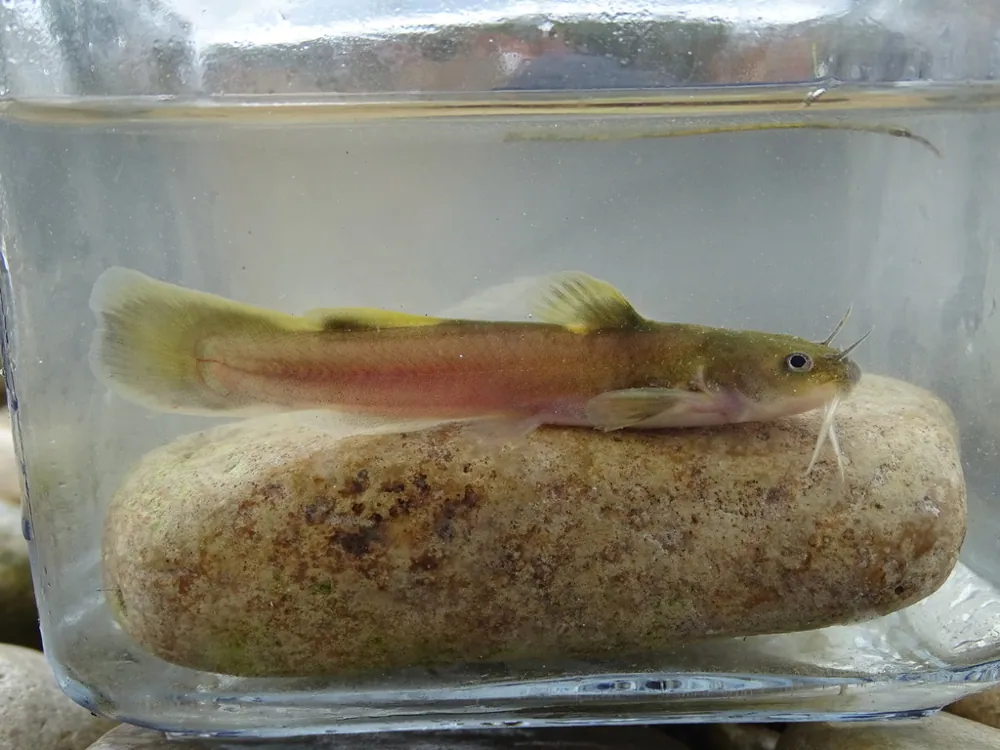
The stonecat is a small freshwater catfish from North America. It hides near or under stones in fast-moving water. It is special because it has venom glands at the base of its pectoral spines, which can cause extreme pain.1
 No anndirto nde
- Small, slender, flat-headed catfish with a thick, yellowish-brown skin1
- The sides of the head shade to yellow, and the belly is whitish1
- A white spot at the rear of the dorsal fin base and another on the upper edge of the tail fin1
- Either two light bars or a patch on the nape, depending on the population1
Doole tooke
Gi'e ceeɓɗe ina njogii tooke. Yaabude nde walla nanngude nde ina muusa.
Hol ko tooke mum (ŋatol walla fiɗol) waɗata?
Stonecats have venom glands, mainly at the bases of the pectoral spines. Their venom causes extreme pain, similar to that of a wasp sting. Other members of this catfish family cause irritating wounds from their spines, but the stonecat's venom is stronger.1
Hol no nde woni bone e yimɓe?
Bone e yimɓe: Ina muusaIna waawi muusude sanne, kono ɓadii abada wonaa bone mawɗo.The spines can deliver venom that causes extreme pain, similar to a wasp sting. Keep clear of its spines.1
Hol ko nde waɗata si nde hulii?
Stonecats hide near or under stones, and their venom glands sit at the bases of their pectoral spines.1
 Si gi'e mum naatii e ɓanndu maa
- Naatnu barme e ndiyam wulɗam, wulɗam no neɗɗo oo waawi muñde tawa sumataa (ƴeewu ɗam e junngo maa), hakkunde minti 30 e minti 90. Heɓu ballal doktaa, haa teeŋti e stonefish e stingray.
Sahaa fof, noddu lamba ballal yaawngal (112, 000, 911) ko adii. Ɗum ko ballal arano kuuɓal, wonaa wasiyya doktaa. Aslu ballal arano
 Reen hoore maa
- Taa memu, taa nanngu, taa aaɓnu dabbaare ladde abada, hay pamaro, hay si ina wayi no ɗaanii walla maayii.
- Accu nde nokku. Si a fottii e gooto, deeƴu, ruttu caggal seeɗa seeɗa, accu nde yaha laawol mum.
- Si gi'e mum naatii e ɓanndu maa: deeƴu, taa dillu, noddu lamba ballal yaawngal (112, 000, 911) walla yah asibiti law. Siftor no nde wayri, foto ina walla.
Nde ɗaɓɓaaki ma. Nde huutora tooke mum ngam nanngude ñaamdu walla reende hoore mum, nde ɓuri yiɗde suuɗaade. Ɓeydu anndude no reentorto
Hol to e aduna?
Hol no nde mawni?
Hol no nde juuti?
Hol no nde teddi?

 juuti no bulok fijo 10 jokkondiraaɗi
 ina waawi lumbaade njuuteendi pisin mawɗo (50 m) nder sakan 38
Hol no Stonecat mawni, fottindaade e AAN?
Hiisa tan nder browser maa. Alaa ko mooftetee walla ko neletee.
Hol no nde yaawi?
Anndal
A stonecat's pectoral spines carry venom glands, which makes them far more painful than the spines of most related catfish.1
Its eggs are amber-yellow and very large for a fish, measuring between 3.5 and 4 mm across.1
Stonecats are used as indicators of water quality, because they are absent from highly polluted or heavily silted areas.1
Stonecats form monogamous pairs for breeding, and they spawn when water temperatures reach 25 °C.1
The upper jaw of the stonecat projects beyond the lower jaw.1
Ngam ganduɓe tooke
- Innde ganndal
- Noturus flavus
- Fedde
- Liddi tooke
- Besngu
- Ictaluridae2
- Tolno
- Siluriformes
- Nahiyaaji
- Amerik Rewo
- Ɓikkoy
- Males guard the clutch of eggs under large, flat rocks, and a female may produce between 200 and 1,200 eggs per year.1
- Duuɓi nguurndam
- ɓadii duuɓi 61
- Hol no nde wonata e ladde
- Not threatened, according to the US Endangered Species Act1
- Bone e yimɓe
- 2 / 5: Ina muusa3
Ɗo anndal iwi
- Noturus flavus (Wikipedia (CC BY-SA 4.0))
- Noturus flavus (iNaturalist): inɗe e tolnugol.
- Venom Wiki: darja bone, mawnude woowaaɗo e miijo yaawre ko amen. Ndaar no min hiisirta ɗum: No min betiri bone.
Kala anndal e ngoo hello ina jogii limre hollirnde iwdi mum. Si min juumii, accu min, min yiɗɓe dabbaaji, wonaa jaridaa ganndal. Wiy min e [email protected] min feewnitay.
 Yaare nden ina heege! Venom Wiki ko golle neɗɗo gooto: meere, tawa tallaaji alaa, trackers alaa. Ballal pamarngal ina walla heddinde ɗum e internet.Ñaamnu yaare nden
 Channel catfish
 Brown bullhead
 Carolina madtom
 Margined madtom
 Tadpole madtom
 Reef stonefish
 Terciopelo
 Eastern coral snake
 Eastern diamondback rattlesnake
 Eyelash viper
 Timber rattlesnake
 Western diamondback rattlesnake