
 Afirik
 Asiya
Asiya Turai
Turai Amerik Worgo
 Australiya e Oseaniya
 Antarktika
 Baharu Pasifik
 Baharu Atlantik
 Baharu Indiya
 Baharu Arktik
 Baharu Mediterane
 Baharu Boɗeeru
 Baharu Karibiya
 Baharu Koral
 Baharu Ciina Worgo
 Baharu Filipin
 Baharu Andaman
 Baharu Rewo
 Baharu Timor e Arafura
 Baharu Bengal
 Baharu Kaliforniya
Wagler's pit viper
 Ina ŋata
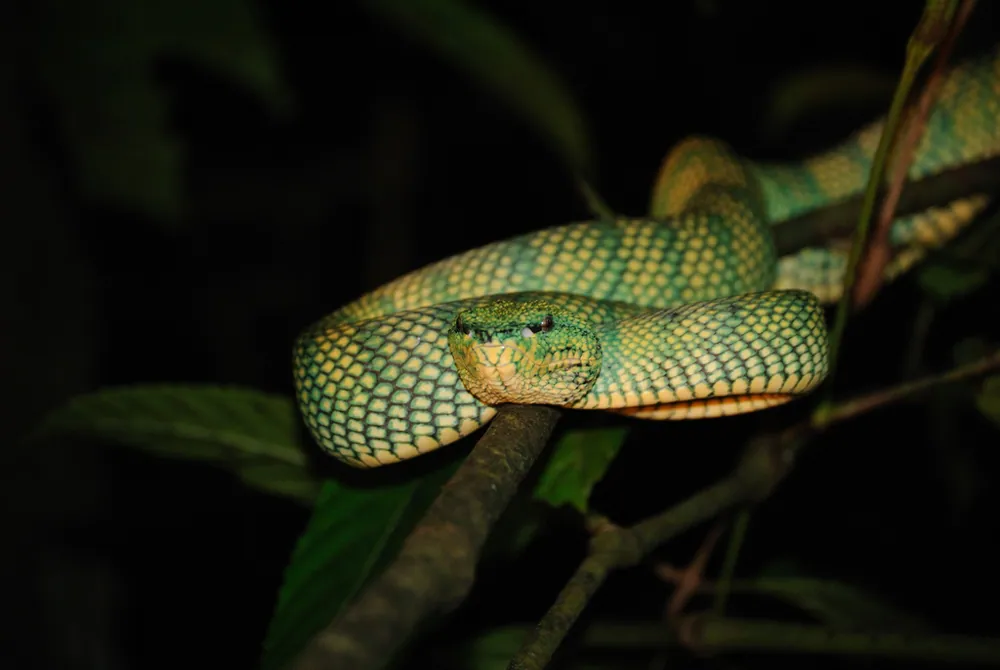
Wagler's pit viper is a venomous snake that lives in the forests of Southeast Asia. It spends most of its life in trees and is sometimes called the temple viper, because it is common around the Temple of the Azure Cloud in Malaysia. Its venom has also been used in scientific research.1



 No anndirto nde
- Females can reach about 1 m (39 in) in total length, including the tail, and are black with yellow stripes.1
- Males typically do not exceed 75 cm (29.5 in). They have large triangular heads and relatively thin green bodies.1
- The species has many colour forms. Some are black or brown with orange and yellow banding, and others are light green with yellow or orange banding.1
- It is nocturnal, so it is active at night, and it often stays still for long periods.1
Doole tooke
Tooke ina yalta e ñiiƴe mum si nde ŋatii.
Hol ko tooke mum (ŋatol walla fiɗol) waɗata?
The venom contains four peptides (small protein chains) called waglerins. In studies on mice, waglerin-1 blocked signals passing from nerves to muscles. Waglerins caused fatal breathing paralysis in adult mice.1
Hol no nde woni bone e yimɓe?
Bone e yimɓe: Bone mawɗoŊatol ina haani doktaa. Maayde ina woodi seeɗa sanne.Hol ko nde waɗata si nde hulii?
When disturbed, it can strike quickly.1
 Si nde ŋatii
- Deeƴin neɗɗo oo, taa o dilla, waɗu koyngal walla junngo ŋataangal e toowal ɓernde, ittu zoobe e geɗe ɗigginiiɗe, yahra mo asibiti law.
Sahaa fof, noddu lamba ballal yaawngal (112, 000, 911) ko adii. Ɗum ko ballal arano kuuɓal, wonaa wasiyya doktaa. Aslu ballal arano
 Reen hoore maa
- Taa memu, taa nanngu, taa aaɓnu dabbaare ladde abada, hay pamaro, hay si ina wayi no ɗaanii walla maayii.
- Accu nde nokku. Si a fottii e gooto, deeƴu, ruttu caggal seeɗa seeɗa, accu nde yaha laawol mum.
- Si gooto e majji ŋatii ma: deeƴu, taa dillu, noddu lamba ballal yaawngal (112, 000, 911) walla yah asibiti law. Siftor no nde wayri, foto ina walla.
Nde ɗaɓɓaaki ma. Nde huutora tooke mum ngam nanngude ñaamdu walla reende hoore mum, nde ɓuri yiɗde suuɗaade. Ɓeydu anndude no reentorto
Hol to e aduna?
Hol no nde mawni?
Hol no nde juuti?
 juuti no ullundi galle 2, hinere haa laaci
 juuti no ayaba 6 jokkondiraaɗi
 ina waawi dogde meeter 100 nder sakan 100 (neɗɗo ɓurɗo yaawde ina haani 9,6)
Hol no Wagler's pit viper mawni, fottindaade e AAN?
Hiisa tan nder browser maa. Alaa ko mooftetee walla ko neletee.
Hol no nde yaawi?


Anndal
Its pits can detect temperature differences as small as 0.003 °C (0.0054 °F).1
Waglerins, the peptides in its venom, are useful tools for studying how nerves and muscles connect.1
Females and males look very different, so the sexes were once hard to tell apart as one animal.1
Its many colour forms, called phases, were once thought by some researchers to be separate subspecies.1
Feññinoowo goonga
Fenaande: Waglerin-1 smooths wrinkles, so it is safe to use in skin creams for that purpose.
Goonga: Waglerin-1 is included in some skin creams marketed as wrinkle removers, but there is no scientific evidence that it relaxes the muscles that cause wrinkles.1
Ɗo anndal iwi
- Tropidolaemus wagleri (Wikipedia (CC BY-SA 4.0))
- Tropidolaemus wagleri (iNaturalist): inɗe e tolnugol.
- Venom Wiki: darja bone, mawnude woowaaɗo e miijo yaawre ko amen. Ndaar no min hiisirta ɗum: No min betiri bone.
Kala anndal e ngoo hello ina jogii limre hollirnde iwdi mum. Si min juumii, accu min, min yiɗɓe dabbaaji, wonaa jaridaa ganndal. Wiy min e [email protected] min feewnitay.
 Yaare nden ina heege! Venom Wiki ko golle neɗɗo gooto: meere, tawa tallaaji alaa, trackers alaa. Ballal pamarngal ina walla heddinde ɗum e internet.Ñaamnu yaare nden
 Brown spotted pit viper
 Habu
Habu Hump-nosed viper
 Hundred-pace viper
 Malayan pit viper
 Mamushi
 Yaare deathstalker
 Cobra Indiya
 Viper kiifi kaasa Indiya
 King cobra
 Puff adder
 Mboddi Russell